Forearm Exercises
 Anton YefanovUpdated
The best forearm exercises are the farmer's carry, the wrist curl, the wrist extension and the reverse grip barbell curl. Together they train grip, both sides of the wrist and the thick muscle on top of the forearm near the elbow. Add a dead hang and you have a complete forearm workout that builds both size and grip strength.
Your forearms hold more than a dozen muscles that close your hand, bend and extend your wrist, rotate your palm and help bend your elbow. They already work in every row, pull-up and deadlift, which is why grip often gives out before your back does. Direct forearm training fixes that and builds the thickness that rows and curls alone rarely produce.
Below you will find our top picks, a comparison of the main forearm exercises, sets and reps by goal, and sample forearm workouts for the gym, for home and for grip strength. Every exercise for your forearms in the library is listed on this page, each with a video and instructions.
Best Forearm Exercises
These seven cover the flexors, the extensors, the brachioradialis and every type of grip. Two or three of them at the end of an upper body or pull day is enough for most people.
No. 1Best Overall
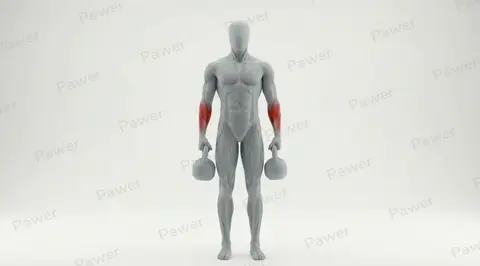
Kettlebell Farmers Carry
Walking with a heavy kettlebell in each hand trains support grip, wrist stability and the whole trunk at once. It is the most direct way to make your grip stronger for deadlifts and rows, and it is very easy to progress by adding weight or distance. Stand tall, keep the shoulders down and walk with short, controlled steps.
No. 2Best for Forearm Size
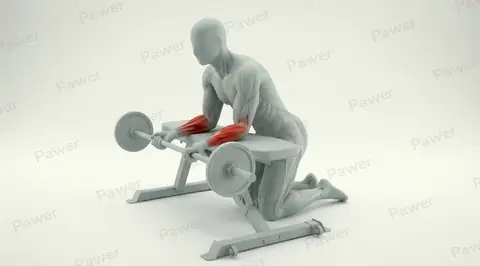
Barbell Wrist Curl
With your forearms resting on a bench and your palms up, the barbell wrist curl isolates the wrist and finger flexors that make up most of the forearm's bulk. Letting the bar roll down to your fingertips and curling it back trains the fingers too. It takes heavier loads than any other wrist isolation exercise.
No. 3Best for Brachioradialis
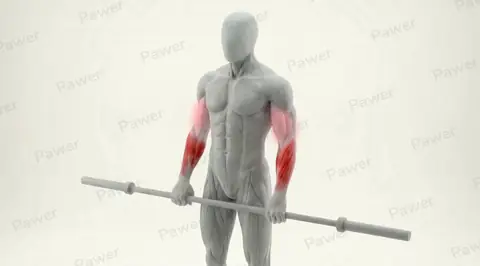
Reverse Grip Barbell Curl
Curling a barbell with your palms facing down shifts the work from the biceps to the brachioradialis and the wrist extensors. That builds the top of the forearm near the elbow, the part that shows most when your arms are relaxed. Use a lighter weight than your normal curl and keep the wrists straight.
No. 4Best for Extensors
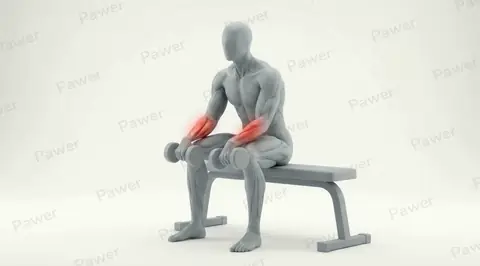
Dumbbell Wrist Extension
This reverse wrist curl trains the extensors on the back of the forearm, which most routines neglect. Balancing all your flexor work with some extension work keeps both sides of the forearm developing evenly. Use light dumbbells and a slow, full range.
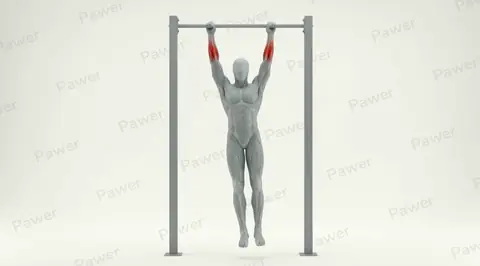
No. 5Best Bodyweight Option
Dead Hang
Hanging from a pull-up bar loads the grip with your full bodyweight and builds the endurance that pull-ups and long sets of rows demand. It needs only a bar and progresses easily from two hands to longer holds and then one hand. It also gives the shoulders a gentle stretch overhead.
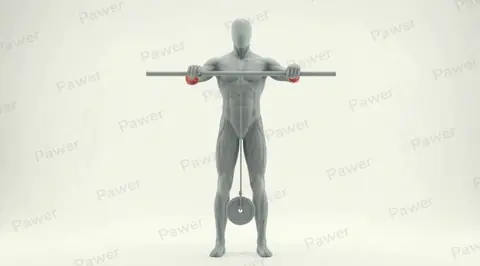
No. 6Best Forearm Finisher
Wrist Roller
Winding a weight up on a rope and lowering it under control works the flexors and extensors in one long, continuous set. Roll it both directions to cover both sides of the forearm. It is a hard finisher that needs only a light plate to be effective.
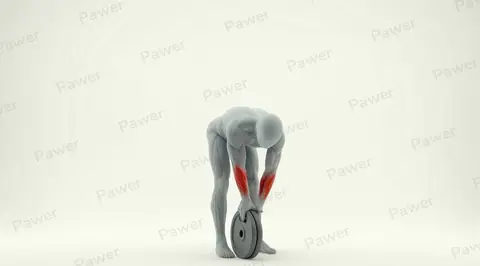
No. 7Best for Pinch Grip
Plate Pinch
Pinching two plates together smooth sides out trains the thumb and finger muscles in a way that bars and handles do not. Pinch strength carries over to climbing, manual work and holding awkward objects. Hold for time and add a heavier pair or a single wider plate as you improve.
Forearm anatomy: flexors, extensors and brachioradialis
The flexors run along the palm side of your forearm and close your hand and bend your wrist forward. They make up most of the forearm's mass and do most of the work in gripping, which is why wrist curls and heavy holds build both size and grip. The extensors sit on the back of the forearm. They bend the wrist back and open the hand, and they hold the wrist steady every time you grip hard.
The brachioradialis is the long muscle on the thumb side that starts above the elbow. It mainly bends the elbow and works hardest with a palms-down or neutral grip, so reverse curls and hammer curls train it far better than wrist curls do.
| Part | What it does | Best exercises |
|---|---|---|
| Wrist and finger flexors (palm side) | Bend the wrist forward and close the hand; the main grip muscles | Barbell Wrist Curl, Dumbbell Wrist Curl, Cable Wrist Curl, Dead Hang |
| Wrist and finger extensors (back side) | Bend the wrist back, open the hand and keep the wrist stable while you grip | Dumbbell Wrist Extension, Reverse Grip Barbell Curl, Wrist Roller |
| Brachioradialis (top, near the elbow) | Bends the elbow, especially with a palms-down or neutral grip | Reverse Grip Barbell Curl, EZ Bar Reverse Preacher Curl, Dumbbell Hammer Curl, Zottman Curl |
| Thumb muscles | Press the thumb against the fingers for pinch grip | Plate Pinch |
The best forearm exercises compared
For forearm size, combine a wrist curl, a wrist extension and a reverse curl so the flexors, extensors and brachioradialis all get direct work. For grip strength, prioritize heavy holds: carries, hangs and pinches train the grip in the same way your lifts and daily tasks use it.
Most of these are beginner-friendly isolation exercises, so equipment is the main deciding factor. A barbell or cable allows heavier wrist curls, dumbbells make it easy to train each arm on its own, and a pull-up bar is all you need for hangs.
| Exercise | Equipment | Difficulty | Best for | Main target |
|---|---|---|---|---|
| Kettlebell Farmers Carry | Kettlebells | Beginner | Support grip under heavy load | Grip and wrist stability |
| Barbell Wrist Curl | Barbell | Beginner | Heaviest wrist flexion work | Flexors |
| Dumbbell Wrist Curl | Dumbbell | Beginner | Training each arm on its own | Flexors |
| Cable Wrist Curl | Cable | Beginner | Constant tension through the range | Flexors |
| Dumbbell Wrist Extension | Dumbbell | Beginner | Balancing out flexor work | Extensors |
| Reverse Grip Barbell Curl | Barbell | Beginner | Thicker upper forearms | Brachioradialis and extensors |
| EZ Bar Reverse Preacher Curl | EZ bar and preacher bench | Beginner | Strict reverse curls with no swing | Brachioradialis and biceps |
| Dead Hang | Pull-up bar | Beginner | Grip endurance with no weights | Flexors |
| Wrist Roller | Wrist roller and plate | Beginner | A long, high-tension finisher | Flexors and extensors |
| Plate Pinch | Weight plates | Beginner | Thumb and pinch strength | Thumb and fingers |
All 10 Forearm Exercises
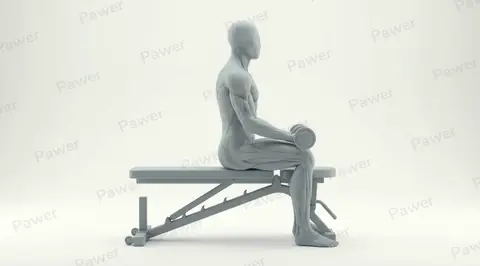
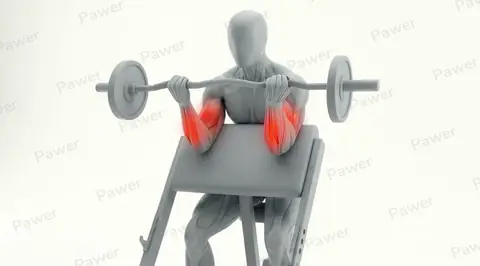
All 10 forearm exercises in the library, grouped by difficulty. Each one has a video, step-by-step form and the muscles it works.
Beginner Forearm Exercises10
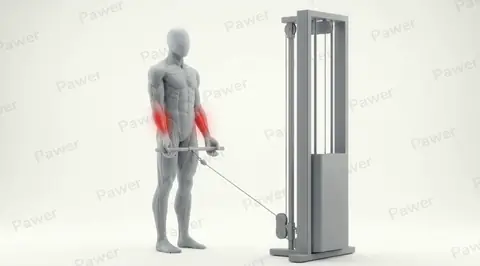
How to train forearms: sets, reps and frequency
Your forearms already get indirect work from every pulling exercise, so a little direct work goes a long way. Around 4 to 10 hard sets per week, split over 2 or 3 sessions at the end of upper body or pull days, is enough for most people. Train them last so a tired grip does not cut your rows and deadlifts short.
Wrist curls and extensions move through a small range with small muscles, so they respond best to moderate weights, higher reps and full control. Add reps before weight, and make the smallest jumps your equipment allows. For grip strength, think in holds and time instead of reps, and add weight once you hit the top of the time range.
| Goal | Sets | Reps | Rest | Frequency |
|---|---|---|---|---|
| Beginner foundation | 2 to 3 per exercise | 12 to 15 | 60 seconds | 2 times per week |
| Forearm size | 3 to 4 per exercise | 10 to 20 | 60 seconds | 2 to 3 times per week |
| Reverse curl strength | 3 to 4 per exercise | 6 to 10 | 90 seconds | 2 times per week |
| Support grip strength | 3 to 5 | 15 to 30 second heavy carries or holds | 90 seconds to 2 minutes | 2 times per week |
| Grip endurance | 2 to 4 | 30 to 60 second hangs or holds | 60 to 90 seconds | 2 to 3 times per week |
Sample forearm workouts for the gym, home and grip strength
Each workout takes 10 to 15 minutes and fits at the end of an upper body or pull session. The home workout needs only a pair of dumbbells and a pull-up bar. For dead hangs and pinches, stop each hold a few seconds before your grip fails.
| Workout | Exercise | Sets | Reps | Rest |
|---|---|---|---|---|
| Gym | Reverse Grip Barbell Curl | 3 | 8 to 12 | 90 seconds |
| Gym | Barbell Wrist Curl | 3 | 12 to 15 | 60 seconds |
| Gym | Dumbbell Wrist Extension | 2 | 15 to 20 | 60 seconds |
| Gym | Kettlebell Farmers Carry | 3 | 30 to 40 second walk | 90 seconds |
| Home | Dumbbell Hammer Curl | 3 | 10 to 12 | 60 seconds |
| Home | Dumbbell Wrist Curl | 3 | 12 to 20 | 60 seconds |
| Home | Dumbbell Wrist Extension | 2 | 15 to 20 | 60 seconds |
| Home | Dead Hang | 3 | 30 to 45 second hold | 90 seconds |
| Grip strength | Kettlebell Farmers Carry | 4 | 20 to 30 second heavy walk | 2 minutes |
| Grip strength | Plate Pinch | 3 | 20 to 30 second hold | 90 seconds |
| Grip strength | Wrist Roller | 2 | 1 full roll up and down | 90 seconds |
Common forearm training mistakes and how to fix them
Forearms are small muscles that tolerate sloppy reps poorly. These are the errors that hold most people back.
- Going too heavy on wrist curls. A heavy bar turns the set into short, jerky partial reps, so drop the weight and use the full range from fingertips to a fully curled wrist.
- Training only the flexors. Wrist curls without wrist extensions or reverse curls leave the back of the forearm behind, so pair every flexor exercise with extensor work.
- Using straps on every pulling set. Straps are useful for your heaviest sets, but take them off for warm-ups and lighter work so your grip still gets trained.
- Training forearms before heavy pulling. A tired grip limits your deadlifts and rows, so save direct forearm work for the end of the session.
- Rushing through the lowering phase. Much of the growth stimulus comes from controlling the weight down, so take about 2 seconds to lower every wrist curl and roller rep.
How to build grip strength
Grip is not one quality. Support grip is how long you can hold on to something heavy, crush grip is how hard you can close your hand, and pinch grip is how well you can hold an object between your thumb and fingers. Each one improves most from training that looks like it, so a balanced grip program includes a little of each.
Heavy pulling already builds a lot of support grip, as long as you do not always use straps. Add carries and hangs for more, and use pinches and wrist work to fill the gaps.
| Grip type | What it is | Best exercises |
|---|---|---|
| Support grip | Holding a heavy load for time | Kettlebell Farmers Carry, Dead Hang, Barbell Deadlift, Barbell Rack Pull |
| Crush grip | Closing the hand hard around a handle | Barbell Wrist Curl, Dumbbell Wrist Curl, Cable Wrist Curl |
| Pinch grip | Holding an object between the thumb and fingers | Plate Pinch |
| Wrist strength | Keeping the wrist stable while you grip | Wrist Roller, Dumbbell Wrist Extension, Reverse Grip Barbell Curl |
Frequently asked questions
How do I get bigger forearms?
Train them directly with progressive load. Wrist curls build the flexors, which make up most of the forearm's mass, and reverse curls build the brachioradialis on top. Add wrist extensions for the back of the forearm, do 10 to 20 reps per set close to failure, and train them 2 or 3 times per week. Forearm size also depends heavily on genetics and overall body weight, so be patient.
Do you need to train forearms directly?
Not always. Heavy rows, pull-ups and deadlifts give the forearms plenty of indirect work, and many lifters grow decent forearms from those alone. Direct training is worth adding if your grip fails before your back on pulling exercises, if your forearms lag behind your upper arms, or if your sport or job demands a strong grip.
How often should you train forearms?
Two or three short sessions per week suits most people. Forearms recover well from moderate volume, but they also work during every pulling session, so count that work too. If your grip feels weak at the start of a pull day, that is a sign you trained them too hard or too recently, and you should cut back.
Do dead hangs build grip strength?
Yes, especially grip endurance. Holding your full bodyweight from a bar trains the finger flexors to hold on for longer, which carries straight over to pull-ups and long sets of rows. Once you can hang for about a minute with both hands, make it harder with a thicker bar, a towel over the bar, or by shifting more weight onto one hand.
Can you train forearms at home?
Yes. A pair of dumbbells covers wrist curls, wrist extensions and hammer curls, and a pull-up bar adds dead hangs. Without any equipment you can still carry heavy household objects or hang from a sturdy bar. As with any muscle, the key is adding reps or weight over time rather than repeating the same easy workout.
Are reverse curls or hammer curls better for forearms?
Reverse curls put more of the work on the brachioradialis and wrist extensors, so they are the better forearm exercise. Hammer curls use a neutral grip that shares the load more evenly with the biceps and the brachialis, so they are more of an all-round arm builder. If forearm size is your main goal, use reverse curls and keep hammer curls as a secondary option.