Cable Core Exercises
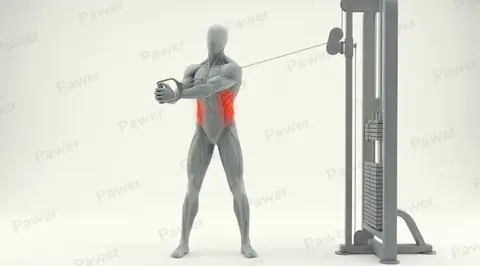
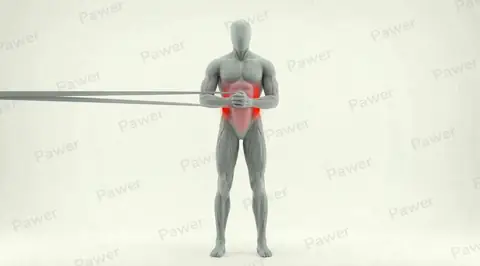
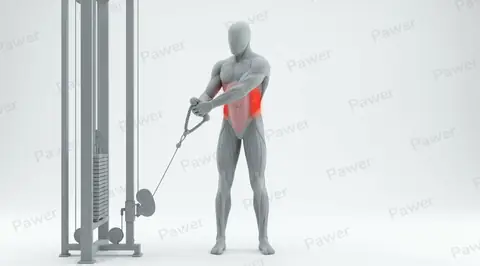
Cables are the best tool for the half of core training that bodyweight cannot load: resisting force from a direction other than straight down. The Pallof press is the clearest example. A cable pulls sideways on your hands while you press them out in front of you, and the entire exercise is your midsection refusing to rotate. Nothing on a mat does that.
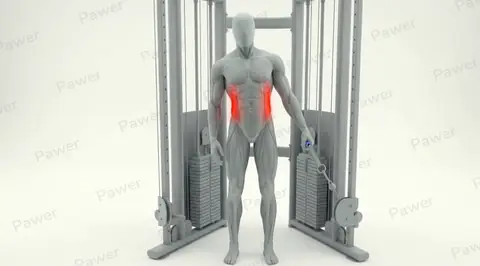
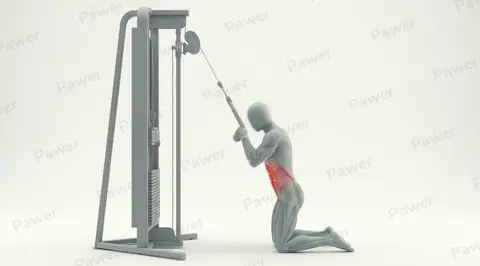
The wood chopper is the opposite instruction: rotate deliberately, under load, through a full diagonal. High-to-low and low-to-high versions train that pattern in both directions. The kneeling cable crunch fills in the flexion work, and unlike a bodyweight crunch you can keep adding weight to it for years.
Beginner4
Intermediate1
Other equipment for Core
Frequently asked questions
What does the Pallof press train?
Anti-rotation, meaning the core's ability to keep your torso square when something tries to twist it. It is one of the few exercises that trains that directly, and it transfers to almost every sport and to staying stable under a loaded barbell.
Is the kneeling cable crunch better than a sit-up?
For building the abdominal muscles, generally yes, because you can load it progressively. A sit-up is capped at your bodyweight; a cable crunch can go up by small increments indefinitely. Round the spine deliberately and pull with the abs, not the arms.
How do I stop feeling wood choppers in my arms?
Keep the arms fairly straight and think of them as a rope connecting the handle to your torso. The rotation should come from your ribcage turning over your hips. If the elbows are bending, you are pulling rather than rotating.