Resistance Band Exercises
 Anton YefanovUpdated
The best resistance band exercises are the band row, the band overhead press, the band Romanian deadlift and the band face pull: with one set of bands you can train your back, shoulders, glutes and hamstrings anywhere. Add the Pallof press for the core and a band-assisted pull-up, and a resistance band workout covers most of your body with gear that fits in a bag.
Bands work differently from weights. The more you stretch a band, the harder it pulls, so resistance is light at the start of a rep and heaviest at the end. That suits rows, presses, face pulls and hip work, which are strongest at the finish, and it makes bands excellent for warm-ups, shoulder and hip accessory work, and training at home or while traveling. Their limit is that they cannot match the heavy loads legs need over time.
Use this page to find the best band exercises for each muscle, see how bands compare with weights, choose band types and resistance levels, and follow a sample workout. Every exercise links to a video with instructions.
Best Resistance Band Exercises
These eight resistance band exercises give you the most training for the least gear. Between them they cover pulling, pressing, hinging, the glutes and the core.
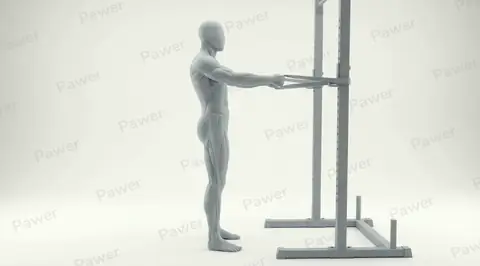
No. 1Best Overall
Band Row
The band row trains the lats, mid-back and biceps, and its rising tension peaks right where you squeeze your shoulder blades together. It works with an anchor at chest height or with the band wrapped around your feet while seated. Hold the finish for a second before you let the band pull you back.
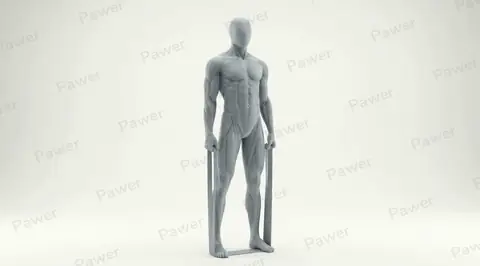
No. 2Best for Posterior Chain
Band Romanian Deadlift
Standing on the band and hinging at the hips trains the hamstrings and glutes, with the band pulling hardest as you lock your hips out at the top. It teaches the hip hinge with no barbell to manage. Push your hips back with a flat back and finish by squeezing your glutes.
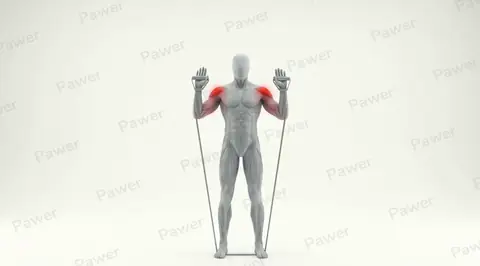
No. 3Best for Shoulders
Band Overhead Press
Pressing a band anchored under your feet trains the delts and triceps, with tension rising toward lockout where a light dumbbell would feel easy. Standing to press also makes your core work to keep your ribs down. Use a wider stance on the band to add tension.
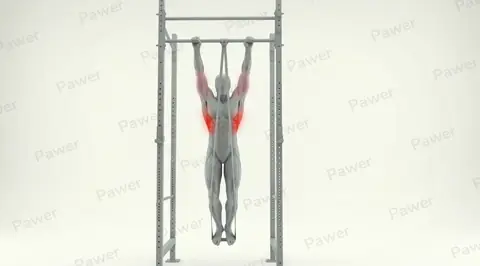
No. 4Best Pull-Up Builder
Band Assisted Pull-Up
A looped band under your knee or foot takes off part of your bodyweight at the bottom, where a pull-up is hardest, so you can train the full range with real reps. Move to a thinner band as you get stronger. It is the most practical home route to an unassisted pull-up.
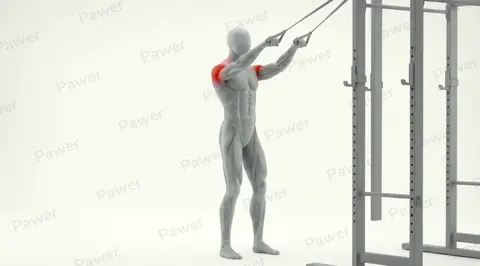
No. 5Best for Rear Delts
Band High Face Pull
Pulling a high-anchored band toward your face trains the rear delts and the upper back muscles that set the shoulder blades. It balances the pressing in most programs and makes a good warm-up before upper-body work. Pull the hands apart as they come toward your ears.
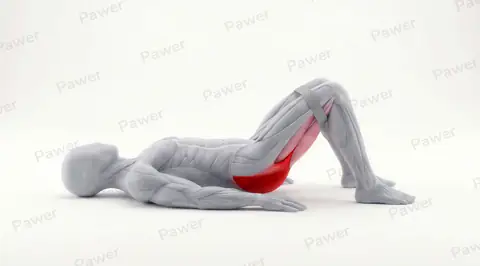
No. 6Best for Glutes
Band Glute Bridge
A loop band above the knees turns an ordinary glute bridge into hip extension plus abduction, so the glutes work to drive the hips up and to keep the knees apart. It is simple, joint friendly and easy to do at home. Push your knees out against the band for the whole set.
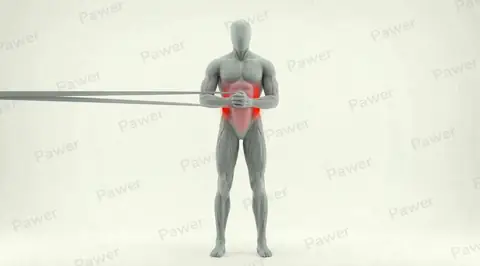
No. 7Best Core Exercise
Pallof Press
The Pallof press trains the core to resist rotation: you press the band out from your chest while it tries to turn you toward the anchor. Step farther from the anchor to make it harder. It builds the trunk stiffness that carries over to lifting, running and sport.
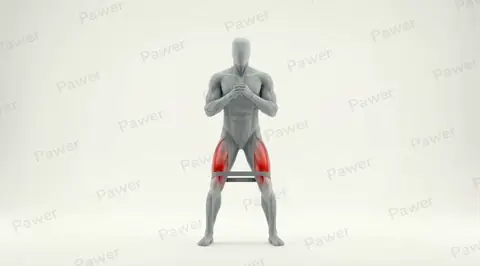
No. 8Best for Beginners
Band Squat
A bodyweight squat with a loop band above the knees teaches you to keep the knees tracking out over the toes, because the band pulls them in if you relax. It is an ideal first leg exercise and a useful warm-up before heavier squats. Once it gets easy, move on to split squats for more load per leg.
Best resistance band exercises for each muscle group
Bands are best for the back, shoulders, rotator cuff, glutes and core, where the rising tension matches how those movements get stronger toward the finish. They are decent for the biceps, hamstrings and traps. For the quads they mostly add glute and knee-control work rather than real load, so pair them with single-leg exercises such as split squats.
Chest and triceps are the gap in this band collection. Push-ups, diamond push-ups and dips cover pressing at home without any equipment, and pair well with banded pulling.
| Muscle | Best exercises | Why |
|---|---|---|
| Back | Band Row, Band Seated Pulldown, Band Pullover | Horizontal and vertical pulls with peak tension at the squeeze, plus a straight-arm lat move |
| Shoulders | Band Overhead Press, Band Lateral Raise, Band Single Arm Lateral Raise | Pressing and raising with tension that builds toward the top of the rep |
| Rear delts and rotator cuff | Band High Face Pull, Band External Rotation | Light, controllable resistance for the small muscles that position the shoulder |
| Glutes | Band Glute Bridge, Band Hip Abduction | Hip extension and abduction, the two main jobs of the glutes |
| Hamstrings | Band Romanian Deadlift, Band Leg Curl | A hip hinge plus knee flexion covers both functions of the hamstrings |
| Quads | Band Squat, Bulgarian Split Squat | The band trains knee tracking; split squats supply the load |
| Biceps | Band Curl | Tension rises as you curl, so the top of the rep is hardest |
| Traps | Band Shrug | Direct upper trap work standing on the band |
| Core | Pallof Press, Band Wood Chopper | Anti-rotation strength and diagonal rotation, adjusted by your distance from the anchor |
| Chest and triceps | Push Up, Diamond Push Ups | No band press in this collection yet, so bodyweight pressing fills the gap |
Resistance bands vs dumbbells, cables and bodyweight
Bands are the cheapest, lightest and most portable way to add resistance, and their rising tension is easy on the joints at the start of a rep, where you are weakest. Their drawbacks are that resistance is hard to measure precisely, the lightest part of the rep is the stretched position, and even strong bands cannot match a loaded barbell or a heavy leg press.
Choose bands when you train at home or travel, when you want warm-up and shoulder or hip accessory work, or when you need assistance for pull-ups. If your main goal is maximal strength or the most leg growth possible, use bands as a supplement to free weights or machines rather than a replacement.
| Equipment | Strength potential | Muscle building | Beginner friendly | Home friendly | Cost |
|---|---|---|---|---|---|
| Resistance bands | Low to moderate | Moderate, good for upper body and glutes | High | Excellent, and they travel | Low |
| Bodyweight | High for upper body, limited for legs | Good | High | Excellent | Free |
| Dumbbells | Moderate to high | High | High | Good with an adjustable pair | Moderate |
| Cables | Moderate | High | High | Poor | Gym membership |
| Machines | Moderate to high | High | Very high | Poor | Gym membership |
| Barbell | Highest | High | Moderate, needs coaching | Needs a rack and space | High |
All 19 Resistance Band Exercises
All 19 resistance band exercises in the library, grouped by difficulty. Each one has a video, step-by-step form and the muscles it works.
Beginner Resistance Band Exercises18
- Band Assisted Pull-UpResistance band
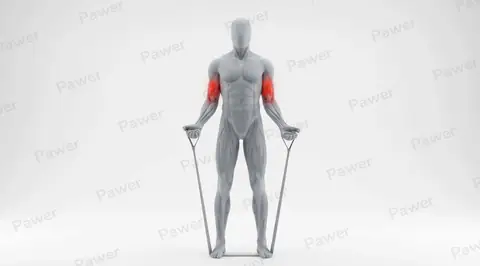 Band CurlResistance band
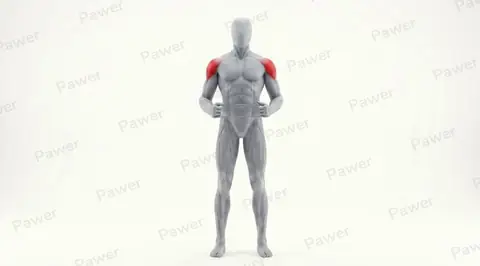 Band External RotationResistance band
- Band Glute BridgeResistance band
- Band High Face PullResistance band
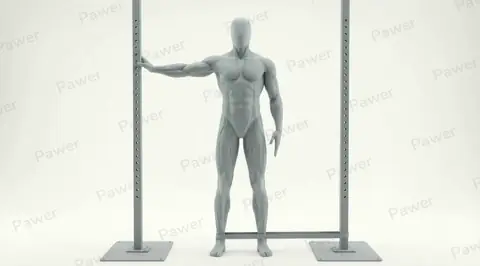 Band Hip AbductionResistance band
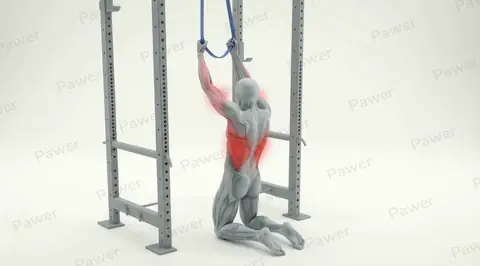 Band Kneeling PulldownResistance band
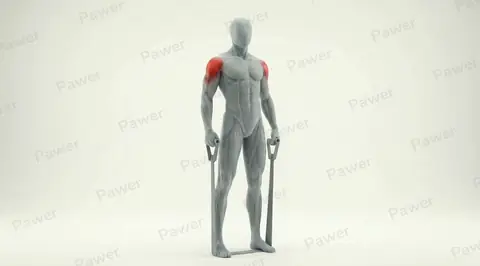 Band Lateral RaiseResistance band
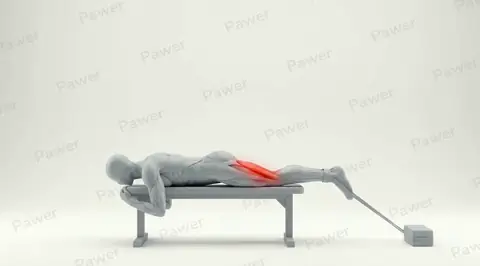 Band Leg CurlResistance band
- Band Overhead PressResistance band
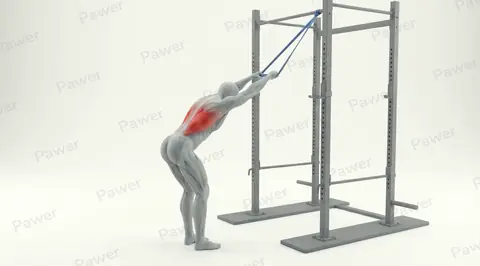 Band PulloverResistance band
- Band Romanian DeadliftResistance band
- Band RowResistance band
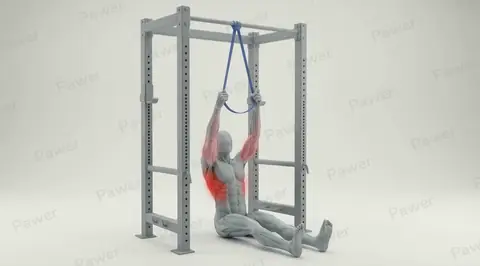 Band Seated PulldownResistance band
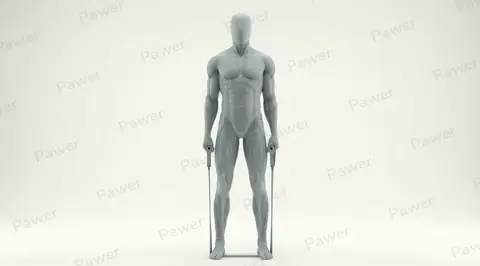 Band ShrugResistance band
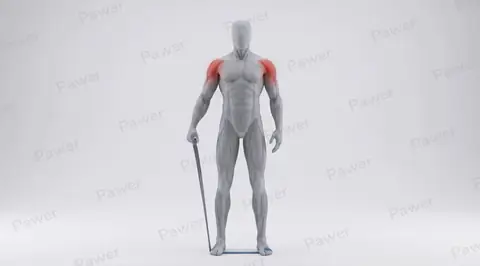 Band Single Arm Lateral RaiseResistance band
- Band SquatResistance band
- Pallof PressCable · Resistance band
Advanced Resistance Band Exercises1
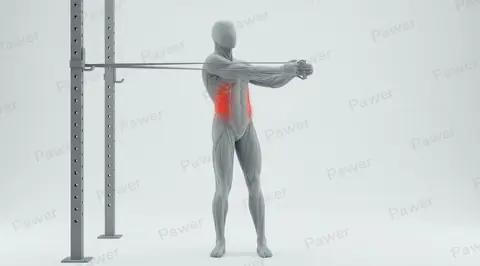
Choosing resistance bands: types, resistance levels and anchoring
Most people need two kinds of band: a few small loop bands for glute and hip work, and a set of long loop or tube bands for rows, presses, pulldowns and hinges. A door anchor turns any door into a cable station for face pulls, pulldowns and Pallof presses; close the door so it opens away from you, and anchor on the hinge side. Outdoors, a solid post or rack works just as well.
Band colors and ratings are not standardized between manufacturers, and a listed resistance only applies at one particular stretch. Buy a set of three to five bands that go from light to heavy, and choose by feel: for each exercise, use the band that makes your target reps hard with good form. You can fine-tune any band by stepping farther from the anchor, widening your stance on it, or combining two bands. Check bands regularly for nicks and tears and replace any that are damaged.
| Band type | What it is | Best for | Example exercises |
|---|---|---|---|
| Mini loop band | A short flat loop worn above the knees or around the ankles | Glute and hip work, squat warm-ups | Band Glute Bridge, Band Hip Abduction, Band Squat |
| Long loop band | A large, thick loop, sold in a range of thicknesses | Pull-up assistance, rows, presses and hinges | Band Assisted Pull-Up, Band Romanian Deadlift, Band Overhead Press |
| Tube band with handles | A tube with a handle at each end, often used with a door anchor | Single-arm work, curls, raises and anchored pulls | Band Curl, Band Single Arm Lateral Raise, Band High Face Pull |
Resistance band workout sets and reps: how to program band training
Bands work best in moderate to high rep ranges, roughly 10 to 25 reps, taken close to failure. Because the band pulls hardest at the end of the rep, add a one-second pause there and lower slowly so the band never snaps you back. Aim for about 10 to 20 hard sets per muscle per week, spread over two or three sessions.
Progress in small steps. Add reps first, then add tension by stepping farther from the anchor or standing wider on the band, then move to the next band up and drop back to the bottom of your rep range. Keep notes on which band and which stance you used, since there is no number on a band to remind you.
| Goal | Sets | Reps | Rest | Frequency |
|---|---|---|---|---|
| Muscle building | 3 to 4 | 12 to 20, ending one to three reps from failure | 60 to 90 seconds | 2 to 3 sessions per muscle per week |
| Muscular endurance | 2 to 3 | 20 to 30 | 30 to 60 seconds | 2 to 4 sessions per week |
| Pull-up assistance | 3 to 5 | 3 to 8 with the lightest band that allows full range | 2 minutes | 2 to 3 sessions per week |
| Warm-up and activation | 1 to 2 | 10 to 20 with a light band | Minimal | Before every lifting session |
Sample resistance band workouts: full body, upper body and lower body
The full-body workout uses one long band and one loop band, and suits two or three sessions a week at home. The upper and lower workouts split the work for four sessions a week; the upper session needs an overhead anchor or pull-up bar. Add push-ups to the full-body and upper workouts to cover your chest and triceps.
| Workout | Exercise | Sets | Reps | Rest |
|---|---|---|---|---|
| Full body | Band Squat | 3 | 15 to 20 | 60 seconds |
| Full body | Band Row | 3 | 12 to 15 | 60 seconds |
| Full body | Band Romanian Deadlift | 3 | 12 to 15 | 60 seconds |
| Full body | Band Overhead Press | 3 | 10 to 15 | 60 seconds |
| Full body | Band Glute Bridge | 3 | 15 to 20 | 45 seconds |
| Full body | Pallof Press | 2 | 10 per side | 45 seconds |
| Upper body | Band Assisted Pull-Up | 4 | 5 to 8 | 2 minutes |
| Upper body | Band Row | 3 | 12 to 15 | 60 seconds |
| Upper body | Band Lateral Raise | 3 | 15 to 20 | 45 seconds |
| Upper body | Band Pullover | 2 | 12 to 15 | 60 seconds |
| Upper body | Band High Face Pull | 3 | 15 to 20 | 45 seconds |
| Upper body | Band Curl | 3 | 12 to 20 | 45 seconds |
| Lower body | Band Romanian Deadlift | 4 | 12 to 15 | 60 seconds |
| Lower body | Band Squat | 3 | 15 to 20 | 60 seconds |
| Lower body | Band Leg Curl | 3 | 12 to 15 | 60 seconds |
| Lower body | Band Glute Bridge | 3 | 15 to 20 | 45 seconds |
| Lower body | Band Hip Abduction | 2 | 15 to 20 per leg | 30 seconds |
| Lower body | Pallof Press | 3 | 10 per side | 45 seconds |
Common resistance band mistakes
Bands are simple, but their changing tension catches people out. These mistakes cost the most results.
- Starting with slack in the band. If the band is loose at the start of each rep, part of every rep is wasted. Set up so there is light tension even in the starting position.
- Letting the band snap back. The band returns faster than any weight would, and riding it back skips the lowering phase that builds muscle. Control the return over two or three seconds.
- Staying on the same band forever. A band that once felt hard becomes easy within weeks. When you can beat the top of your rep range, step farther away, widen your stance or move to a heavier band.
- Pulling at the wrong angle to the anchor. A face pull from a low anchor or a row from a high one shifts the work to other muscles. Set the anchor in line with the movement, just as you would a cable pulley.
- Using worn bands or unsafe anchors. A band with a nick or a frayed edge can snap, and furniture can slide. Inspect bands before use, replace damaged ones and anchor only to something that cannot move.
A resistance band warm-up for lifting days
Bands shine as a warm-up because they load the small stabilizing muscles of the shoulders and hips lightly without tiring you before the main work. Run this short routine once through before an upper or lower session, using a light band and controlled reps. It takes about five minutes and raises your body temperature while rehearsing the positions you are about to load.
| Exercise | Reps | Why |
|---|---|---|
| Band External Rotation | 12 to 15 per arm | Warms up the rotator cuff before pressing and pulling |
| Band High Face Pull | 15 | Gets the rear delts and upper back working to set the shoulder blades |
| Band Hip Abduction | 12 to 15 per leg | Wakes up the side glutes that keep the knees tracking in squats and lunges |
| Band Glute Bridge | 12 to 15 | Rehearses full hip extension before hinges and squats |
| Band Squat | 10 to 12 | Grooves the squat pattern with the knees pushed out against the band |
Frequently asked questions
Can you build muscle with resistance bands?
Yes, especially in the upper body and glutes. Muscle grows from sets taken close to failure, and a band set of 15 to 20 hard reps provides that. The difficulty is progression, since the jumps between bands are uneven and the strongest bands still cannot load the legs as heavily as weights. Track your band, stance and reps so you know you are progressing.
Are resistance bands as good as weights?
For general fitness, home training and many upper-body exercises, they come close. For maximal strength and leg size, weights are better, because they allow far heavier and more precisely measured loads. Bands also change tension across each rep, which some exercises suit and others do not. Many lifters use both, with bands handling warm-ups and accessory work.
What resistance band should a beginner buy?
A set rather than a single band. Look for three to five long loop or tube bands covering light to heavy, plus a pack of mini loop bands for the hips. That range lets you match each exercise to the right tension, since your back can handle far more than your shoulders. A door anchor is a cheap, worthwhile extra.
Can I do resistance band exercises every day?
Light band work every day is fine, and a short daily routine of face pulls, external rotations and hip work suits most people. Hard training sessions, where sets go close to failure, still need recovery, so train the same muscles hard about every other day at most. Rotating upper and lower body lets you work out more often.
Which resistance band color is the strongest?
There is no universal answer, because colors are set by each manufacturer. A heavy band from one brand may be lighter than a medium from another. Check the resistance range printed on the band or packaging, and compare bands within the same brand. In practice, judge by feel: the right band is the one that makes your target reps hard.
Are resistance bands good for legs?
They are useful but limited. Bands are excellent for glute and hamstring work such as bridges, abductions, Romanian deadlifts and leg curls. For the quads, a band adds little real load to a squat, so legs soon outgrow banded squats alone. Combine band work with single-leg exercises like split squats and step-downs for the best results at home.
Resistance band exercises by muscle group
Pick the muscle you came to train, and see only the Resistance band work for it.