Tricep Exercises
 Anton YefanovUpdated
The best tricep exercises are the close-grip bench press, the overhead cable rope extension, the rope pushdown and the dumbbell skullcrusher: one heavy press, one movement with your arm overhead, and isolation work you can push close to failure. Rotate through those and you train all three heads of the triceps through their full range.
The triceps sit on the back of your upper arm and make up most of its muscle, so they matter more for arm size than the biceps do. Their main job is straightening your elbow, which is why they work hard in every press. The long head also crosses the shoulder, and it only reaches a full stretch when your arm is overhead. That single detail explains why a good triceps workout includes more than pushdowns.
Below you will find ranked picks, an anatomy guide, a comparison of the main tricep exercises, sets and reps by goal, and sample workouts for the cable stack, dumbbells and home. Every exercise links to a page with a video and instructions.
Best Tricep Exercises
These are the triceps exercises that earn a permanent place in a program. Between them they cover heavy loading, the overhead stretch, isolation and training with no equipment at all.
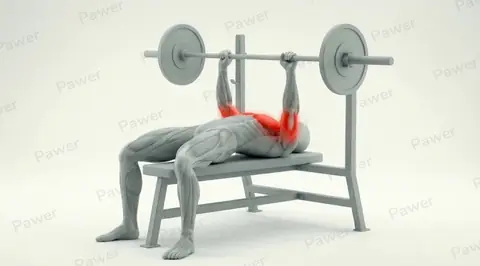
No. 1Best for Strength and Size
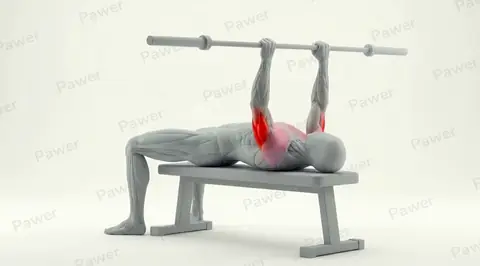
Barbell Close Grip Bench Press
Moving your hands to about shoulder width turns the bench press into the heaviest triceps exercise you can do, with the chest and front delts helping. Heavy loading in the 5 to 10 rep range builds the size and lockout strength that carries over to every other press. Keep your elbows tucked and touch the bar to your lower chest.
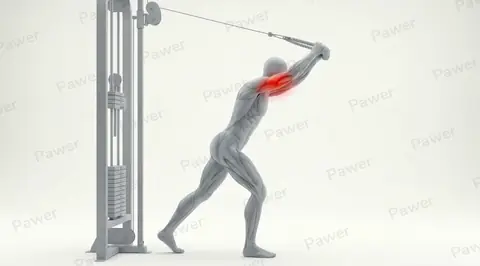
No. 2Best for the Long Head
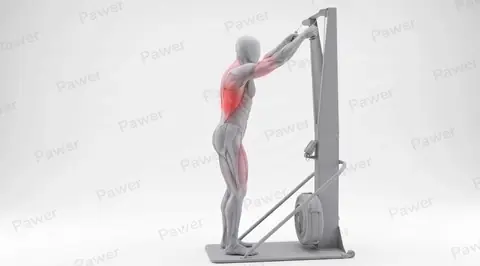
Cable Rope Overhead Tricep Extension
With your arms overhead, the long head starts every rep fully stretched, a position pushdowns never reach. The cable keeps tension steady from bottom to top, and it is easier on the elbows than a heavy dumbbell overhead. Face away from the stack, stagger your stance and let the rope travel well behind your head.
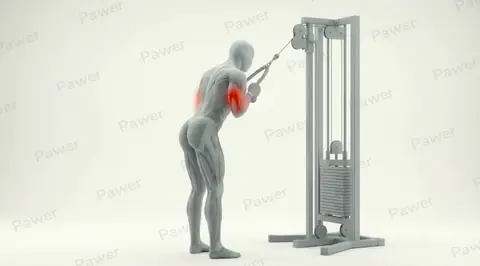
No. 3Best Isolation Exercise
Cable Rope Pushdown
The rope pushdown is the simplest way to take your triceps close to failure safely, set after set. Spreading the rope at the bottom lets you finish every rep with a full lockout. It works well for higher reps at the end of a push or arm workout. If you want to go heavier, switch to the straight bar.
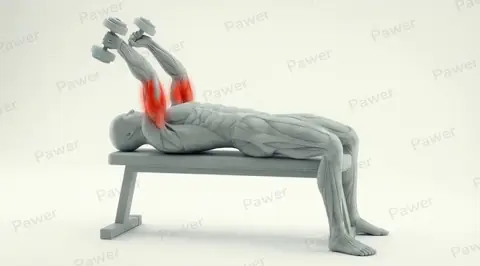
No. 4Best Dumbbell Exercise
Dumbbell Skullcrusher
Lying on a bench and lowering the dumbbells beside your head loads the triceps through a long range with only a bench and a pair of dumbbells. Letting your upper arms drift slightly back toward your head increases the stretch on the long head. It is the core of any dumbbell tricep workout.
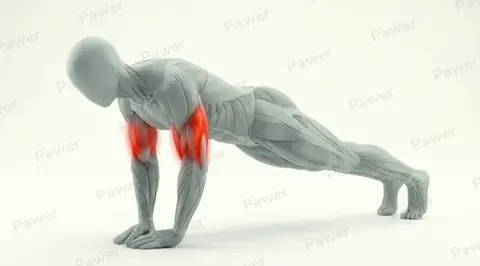
No. 5Best Without Equipment
Diamond Push Ups
Bringing your hands together under your chest shifts a push-up's work toward the triceps, so you can train them anywhere. Elevate your feet to make it harder, or drop to your knees to build up to full reps. Keep your elbows close to your sides rather than letting them flare.
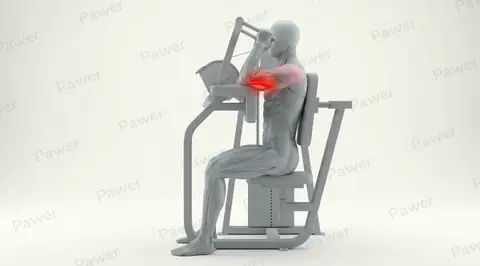
No. 6Best for Beginners
Machine Tricep Extension
The pad supports your upper arms and the machine fixes the path, so the only thing left to do is straighten your elbows. That makes it easy to learn and safe to push hard from the first session. It also works well as a burnout after heavier pressing.
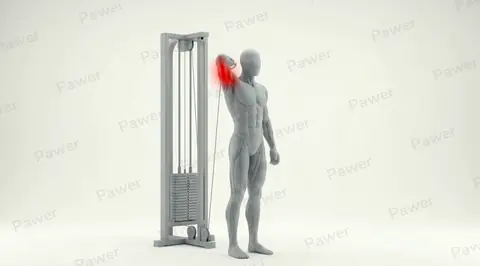
No. 7Best for Fixing Imbalances
Single-Arm Overhead Cable Extension
Training one arm at a time stops your stronger side from carrying the weaker one, and the overhead position still stretches the long head. Start each set with your weaker arm and match its reps with the other. It suits lifters who notice one triceps lagging or one elbow locking out first on presses.
Triceps anatomy: long, lateral and medial heads
All three heads join into one tendon at the elbow, so every triceps exercise trains all three. The difference is in emphasis. The long head starts on the shoulder blade, so arm position changes how stretched it is: it is long and stretched with your arm overhead, and short and slack with your arm pulled back. The lateral and medial heads start on the upper arm bone and do not care where your arm is, only how hard the elbow is working.
In practice that means one overhead exercise for the long head, plus pressing and pushdowns for the lateral and medial heads, covers the whole muscle.
| Part | What it does | Best exercises |
|---|---|---|
| Long head | Straightens the elbow and helps pull the arm down and back at the shoulder; stretched most when the arm is overhead | Cable Rope Overhead Tricep Extension, Dumbbell Seated Overhead Tricep Extension, Dumbbell Decline Skullcrusher, Single-Arm Overhead Cable Extension |
| Lateral head | Straightens the elbow; the visible horseshoe on the outside of the arm, strongest in heavy pressing and pushdowns | Barbell Close Grip Bench Press, Cable Bar Pushdown, Cable Rope Pushdown, Diamond Push Ups |
| Medial head | Straightens the elbow in every rep, light or heavy, and sits mostly underneath the other two heads | Reverse-Grip Tricep Pushdown, Machine Cable V Bar Push Downs, Dumbbell Tricep Kickback, JM Press |
The best tricep exercises compared
The most useful way to sort triceps exercises is by where your arm is. Overhead extensions stretch the long head. Pushdowns keep your arms at your sides and are the easiest to push close to failure. Presses let you lift the most weight. Kickbacks and bench dips put your arm behind your body, which shortens the long head and makes them better finishers than main lifts.
A balanced plan takes one exercise from at least two of those positions. If you only have time for two, pair a close-grip press or skullcrusher with an overhead extension.
| Exercise | Equipment | Difficulty | Best for | Arm position |
|---|---|---|---|---|
| Barbell Close Grip Bench Press | Barbell and bench | Intermediate | Heavy loading and pressing strength | Pressing in front of you |
| JM Press | Barbell and bench | Advanced | Lockout strength for the bench press | Pressing in front of you |
| Dumbbell Skullcrusher | Dumbbells and bench | Beginner | Size with dumbbells | Over your face, angled back |
| Cable Rope Overhead Tricep Extension | Cable and rope | Beginner | Long head in the stretch | Overhead |
| Dumbbell Seated Overhead Tricep Extension | One dumbbell and bench | Intermediate | Long head without cables | Overhead |
| Cable Rope Pushdown | Cable and rope | Beginner | High reps and full lockout | At your sides |
| Cable Bar Pushdown | Cable and straight bar | Beginner | Heavier pushdowns | At your sides |
| Machine Tricep Extension | Tricep extension machine | Beginner | Learning the movement and safe sets to failure | Supported in front of you |
| Dumbbell Tricep Kickback | One dumbbell | Beginner | Light finisher | Behind your body |
| Diamond Push Ups | None | Beginner | Training at home | Pressing in front of you |
All 22 Tricep Exercises
All 22 tricep exercises in the library, grouped by difficulty. Each one has a video, step-by-step form and the muscles it works.
Beginner Tricep Exercises18
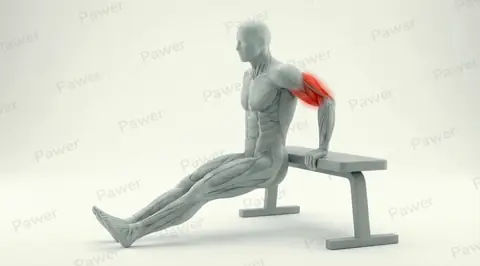 Bench DipsBodyweight
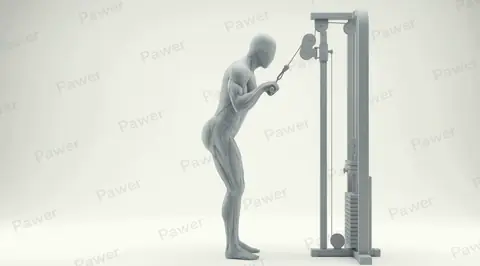 Cable Bar PushdownCable
- Cable Rope Overhead Tricep ExtensionCable
- Cable Rope PushdownCable
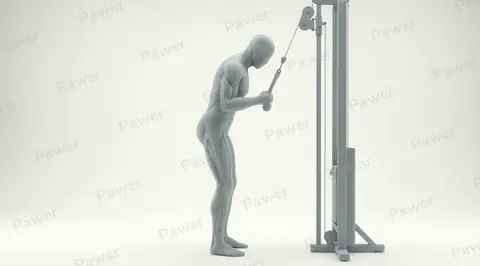 Cable Single Arm Rope PushdownCable
- Diamond Push UpsBodyweight
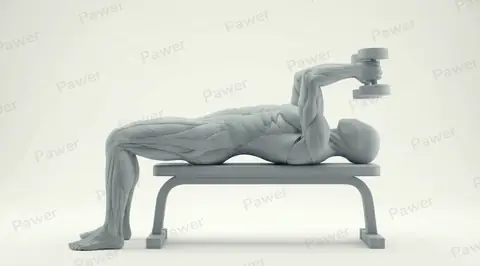 Dumbbell Decline SkullcrusherDumbbell
- Dumbbell SkullcrusherDumbbell
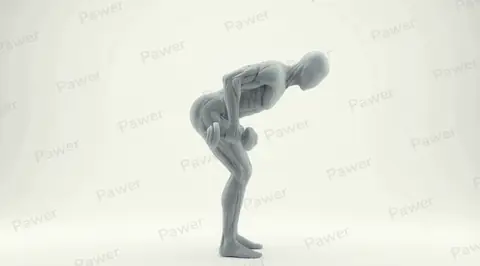 Dumbbell Tricep KickbackDumbbell
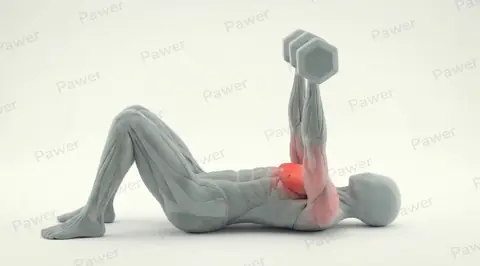 Floor PressDumbbell
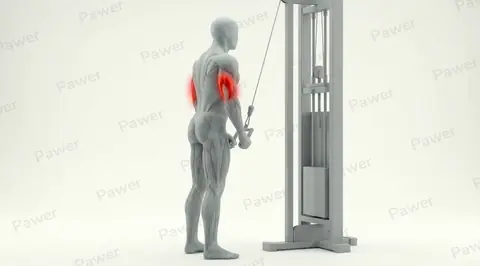 Machine Cable V Bar Push DownsCable
- Machine Tricep ExtensionMachine
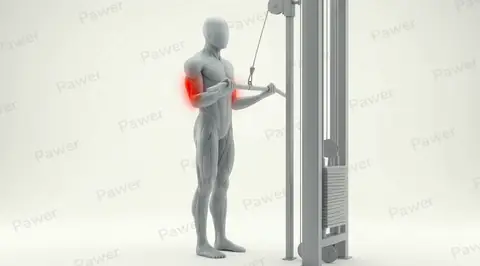 Reverse-Grip Tricep PushdownCable
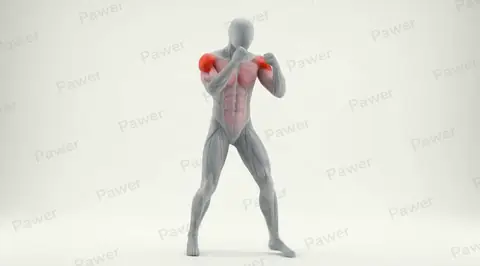 Shadow BoxingBodyweight
- Single-Arm Overhead Cable ExtensionCable
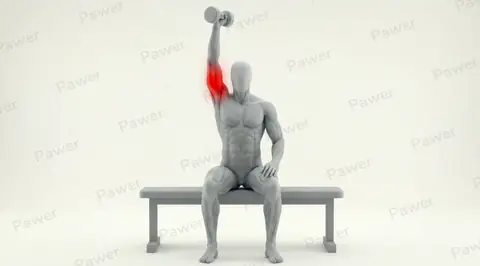 Single-Arm Tricep ExtensionDumbbell
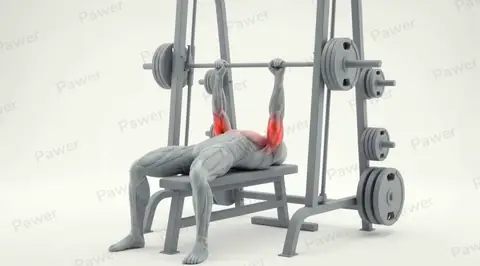 Smith Machine Close Grip Bench PressMachine
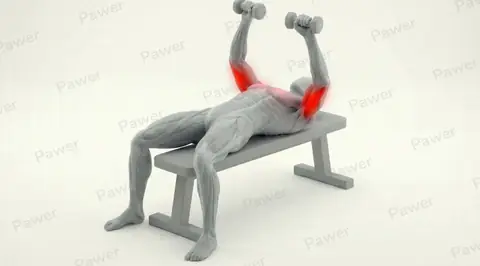 Tate PressDumbbell
Intermediate Tricep Exercises3
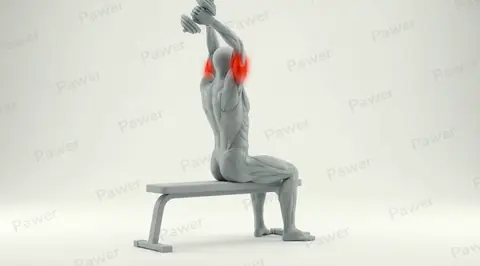
Advanced Tricep Exercises1
How to train your triceps: sets, reps and frequency
Your triceps already work in every bench press, overhead press, push-up and dip, so direct work sits on top of that pressing. For most lifters, 6 to 12 direct sets per week across two sessions is enough to grow. If you do a lot of heavy pressing, start at the low end; if your arms are a priority, work toward the top. Take isolation sets to within one or two reps of failure, since they are safe to push hard.
Triceps respond well to a wide rep range. Keep close-grip presses in the 5 to 10 range and let extensions and pushdowns run from 8 up to about 20. Progress with double progression: add reps until you reach the top of the range on every set, then increase the weight by the smallest step your equipment allows. On cable stacks with big jumps, add a rep or two at the new weight before expecting the full range.
| Goal | Sets | Reps | Rest | Frequency |
|---|---|---|---|---|
| Strength | 3 to 5 sets of close-grip pressing | 4 to 8 | 2 to 3 minutes | 1 to 2 times per week |
| Muscle growth | 6 to 12 direct sets per week | 8 to 15 | 60 to 120 seconds | 2 times per week |
| Arm specialization | 10 to 16 direct sets per week | 8 to 20 | 60 to 90 seconds | 2 to 3 times per week |
| Beginner | 4 to 6 direct sets per week | 10 to 15 | 60 to 90 seconds | 1 to 2 times per week |
Sample tricep workouts: cable, dumbbell and home
Each workout starts with the heaviest movement, adds an overhead extension and finishes with high-rep isolation. Do one at the end of a push or upper-body day, or pair it with biceps on an arm day.
| Workout | Exercise | Sets | Reps | Rest |
|---|---|---|---|---|
| Gym (barbell and cable) | Barbell Close Grip Bench Press | 3 | 6 to 8 | 2 to 3 minutes |
| Gym (barbell and cable) | Cable Rope Overhead Tricep Extension | 3 | 10 to 12 | 90 seconds |
| Gym (barbell and cable) | Cable Rope Pushdown | 3 | 12 to 15 | 60 seconds |
| Dumbbell only | Dumbbell Skullcrusher | 3 | 8 to 12 | 90 seconds |
| Dumbbell only | Dumbbell Seated Overhead Tricep Extension | 3 | 10 to 12 | 90 seconds |
| Dumbbell only | Dumbbell Tricep Kickback | 2 | 12 to 15 per arm | 60 seconds |
| Home (no equipment) | Diamond Push Ups | 3 | 1 to 2 short of failure | 90 seconds |
| Home (no equipment) | Bench Dips | 3 | 10 to 20 | 90 seconds |
| Home (no equipment) | Push Up | 2 | As many as possible | 60 seconds |
Common triceps training mistakes
Triceps exercises are simple to learn, which makes these errors easy to slip into without noticing.
- Letting the elbows drift on pushdowns. When your elbows swing forward and back, your lats and chest join in and the triceps do less. Pin your upper arms to your sides, lean slightly forward, and move only at the elbow.
- Skipping overhead work. Pushdowns and presses never fully stretch the long head, the largest of the three. Include at least one overhead extension each week.
- Going too heavy on skullcrushers and overhead extensions. Big weights in these positions put a lot of strain on the elbow and usually shorten the range. Use a load you can lower slowly to a full stretch, and save heavy work for close-grip pressing.
- Stopping short of lockout. Half reps at the top or bottom skip the part of the movement where the triceps are working hardest. Straighten your elbow fully on every rep and pause briefly when your arm is extended.
- Ignoring the pressing you already do. Heavy bench and overhead pressing are hard work for the triceps. Stack lots of direct work on top and your elbows and your recovery will both suffer. Count your presses when you plan triceps volume, and add direct sets gradually.
- Sinking too deep on bench dips. Dropping until your shoulders roll forward puts the joint in a vulnerable position for little extra triceps work. Lower until your upper arms are about parallel to the floor and keep your chest up.
Dumbbell vs cable tricep exercises
Both build the triceps equally well; the difference is where the exercise is hardest. A dumbbell is pulled straight down by gravity, so an overhead extension is heaviest in the stretch and almost free at lockout, while a kickback is the opposite. A cable pulls along the line of the cable, which keeps tension more even through the rep and makes it easy to train close to failure without a spotter.
Training at home with dumbbells, you can cover everything with a skullcrusher, an overhead extension and a kickback. In a gym, use cables for pushdowns and overhead work and save dumbbells for skullcrushers and variety. Pick from either column based on what you have.
| Goal | Dumbbell option | Cable option |
|---|---|---|
| Stretch the long head | Dumbbell Seated Overhead Tricep Extension, Dumbbell Decline Skullcrusher | Cable Rope Overhead Tricep Extension |
| Build overall size | Dumbbell Skullcrusher, Tate Press | Cable Bar Pushdown, Machine Cable V Bar Push Downs |
| Finish with a hard squeeze | Dumbbell Tricep Kickback | Cable Rope Pushdown, Reverse-Grip Tricep Pushdown |
| Train one arm at a time | Single-Arm Tricep Extension | Single-Arm Overhead Cable Extension, Cable Single Arm Rope Pushdown |
Frequently asked questions
What is the best tricep exercise?
If you can only pick one, an overhead extension (cable or dumbbell) is the strongest single choice for size, because it trains the long head in the stretched position that pushdowns and presses never reach. For strength, the close-grip bench press wins, since it lets you load the triceps far more heavily. Most people get the best results from doing both each week.
How often should you train triceps?
Twice a week works well for most people. The triceps recover quickly from isolation work, but they also take a beating from every press you do, so more frequent sessions only make sense if your pressing volume is moderate. If you train a push, pull and legs split, put a couple of triceps exercises at the end of each push day.
Do I need tricep exercises if I already bench press?
Not to start with. Beginners get plenty of triceps growth from pressing alone. Over time, direct work becomes more useful because the bench press does not fully stretch the long head, and your chest or shoulders often limit the set before your triceps are fully worked. Adding a few sets of overhead extensions and pushdowns fills that gap.
Are skull crushers bad for your elbows?
Not inherently, but they are the triceps exercise most likely to cause elbow discomfort when done too heavy or too fast. Use dumbbells or an EZ bar rather than a straight bar so your wrists can find a comfortable angle, lower slowly, and stay in the 8 to 15 rep range. If your elbows still complain, cable overhead extensions train the same head with a smoother load.
Rope or bar for tricep pushdowns?
Use both for different jobs. The straight bar or V-bar is more stable, so you can handle more weight, which suits lower rep sets. The rope lets your hands separate and rotate at the bottom, giving a fuller lockout and a stronger squeeze, which suits higher reps. If one bothers your wrists or elbows, the other usually feels fine.
Should I train triceps or biceps for bigger arms?
Train both, but do not neglect the triceps. They make up the larger share of your upper arm, so adding size there changes how big your arms look more than the same effort on biceps. Most lifters already curl often and treat triceps as an afterthought. Matching your triceps sets to your biceps sets, or slightly exceeding them, is a sensible default.
Triceps exercises by equipment
Narrow the list to what you actually have to train with.