Barbell Back Exercises
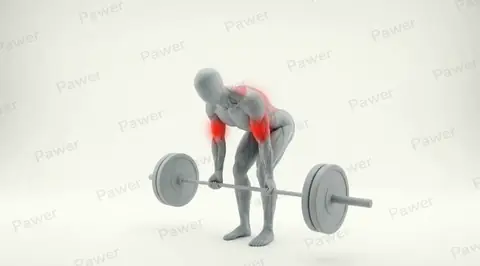
The barbell row is the single most productive back exercise for building thickness, and this page is mostly variations on how strictly you do it. A Pendlay row starts from a dead stop on the floor every rep, which removes momentum and makes it brutally honest. A Yates row uses a more upright torso and lets you handle more weight. A seal row, lying face-down on a bench, eliminates the lower back and legs entirely so nothing but the back can cheat.
Grip flips the emphasis: overhand rows pull the elbows wider and load the upper back and rear delts, underhand rows tuck the elbows and bring the lats and biceps in. The landmine T-bar row is the gentlest on the lower back of the bunch, and the barbell pullover is the odd one out, a lat exercise that trains the muscle through a completely different line of pull.
Beginner1

Intermediate8







Advanced1
Other equipment for Back
Frequently asked questions
Barbell row or pull-up for back thickness?
Rows. A horizontal pull loads the mid-back, rhomboids and traps in a way a vertical pull does not, and that is what reads as thickness. Pull-ups build width. A complete back programme has one of each.
How strict should my barbell row be?
Strict enough that the torso angle does not change during the set. If you find yourself standing up to finish a rep the weight is too heavy. Drop it, or switch to a Pendlay or seal row where the position is enforced for you.
Do barbell rows hurt your lower back?
They load it, which is not the same as hurting it, but a long set of heavy bent-over rows is fatiguing for the erectors. Chest-supported and seal rows give you the same back stimulus with the lower back taken out, which is why they exist.