Barbell Bent Over Row
Also known as: Bent Over Barbell Row, Barbell Row, and Bent Over Row
 Anton YefanovUpdated
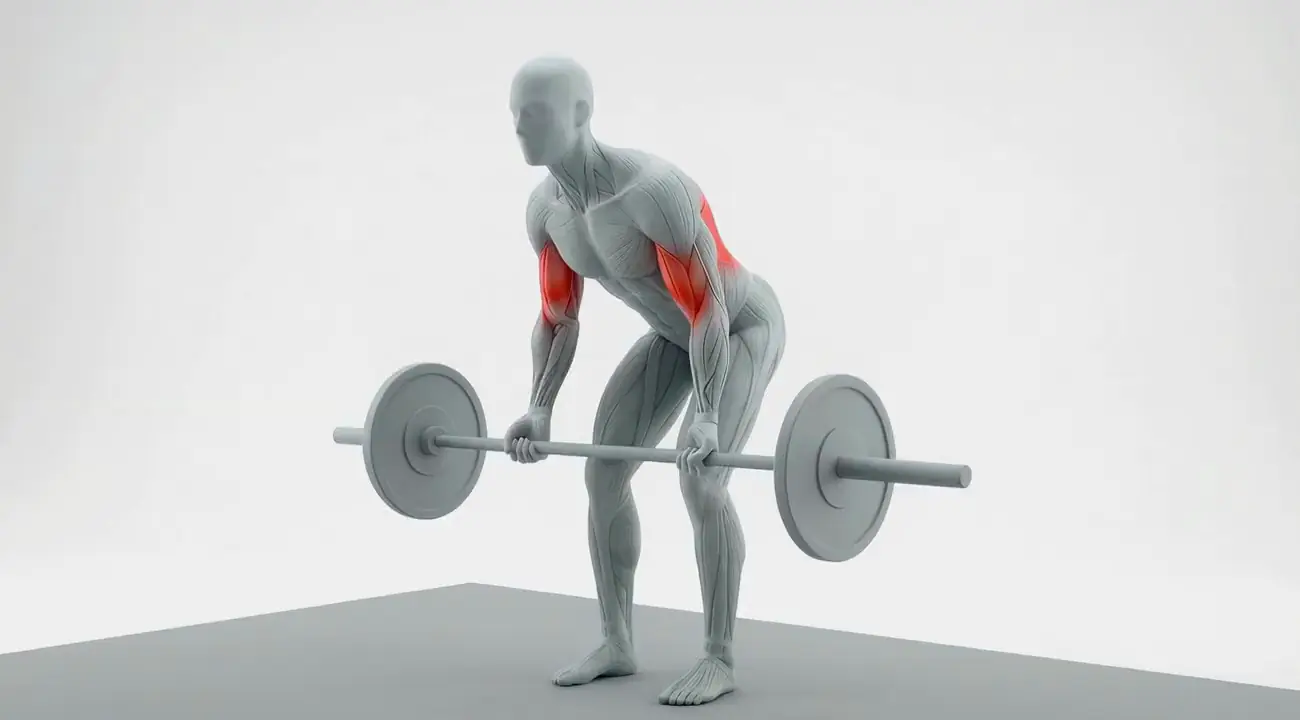
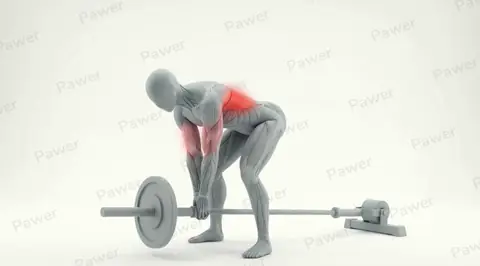
The barbell bent-over row is one of the most efficient back-builders in any program. By hinging at the hips and rowing a loaded barbell to the lower chest, it trains the lats, mid-back, and biceps under heavy load while also forcing the lower back and core to work isometrically to hold the position.
How to do the Barbell Bent Over Row
- Stand with feet shoulder-width apart and grip the barbell with hands just outside your knees, palms facing you.
- Hinge at your hips with a flat back until your torso is at about a 45-degree angle to the floor.
- Brace your core hard and let the bar hang directly below your shoulders at full arm extension.
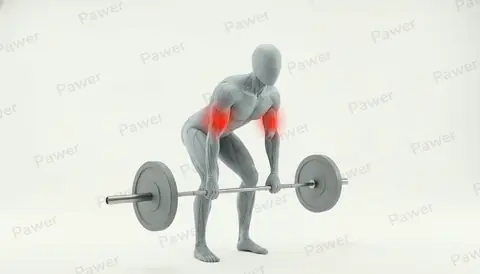
- Pull the bar up to your lower chest, keeping your elbows tucked at about 45 degrees from your torso.
- Squeeze your shoulder blades together at the top, fully contracting the lats and mid-back.
- Lower the bar back down with control over 2 to 3 seconds, keeping the back position locked the whole time.
Muscles worked
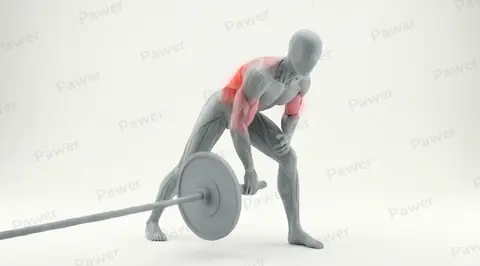
The barbell bent over row works the back, mainly the lats along with the rhomboids and traps of the mid back, while the biceps assist by bending the elbows. The lats extend the shoulders as you pull the bar toward the lower chest, and they work hardest in the top half, when the elbows drive behind the torso.
The squeeze at the top comes from the rhomboids and mid traps pulling the shoulder blades together. Grip and elbow path steer the emphasis. With palms facing you and elbows tucked around 45 degrees, the pull runs close to the body, which favors the lats and gives the biceps more work. A wider, flared elbow path moves it toward the upper back and rear delts. The 45 degree hinge also keeps the lower back and core working isometrically to hold the torso still under load.

Why train it
- Builds the lats, mid-back, and biceps under heavy compound load.
- Trains the lower back and core to hold position under tension.
- Balances out heavy bench pressing and protects shoulder health.
Common mistakes
- Standing too upright, turning the row into a partial deadlift instead of a back exercise.
- Rounding the lower back as you pull, which puts the spine at serious risk under load.
- Pulling with the biceps and bending the wrists, leaving the lats and mid-back understimulated.
- Using too much momentum and swinging the bar up. The back stops working when the body cheats.
Frequently asked questions
What equipment do I need for the Barbell Bent Over Row?
Only a barbell. Nothing beyond that is required to run the movement the way it is described above.
Is the Barbell Bent Over Row suitable for beginners?
With some training behind you. The Barbell Bent Over Row is rated intermediate, which means the setup matters as much as the effort. It is a reasonable first month goal rather than a first session one, and the alternatives below are the easier way in.
Can I do the Barbell Bent Over Row at home?
Yes, if you own a barbell. That is the whole requirement, and it is the reason this one travels well between a home setup and a gym floor.
How many sets and reps of the Barbell Bent Over Row should I do?
Three to five sets of 6 to 12 reps. Pulling responds well to a full stretch at the top, so pick a load you can control all the way out rather than one you have to heave.
What are good alternatives to the Barbell Bent Over Row?
Chin Ups, Kettlebell Gorilla Row, and Smith Machine Bent-Over Row train the same primary muscles as the Barbell Bent Over Row. Pick whichever one suits the equipment in front of you.
Work out your Barbell Bent Over Row weights
Estimate your max from a recent set, then find the weight for your next one.
- One Rep Max CalculatorTurn a recent set into an estimated max. Compare Epley, Brzycki and Lombardi, then read off your training percentages and every rep max from 2RM to 12RM.
- RPE CalculatorRate a set by effort, get an estimated max, and read off the weight for your next target. Includes a full RPE chart of percentages by reps and effort.
- Barbell Plate CalculatorSee which plates go on each side of the bar for any weight, using only what your gym stocks. Count a loaded bar, add collars, and switch bars.
- Warm-Up CalculatorGet every warm-up set for your working weight, with reps, rest and the plates per side. Ramps for work sets, heavy singles, meets and 5x5 programs.
Similar exercises
By muscle
Every exercise is mapped to the muscles it trains. Browse by what you want to build.
By equipment
A full gym, a pair of dumbbells, or nothing at all: browse by what you have.