Quad Exercises
 Anton YefanovUpdated
The best quad exercises are the barbell squat, the front squat, the Bulgarian split squat and the leg extension. Those four cover a heavy squat, an upright quad-biased squat, a single-leg movement and an isolation exercise, and nearly everything else in this library is a variation of one of them, adjusted for equipment, skill or joint comfort.
Your quads are four muscles on the front of the thigh. Together they straighten the knee, and one of them, the rectus femoris, also helps lift the thigh toward your torso. They do most of the work when you stand up from a chair, climb stairs, jump or sprint, which is why strong quads carry over to almost every sport.
If you just want a quad workout to follow, start with the ranked picks below. The sections after that explain the anatomy, compare the main exercises for your quads side by side, give sets and reps for each goal, and lay out sample sessions for the gym and for home. Every exercise links to its own page with a video and step-by-step instructions.
Best Quad Exercises
These eight exercises cover every way to train the quads, from heavy barbell work to bodyweight sets you can do in a living room. Most people need two or three of them, not all eight.
No. 1Best Overall
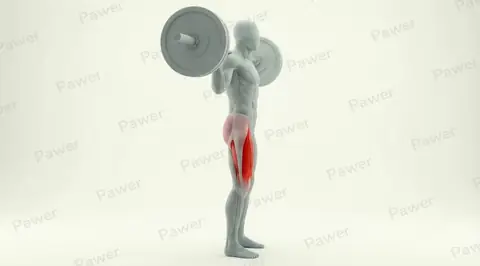
Barbell Squat
The back squat lets you load your quads heavier than any other free-weight exercise and trains them through a deep knee bend. It builds the glutes and trunk at the same time. Squat as deep as you can while holding your back position, and it can anchor a leg program for years.
No. 2Best for Quad Size
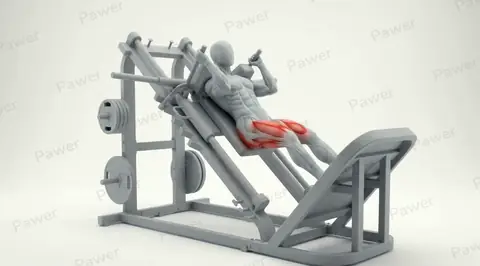
Machine Hack Squat
The angled sled supports your back and removes the balance demand, so you can push sets close to failure without losing position. Your knees travel further forward than in most free squats, which keeps the work on the quads. It is an ideal main lift for a hypertrophy block.
No. 3Best Quad-Biased Barbell Lift
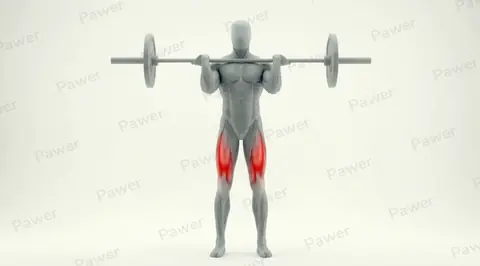
Front Squat
Racking the bar on the front of your shoulders forces an upright torso, so your knees travel forward and the quads take a bigger share of the work than in a back squat. It also demands a strong upper back and good wrist and ankle mobility. It suits lifters who already squat well and want more quad and less hip.
No. 4Best Single-Leg Exercise
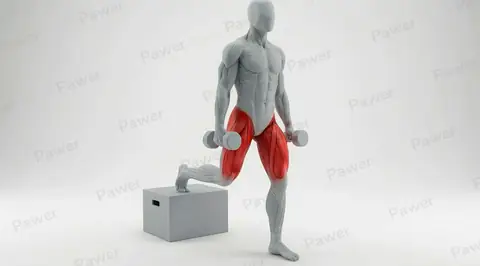
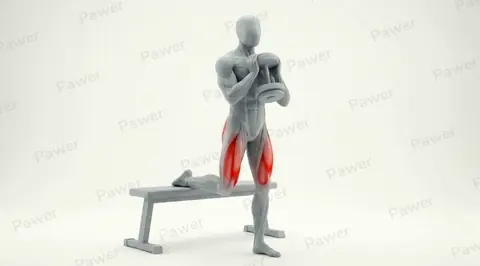
Dumbbell Bulgarian Split Squat
Elevating the rear foot puts almost all the load on the front leg and takes it through a long range. It exposes and evens out differences between legs, needs only a bench and two dumbbells, and is hard enough that modest weights go a long way. Use a slightly shorter stance to bias the quads.
No. 5Best Isolation
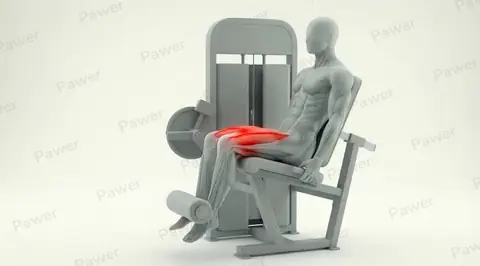
Machine Leg Extension
Squats train the rectus femoris relatively little, because it shortens at the hip while it lengthens at the knee. The leg extension has no hip movement, so it fills that gap. Use it after your main lift for 10 to 15 controlled reps with a brief squeeze at the top.
No. 6Best for Beginners
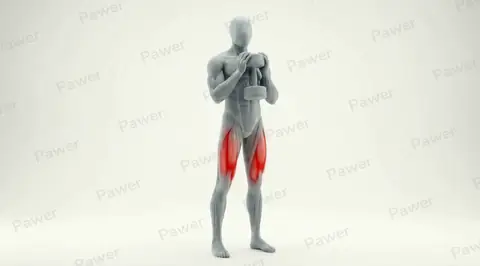
Dumbbell Goblet Squat
Holding one dumbbell at your chest counterbalances you, keeps your torso upright and makes good depth easy to find. It teaches the squat pattern that every other exercise here builds on, and it scales from a light dumbbell to a heavy one before you ever need a barbell.
No. 7Best at Home
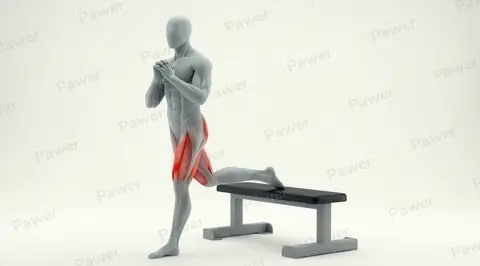
Bulgarian Split Squat
With nothing but a couch or chair behind you, this is the hardest quad exercise you can do without weights. Lower for three seconds and pause at the bottom, and a set of 12 to 15 per leg will challenge most people. Hold a loaded backpack once that stops being hard.
No. 8Best Low-Skill Heavy Lift
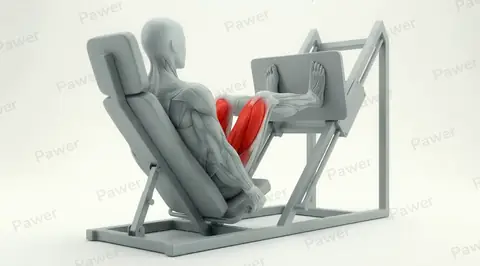
Machine Leg Press
The leg press lets you move heavy loads with your back supported and no bar on your spine. That makes it a good main lift if squats do not suit you, or a way to add volume after them. Place your feet lower on the platform to emphasize the quads; higher and wider shifts work toward the glutes.
Quad anatomy: the four heads of the quadriceps
The quadriceps has four heads that share one tendon, which runs over the kneecap and attaches to the shin. The three vasti (lateralis, medialis and intermedius) start on the thigh bone and cross only the knee, so their single job is to straighten it. The rectus femoris starts on the pelvis and crosses both the hip and the knee, so it also flexes the hip.
In practice this means two things. Any exercise with a deep knee bend under load trains all three vasti hard, so squats, leg presses and split squats build most of your quad size. The rectus femoris is the exception: in a squat it shortens at the hip as it lengthens at the knee, so it does less work. Exercises that bend the knee without much hip movement, such as the leg extension and the sissy squat, make up the difference.
You cannot isolate the vastus medialis, the teardrop above the inner knee. It works in every knee extension. Full range of motion is what develops it, not turning your toes in or out.
| Part | What it does | Best exercises |
|---|---|---|
| Vastus lateralis | Straightens the knee. The largest head, forming the outer sweep of the thigh | Barbell Squat, Machine Hack Squat, Machine Leg Press |
| Vastus medialis | Straightens the knee. Forms the teardrop above the inner knee | Front Squat, Dumbbell Bulgarian Split Squat, Pendulum Squat / V-Squat |
| Vastus intermedius | Straightens the knee. Sits underneath the rectus femoris | Belt Squat, Machine Hack Squat, Front-Foot-Elevated Split Squat |
| Rectus femoris | Straightens the knee and flexes the hip | Machine Leg Extension, Sissy Squat, Machine Plate Loaded Leg Extension |
The best quad exercises compared
Choose your main lift by equipment and comfort first. If you have a rack and squat well, the back squat or front squat should be the first exercise of your leg day. If a barbell bothers your back or you are training mainly for size, a hack squat, pendulum squat or leg press can load the quads very hard with far less balance and technique demand.
Then add one exercise from a different category: a single-leg movement if your main lift used both legs, and an isolation exercise if you want more rectus femoris work or a low-fatigue way to add sets. The goblet squat and wall sit are the starting points if you are new or have no weights.
| Exercise | Equipment | Difficulty | Best for | Quad emphasis |
|---|---|---|---|---|
| Barbell Squat | Barbell | Intermediate | Overall leg strength and size | High, shared with the glutes |
| Front Squat | Barbell | Intermediate | Quad-focused barbell strength | Very high |
| Machine Hack Squat | Machine | Beginner | Hypertrophy sets close to failure | Very high |
| Pendulum Squat / V-Squat | Machine | Beginner | Deep knee bend with back support | Very high |
| Machine Leg Press | Machine | Beginner | Heavy volume without loading the spine | High, depends on foot position |
| Dumbbell Bulgarian Split Squat | Dumbbell | Intermediate | Single-leg strength and balance | High with a shorter stance |
| Dumbbell Goblet Squat | Dumbbell | Beginner | Learning the squat | Moderate |
| Machine Leg Extension | Machine | Beginner | Isolation and rectus femoris work | Quads only |
| Sissy Squat | Bench | Intermediate | Knee-forward strength with little load | Very high |
| Wall Sit | Bodyweight | Beginner | Endurance with no equipment | Moderate, isometric |
All 92 Quad Exercises
All 92 quad exercises in the library, grouped by difficulty. Each one has a video, step-by-step form and the muscles it works.
Beginner Quad Exercises46
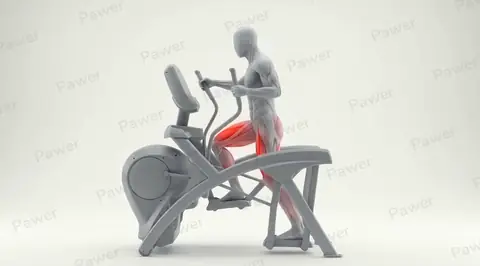 Arc TrainerMachine
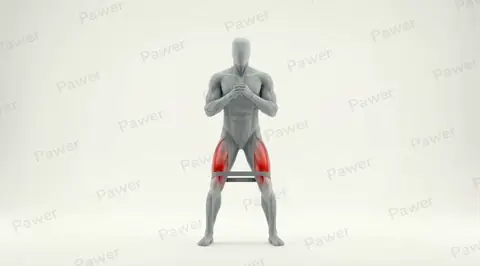 Band SquatResistance band
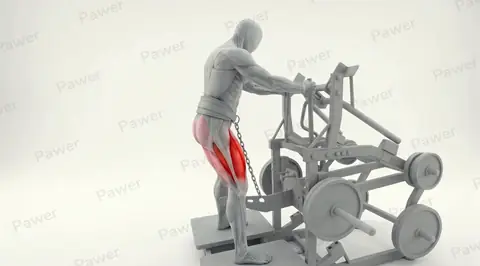 Belt SquatMachine
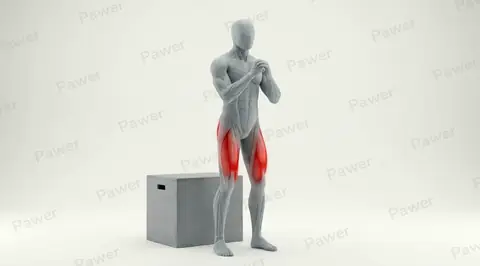 Bodyweight Box SquatBodyweight
 Bodyweight Reverse LungeBodyweight
 Bodyweight SquatBodyweight
 Box JumpBodyweight
- Bulgarian Split SquatBodyweight
 Cycling CooldownBodyweight
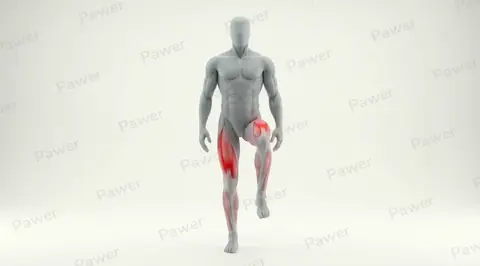 Cycling WarmupBodyweight
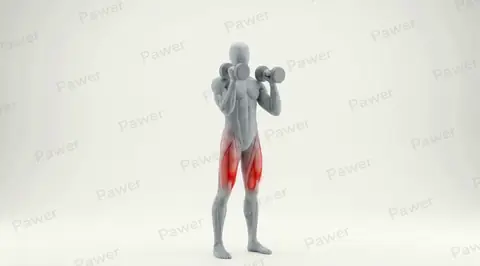 Dumbbell Front SquatDumbbell
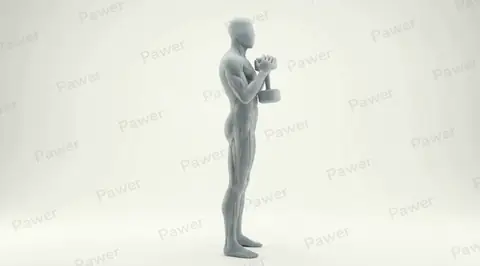 Dumbbell Goblet Forward LungeDumbbell
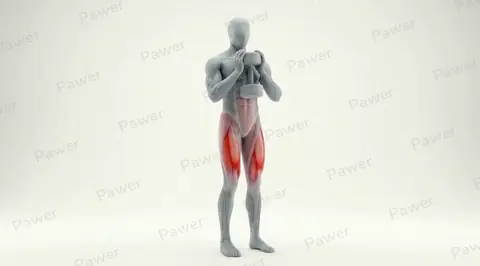 Dumbbell Goblet Reverse LungeDumbbell
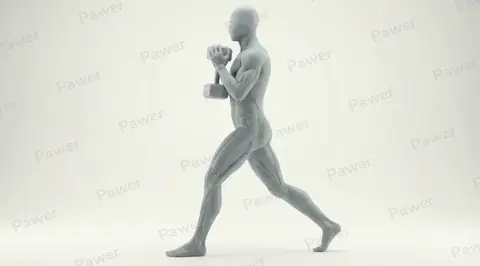 Dumbbell Goblet Split SquatDumbbell
- Dumbbell Goblet SquatDumbbell
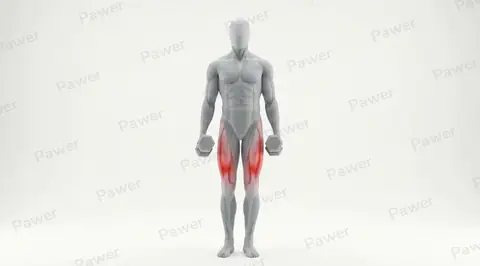 Dumbbell Lateral LungeDumbbell
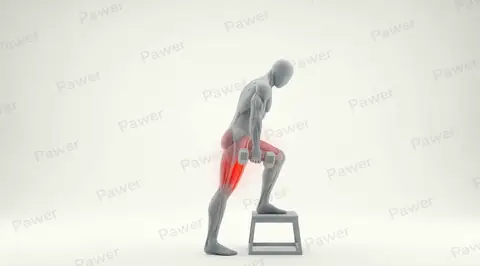 Dumbbell Step-Up (Low)Dumbbell
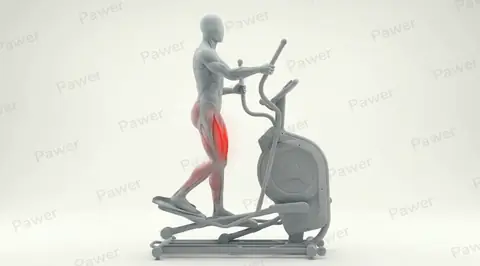 EllipticalMachine
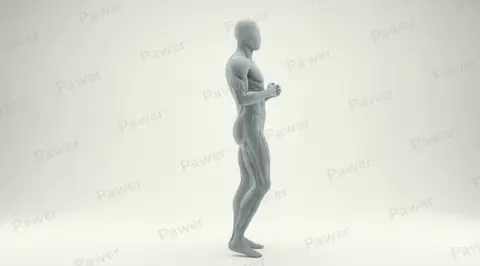 Forward LungeBodyweight
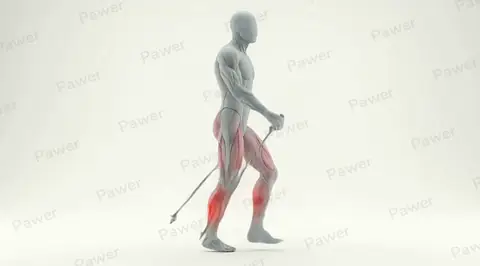 HikingBodyweight
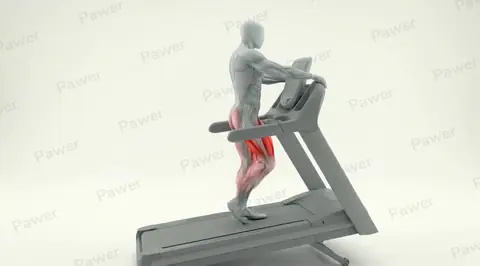 Incline Treadmill WalkMachine
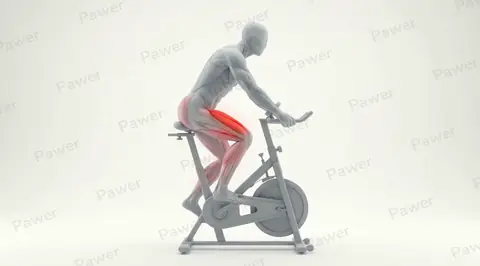 Indoor Cycling (Spin Bike)Machine
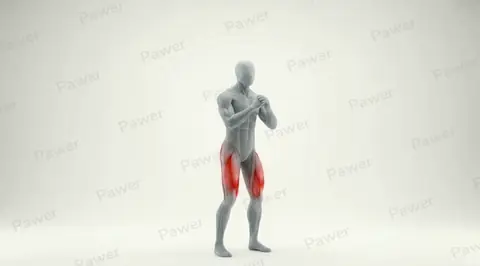 Jump SquatsBodyweight
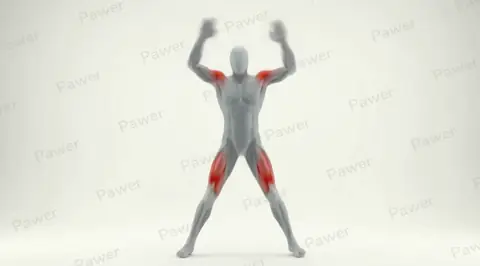 Jumping JackBodyweight
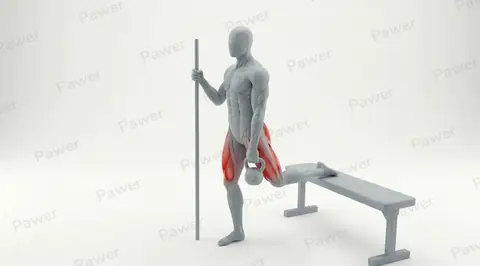 Kettlebell Assisted Bulgarian Split SquatKettlebell
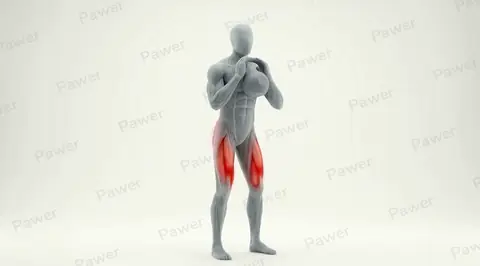 Kettlebell Goblet SquatKettlebell
- Machine Hack SquatMachine
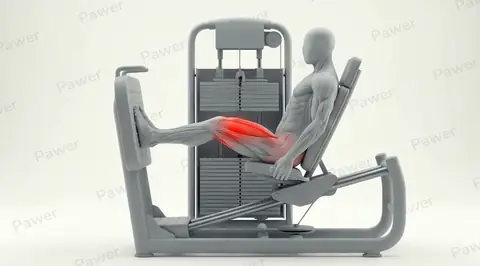 Machine Horizontal Leg PressMachine
- Machine Leg ExtensionMachine
- Machine Leg PressMachine
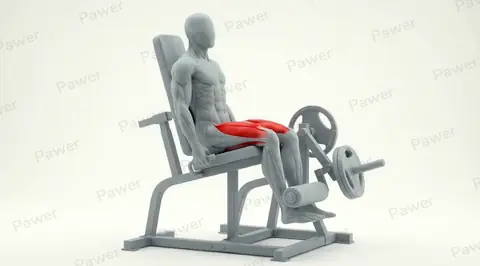 Machine Plate Loaded Leg ExtensionMachine
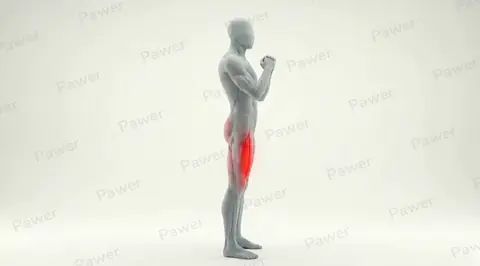 Pause SquatBodyweight
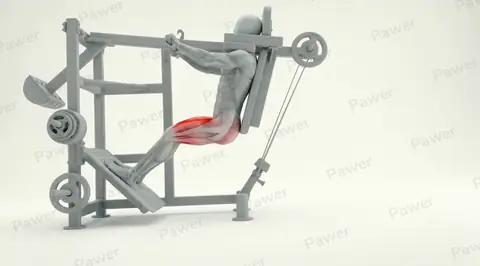 Pendulum Squat / V-SquatMachine
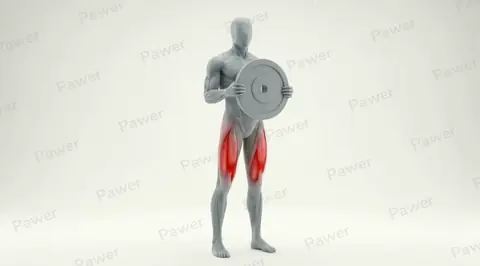 Plate Forward LungeWeight plate
 Running CooldownBodyweight
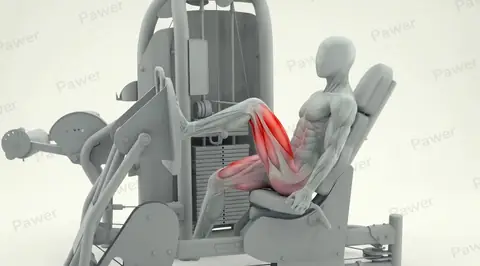 Single-Leg PressMachine
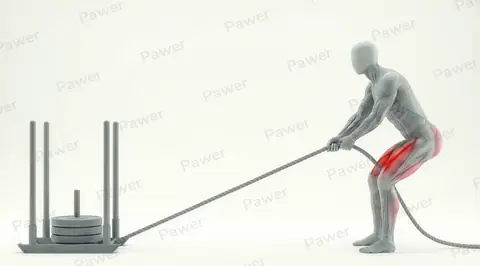 Sled PullSled
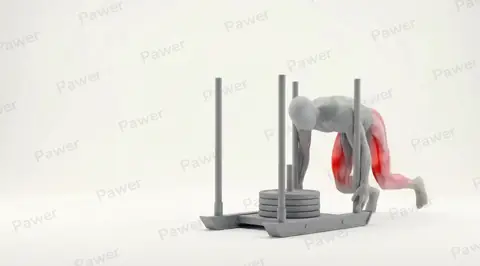 Sled Push/PullSled
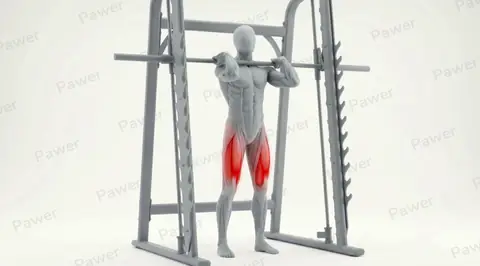 Smith Machine Front SquatMachine
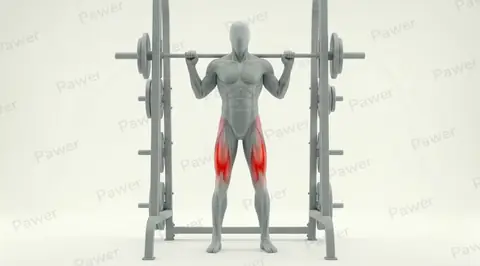 Smith Machine SquatMachine
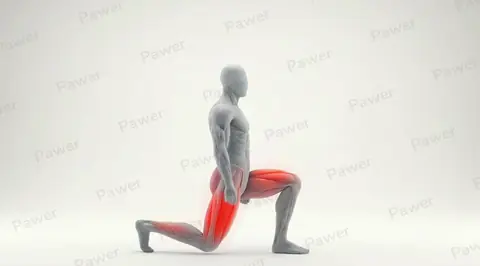 Split Squat Isometric HoldBodyweight
 Steady State RideBicycle
 Steady-State Rowing MachineMachine
 Trap Bar DeadliftBarbell
 Treadmill RunMachine
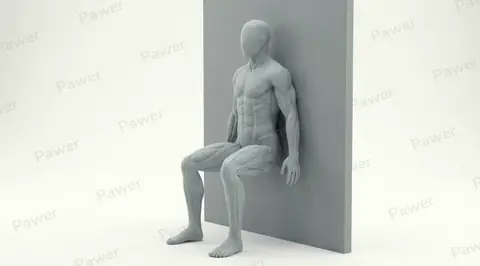 Wall SitBodyweight
Intermediate Quad Exercises40
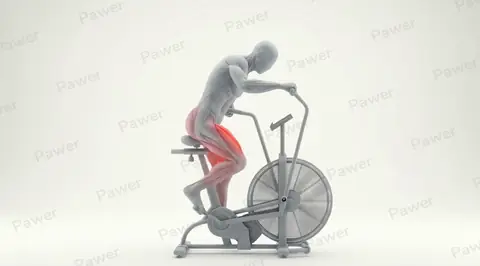 Assault BikeMachine
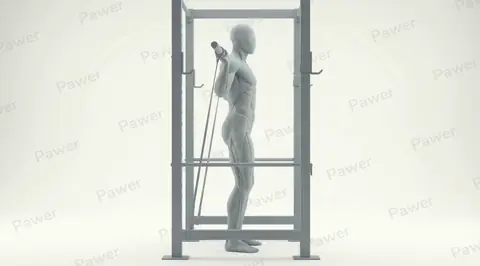 Barbell Banded Back SquatBarbell
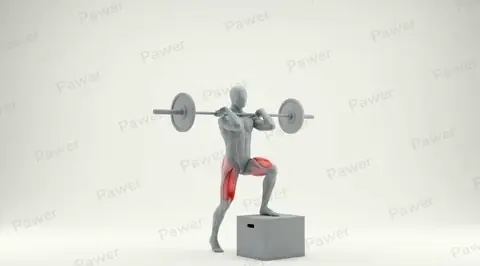 Barbell Front Rack Step Up Knee DriveBarbell
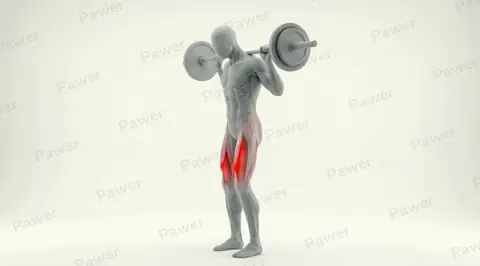 Barbell Reverse LungeBarbell
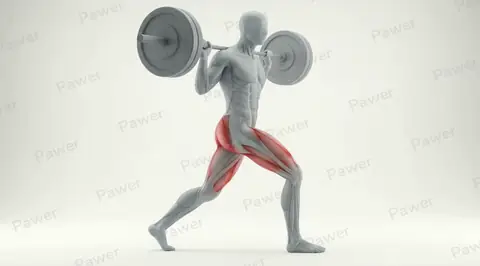 Barbell Split SquatBarbell
- Barbell SquatBarbell
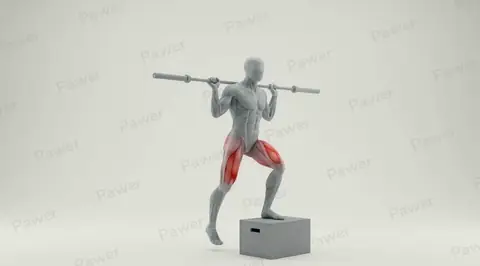 Barbell Step Up Knee DriveBarbell
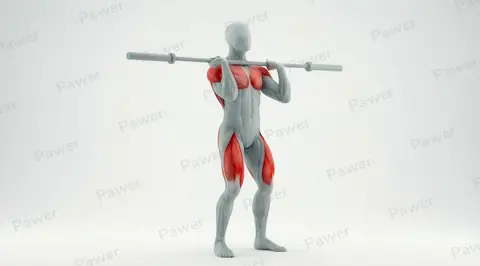 Barbell ThrusterBarbell
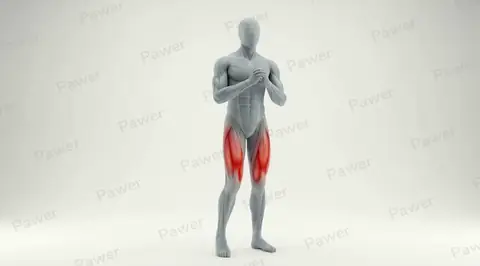 Bodyweight Alternating Lateral LungeBodyweight
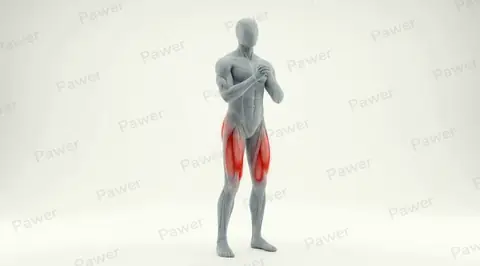 Bodyweight Alternating Reverse LungesBodyweight
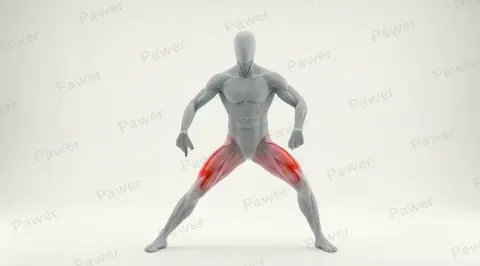 Cossack SquatBodyweight
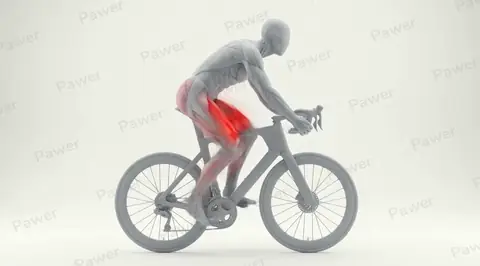 Cycling IntervalsBicycle
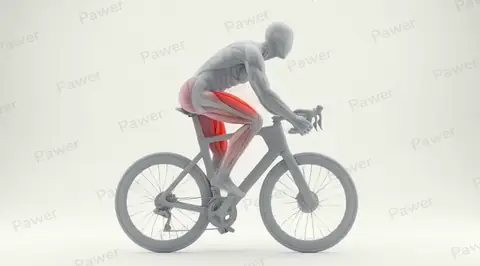 Cycling SprintBicycle
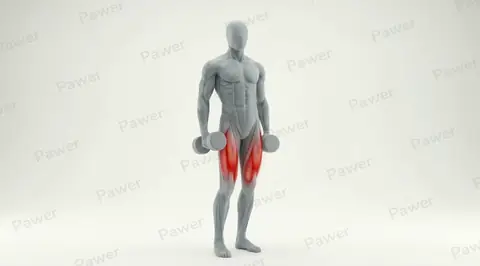 Dumbbell Alternating Forward LungeDumbbell
- Dumbbell Bulgarian Split SquatDumbbell
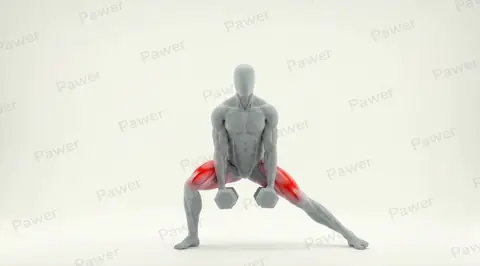 Dumbbell Cossack SquatDumbbell
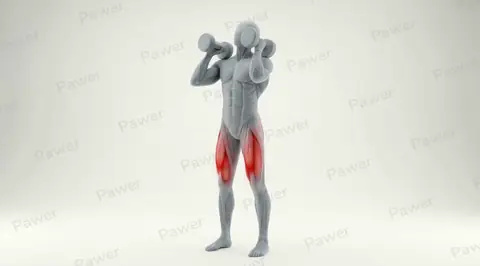 Dumbbell Front Squat (Tempo)Dumbbell
 Dumbbell Goblet Bulgarian Split SquatDumbbell
 Dumbbell ThrusterDumbbell
- Front SquatBarbell
 Front-Foot-Elevated Split SquatDumbbell
 Hang CleanBarbell
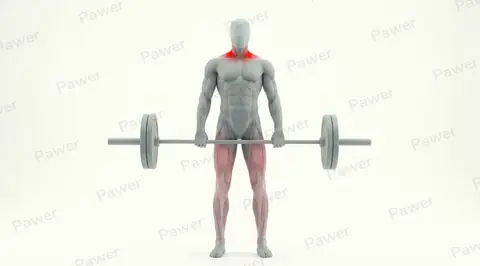 Hang Power CleanBarbell
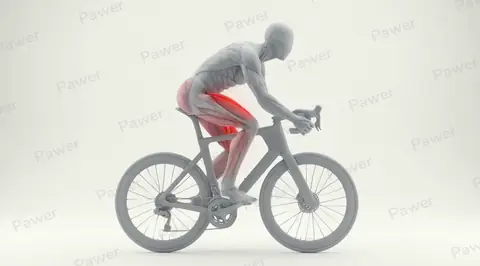 Hill Climb RepeatsBicycle
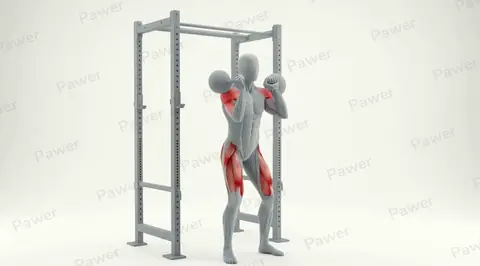 Kettlebell ThrusterKettlebell
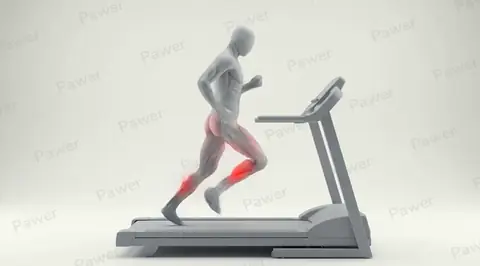 Long RunMachine
 Push JerkBarbell
 Rowing IntervalsMachine
 Rowing SprintMachine
 Running IntervalsBodyweight
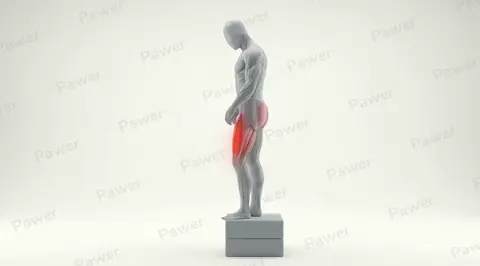 Single-Leg Step-DownBodyweight
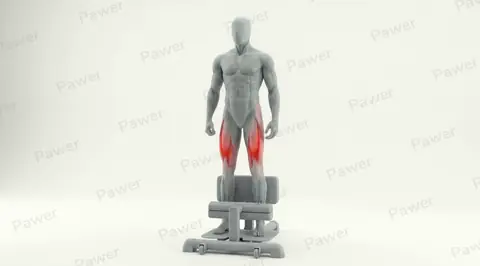 Sissy SquatBench
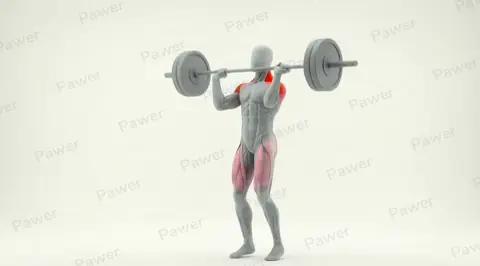 Split JerkBarbell
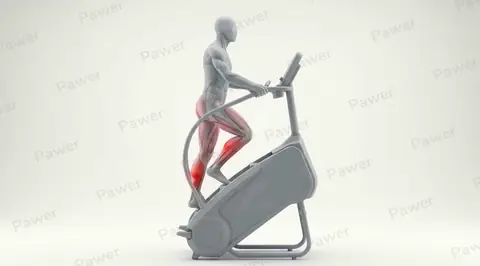 Stair ClimberMachine
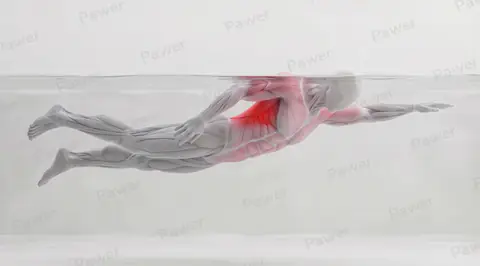 Swim Kick DrillBodyweight
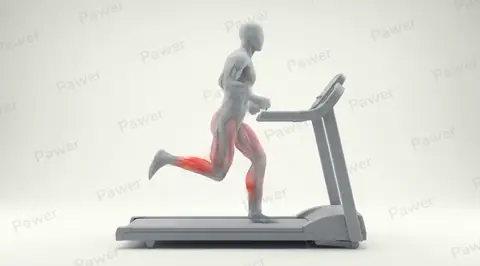 Tempo RunMachine
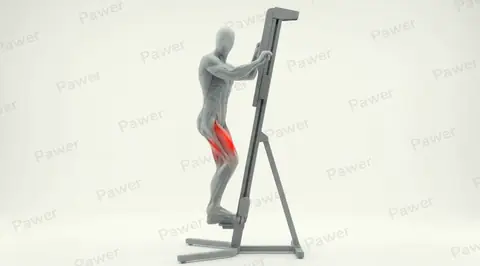 VersaClimberMachine
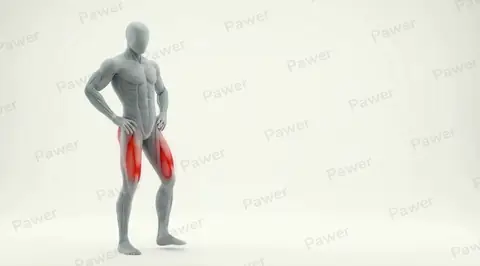 Walking LungeBodyweight
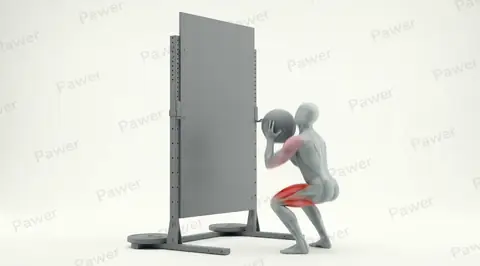 Wall BallBodyweight
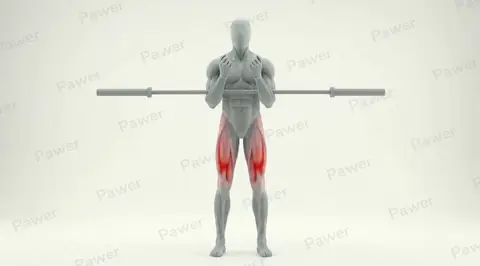 Zercher SquatBarbell
Advanced Quad Exercises6
How to train your quads: sets, reps and frequency
Most people build their quads well on 10 to 20 hard sets per week, split across two sessions. A hard set is one that ends within about one to three reps of failure. Beginners grow on the low end of that range. If you have trained for years and your legs have stalled, adding sets gradually toward the top end is a reasonable next step.
Use heavier, lower-rep sets on the big compound lifts, where technique and load matter most, and save higher reps for machines and isolation work, where you can push close to failure safely. Squats and lunges are tiring, so rest 2 to 3 minutes between heavy sets and about a minute between sets of leg extensions.
Progress by adding reps first, then load. When you reach the top of your rep range on every set, add the smallest available weight and work back up. Depth counts too: a squat or split squat taken as low as you can control trains the quads harder than a heavier half rep.
| Goal | Sets | Reps | Rest | Frequency |
|---|---|---|---|---|
| Strength | 3 to 5 per main lift | 3 to 6 | 2 to 4 minutes | 2 times per week |
| Muscle size | 3 to 4 per exercise, 10 to 20 per week | 6 to 15 | 90 seconds to 3 minutes | 2 times per week |
| Endurance | 2 to 3 | 15 to 25, or timed holds | 30 to 60 seconds | 2 to 3 times per week |
| Beginner | 2 to 3 per exercise | 8 to 12 | 90 seconds to 2 minutes | 2 to 3 times per week |
Sample quad workouts for the gym and at home
Each workout trains the hardest quad exercise first, while you are fresh, and finishes with lighter work. Pick one and run it twice a week with at least two days between sessions, adding reps or weight as you go. The gym session ends with a leg curl so your hamstrings keep pace with your quads.
| Workout | Exercise | Sets | Reps | Rest |
|---|---|---|---|---|
| Gym | Barbell Squat | 4 | 5 to 8 | 3 minutes |
| Gym | Machine Hack Squat | 3 | 8 to 12 | 2 minutes |
| Gym | Dumbbell Bulgarian Split Squat | 3 | 8 to 10 per leg | 90 seconds |
| Gym | Machine Leg Extension | 3 | 12 to 15 | 60 seconds |
| Gym | Lying Leg Curl | 3 | 10 to 12 | 60 seconds |
| Home | Bulgarian Split Squat | 4 | 10 to 15 per leg | 90 seconds |
| Home | Pause Squat | 3 | 15 to 20 | 60 seconds |
| Home | Single-Leg Step-Down | 3 | 8 to 10 per leg | 60 seconds |
| Home | Split Squat Isometric Hold | 2 | 30 to 45 seconds per leg | 60 seconds |
| Home | Wall Sit | 2 | 45 to 60 seconds | 60 seconds |
| Beginner | Dumbbell Goblet Squat | 3 | 10 to 12 | 90 seconds |
| Beginner | Machine Leg Press | 3 | 10 to 12 | 90 seconds |
| Beginner | Dumbbell Goblet Reverse Lunge | 2 | 8 to 10 per leg | 60 seconds |
| Beginner | Machine Leg Extension | 2 | 12 to 15 | 60 seconds |
Common quad training mistakes
Most stalled quad progress comes down to range, effort or variety rather than exercise choice.
- Cutting depth to lift more weight. Quarter squats let you load the bar heavily but train only a small part of the range. Squat as low as you can while holding your back position, even if that means taking plates off.
- Keeping your knees behind your toes at all costs. The quads work hardest when the knees travel forward, and that is a normal part of a deep squat or split squat. Let your knees track forward in line with your feet and build load gradually.
- Doing nothing but squats. Squats underwork the rectus femoris and never train one leg at a time. Add a split squat or lunge and a leg extension or sissy squat to round out the week.
- Bouncing out of the bottom. Dropping fast and rebounding hands the work to momentum, and the bottom is where people lose position. Lower for two to three seconds, or use the pause squat to learn to drive up from a dead stop.
- Stopping sets far from failure. Leg training is uncomfortable, so it is easy to end a set with five or more reps left. On machines and isolation work in particular, take most sets to within one or two reps of failure.
- Adding weight before the reps are clean. Jumping the load every session turns squats into grinding reps with knees caving inward. Add weight only when every rep of every set meets your standard.
How to build your quads at home without weights
Bodyweight quad training works when you make each rep harder instead of doing endless easy ones. The tools that do that are single-leg work, slow lowering and pauses, because each raises the effort without added load. A set where you finish 30 easy reps is training endurance, not size.
Work through the stages below, moving on when you can do 15 slow reps with good form. For knee-dominant work that targets the quads directly, the sissy squat (holding a door frame) and the wall sit need nothing more than a wall or sturdy support. Once the last stage is easy, a backpack loaded with books makes a perfectly good dumbbell.
| Stage | Exercises | How to progress |
|---|---|---|
| Stage 1 | Bodyweight Box Squat, Bodyweight Squat, Wall Sit | Add reps, then pause for two seconds at the bottom |
| Stage 2 | Bodyweight Reverse Lunge, Pause Squat, Walking Lunge | Lower for three seconds on every rep |
| Stage 3 | Bulgarian Split Squat, Single-Leg Step-Down, Sissy Squat | Add a pause, then a loaded backpack |
Frequently asked questions
What is the best quad exercise?
The barbell squat comes closest, because it trains all four heads through a deep range with heavy loads. If you do not squat comfortably with a barbell, a hack squat or leg press is an equally good main lift for size. Whichever you choose, pair it with a leg extension so the rectus femoris, which squats underwork, gets direct training.
How often should I train quads?
Twice a week suits most people. It splits 10 to 20 weekly sets into two manageable sessions, so each set gets real effort instead of being done exhausted at the end of a marathon leg day. Heavy squats are tiring, so leave at least 48 hours between hard sessions. Beginners can train legs three times a week with fewer sets each time.
Are squats enough to build big quads?
Squats alone will build most of your quad size, especially as a beginner, but they leave gaps. The rectus femoris gets relatively little work, and both legs share the load, so a stronger side can hide a weaker one. Adding a single-leg exercise and a leg extension covers both gaps for only a few extra sets a week.
Can you build quads with only bodyweight exercises?
Yes, up to a point. Bulgarian split squats, step-downs and sissy squats are hard enough to build muscle for most people when you take them close to failure with slow lowering. The limit comes once you can do 20 or more clean reps per leg. At that stage, holding added weight, even a loaded backpack, will keep you progressing faster than adding more reps.
Do lunges or squats work the quads more?
Both train the quads hard. Squats let you lift more total load, so they are easier to progress for strength. Lunges and split squats load one leg at a time and add balance, so they feel harder at lighter weights. A shorter stride and upright torso shift lunges toward the quads, while a longer stride and forward lean shift them toward the glutes.
Should your knees go past your toes when you squat?
In most deep squats and lunges they will, and that is normal. Forward knee travel is how the quads get a deep knee bend; forcing your shins vertical shifts the work to your hips and lower back instead. Let your knees track in line with your toes, control the descent, and build depth and load gradually. If a movement is painful, reduce the range or load.
Quads exercises by equipment
Narrow the list to what you actually have to train with.