Pendulum Squat / V-Squat
 Anton YefanovUpdated
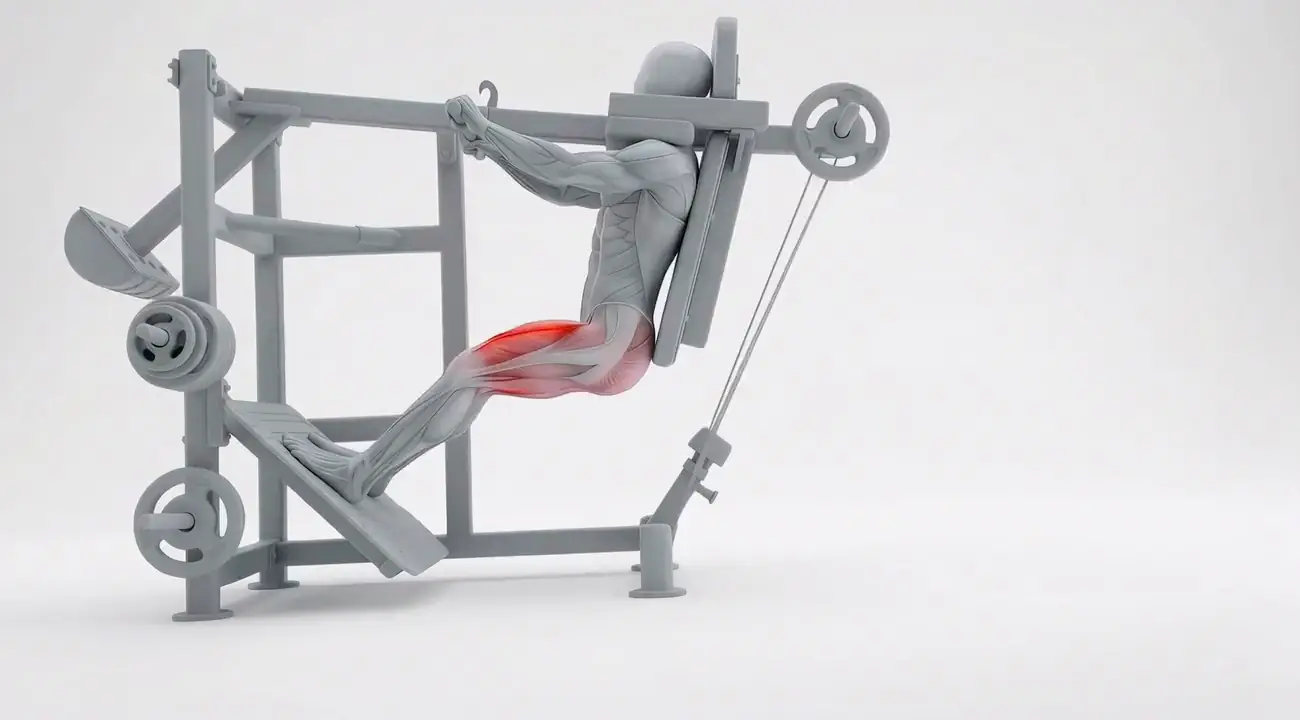
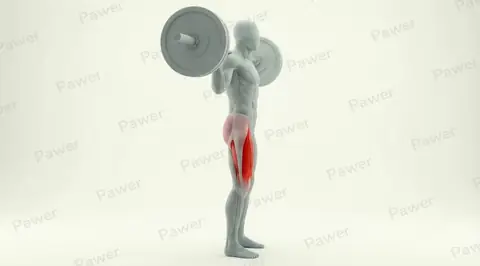
The pendulum squat runs the body along a swinging arc rather than a straight rail. Your back and shoulders sit against a pad that travels with you and your feet stay planted on an adjustable plate, so the machine holds position while you squat deep. A counterbalance keeps the motion smooth, and the arc gives a resistance curve that stays heavy in the stretched bottom position instead of falling away. The quadriceps are the prime movers, with the glutes taking over through the transition out of the bottom and the hamstrings stabilizing.
How to do the Pendulum Squat / V-Squat
- Load the machine and set the foot plate to suit your height and ankle range.
- Position your back and shoulders against the pads with your hips settled.
- Place your feet hip to shoulder width on the plate, toes turned out slightly.
- Release the safeties and brace your trunk.
- Descend along the arc until your thighs pass parallel.
- Drive through the feet to return, stopping just short of knee lockout.
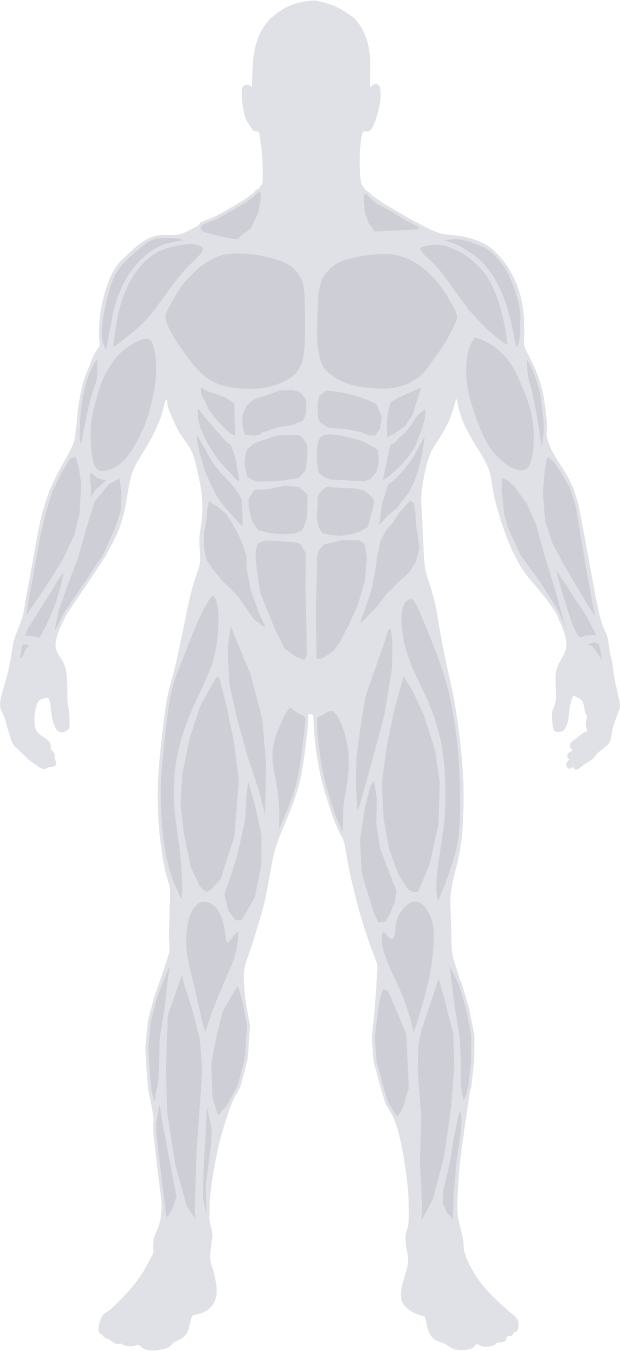
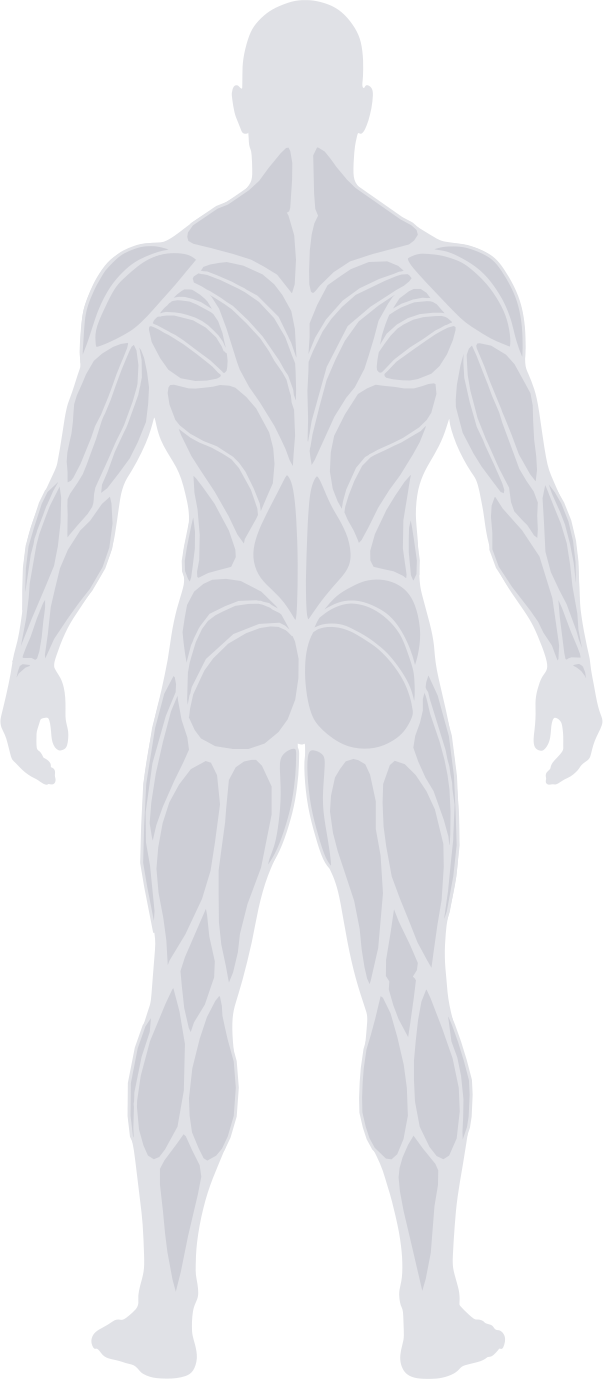
Muscles worked
- Primary:
- Quads
- Secondary:
- Glutes, Hamstrings, and Core
Why train it
- The arc keeps tension high in the stretched position where quad growth is driven.
- Back support removes spinal loading from a deep squat pattern.
- The guided path lets you train close to failure without a spotter.
Common mistakes
- Letting the head and hips fall out of line, which twists the load off the arc.
- Riding the machine down quickly, which wastes the loaded stretch at the bottom.
- Letting the heels lift off the plate, which shifts the load onto the knees.
- Skipping the warm-up before loading a deep, stretched squat position.
Frequently asked questions
What muscles does the Pendulum Squat / V-Squat work?
The Pendulum Squat / V-Squat trains the quads as the main target. Expect the glutes, hamstrings, and core to take some of the load as well.
What equipment do I need for the Pendulum Squat / V-Squat?
The Pendulum Squat / V-Squat needs a machine. Nothing beyond that is required to run the movement the way it is described above.
Is the Pendulum Squat / V-Squat suitable for beginners?
Yes. The Pendulum Squat / V-Squat is rated beginner, and the machine holds the path for you, so there is little to get wrong once the seat and the pin are set.
Can I do the Pendulum Squat / V-Squat at home?
Only if your home setup runs to a machine. Most do not, so this is usually a gym movement. The alternatives below cover the same muscles with kit you are more likely to have.
How many sets and reps of the Pendulum Squat / V-Squat should I do?
Three to five sets of 5 to 10 reps. Rest two to three minutes: squats tire the whole body, and a rushed second set is where depth and bracing fall apart.
What are good alternatives to the Pendulum Squat / V-Squat?
Band Squat, Bodyweight Box Squat, and Dumbbell Front Squat train the same primary muscles as the Pendulum Squat / V-Squat. Pick whichever one suits the equipment in front of you.
Work out your Pendulum Squat / V-Squat weights
Estimate your max from a recent set, then find the weight for your next one.
- One Rep Max CalculatorTurn a recent set into an estimated max. Compare Epley, Brzycki and Lombardi, then read off your training percentages and every rep max from 2RM to 12RM.
- RPE CalculatorRate a set by effort, get an estimated max, and read off the weight for your next target. Includes a full RPE chart of percentages by reps and effort.
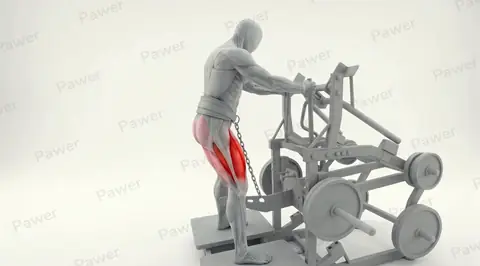
Similar exercises
By muscle
Every exercise is mapped to the muscles it trains. Browse by what you want to build.
By equipment
A full gym, a pair of dumbbells, or nothing at all: browse by what you have.