Box Jump
 Anton YefanovUpdated
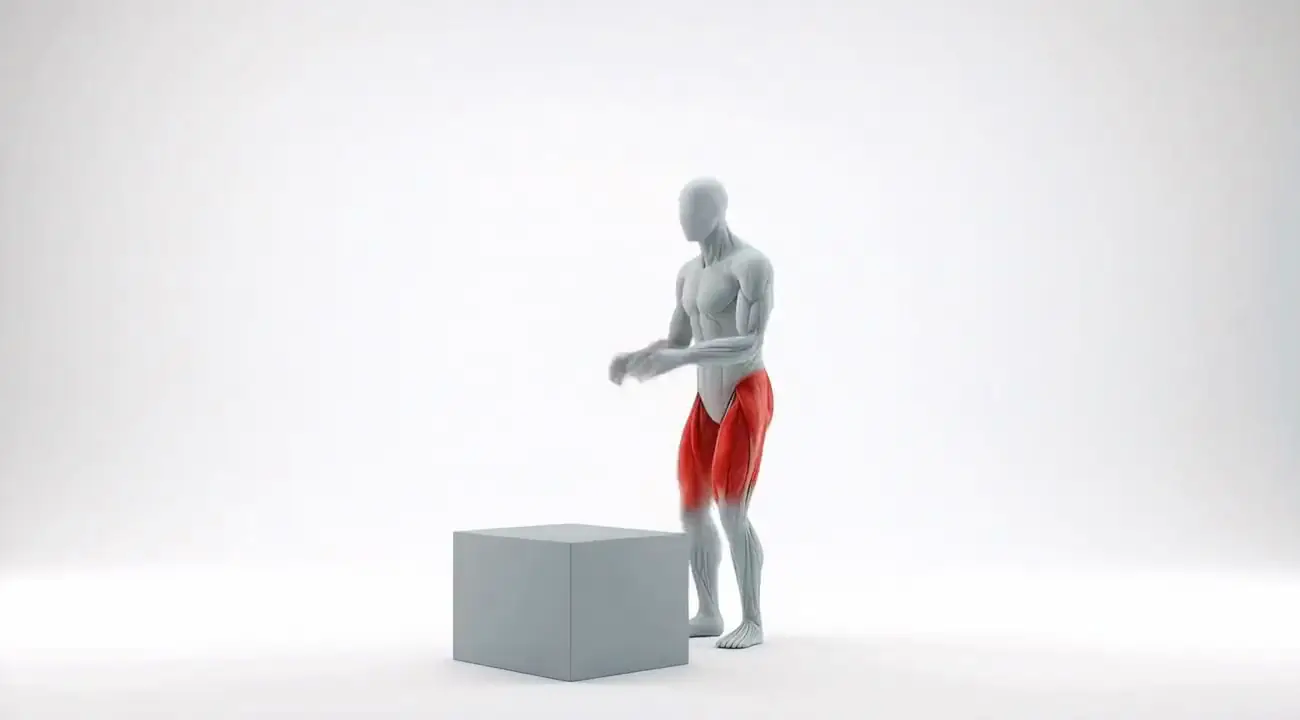
The box jump is one of the most efficient plyometric exercises in any athletic program. By exploding off the floor and landing on a sturdy box, it trains lower-body power and reactive strength while keeping landing impact low. The box absorbs what would otherwise be a hard floor landing. It builds the glutes, quads, and calves through fast, powerful triple extension.
How to do the Box Jump
- Stand a comfortable distance in front of a sturdy box with feet shoulder-width apart.
- Drop into a quarter squat by sitting your hips back and swinging your arms behind you.
- Explode upward by driving through the floor and swinging your arms forward and up.
- Pull your knees up underneath you in mid-air and aim to land softly on top of the box.
- Land in a soft quarter squat with both feet flat on the box and your chest tall.
- Stand fully tall on top of the box, then step down one leg at a time and reset for the next rep.
Muscles worked
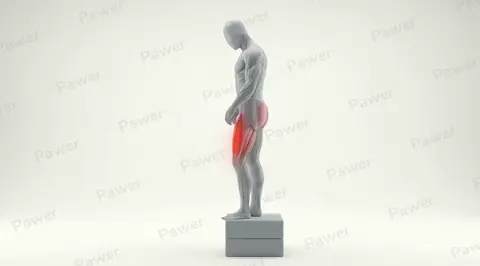
The box jump works the glutes and quads, with the calves adding the final push off the floor. From the quarter squat, the glutes drive explosive hip extension while the quads straighten the knees, and together they produce most of the force that lifts you onto the box.
The hardest moment is the transition from the dip into the jump. A quick, shallow countermovement lets the glutes and quads use stored elastic energy, so the jump is more powerful than starting from a dead stop. The calves finish the triple extension as the ankles point. On the landing, the same muscles absorb the force in a soft quarter squat, but because the box is higher than the floor, the landing is short and controlled. Stepping down rather than jumping keeps the focus on the takeoff.


Why train it
- Builds explosive lower-body power for sport and athletic performance.
- Trains reactive strength with reduced landing impact.
- Develops glute, quad, and calf power through triple extension.
Common mistakes
- Jumping down from the box instead of stepping down. Over volume, this adds unnecessary impact to the knees.
- Landing with stiff legs and a flat impact instead of absorbing softly into a quarter squat.
- Choosing a box too tall and barely clearing it, which leads to scraped shins and missed reps.
- Using too much arm swing without leg drive, which turns a power lift into an arm-thrown jump.
Frequently asked questions
How high should a box jump be?
Lower than you think. Pick a box you can land on softly in the same squat position you jumped from, usually knee height or below for beginners. If you have to pull your knees up to your chest to clear it, you are training hip mobility, not how high you can jump. The power comes from the jump, not the box height.
Do box jumps increase your vertical jump?
They can, as part of a jump training program. Box jumps train you to produce force quickly, and the box keeps the landing gentle. On their own they are not enough: getting stronger with squats and adding other jump work, like jump squats, matters as much.
Should you jump or step down from a box jump?
Step down. Jumping down adds a hard landing to every rep, which is where most box jump injuries to the Achilles and shins happen. Stepping down keeps each jump fresh and safe. Jumping down is a separate, more advanced drill called a depth jump.
Are box jumps bad for your knees?
Not when done with low reps and soft landings. The box actually reduces landing force compared with jumping on flat ground. Land with your knees tracking over your toes, not caving in, and keep sets to five or fewer reps so you never jump while tired.
What equipment do I need for the Box Jump?
Only a sturdy plyo box. Your own weight is the resistance, so there is nothing to load.
Is the Box Jump suitable for beginners?
Yes. The Box Jump is rated beginner: you are the load, so there is no weight to get wrong. Add reps or time only once the position holds from the first of them to the last.
Can I do the Box Jump at home?
Yes, if you own a sturdy plyo box. That is the whole requirement, and it is the reason this one travels well between a home setup and a gym floor.
How many sets and reps of the Box Jump should I do?
Three to five sets of 3 to 6 reps, fully rested. Every rep should be as sharp as the first, so stop the set the moment height or speed drops.
What are good alternatives to the Box Jump?
Jump Squats, Band Squat, and Dumbbell Front Squat train the same primary muscles as the Box Jump. Pick whichever one suits the equipment in front of you.
Similar exercises
 Jump SquatsBodyweight
 Bodyweight Box SquatBodyweight
 Bodyweight Reverse LungeBodyweight
 Bodyweight SquatBodyweight
 Bulgarian Split SquatBodyweight
 Forward LungeBodyweight
 HikingBodyweight
 Bodyweight Alternating Lateral LungeBodyweight
 Bodyweight Alternating Reverse LungesBodyweight
 Single-Leg Step-DownBodyweight
By muscle
Every exercise is mapped to the muscles it trains. Browse by what you want to build.
By equipment
A full gym, a pair of dumbbells, or nothing at all: browse by what you have.