Bodyweight Chest Exercises
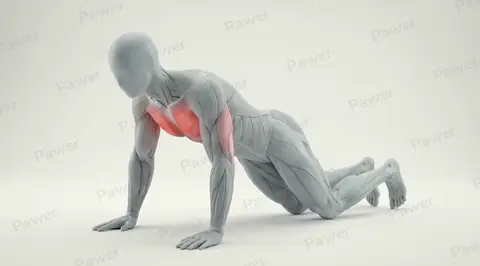
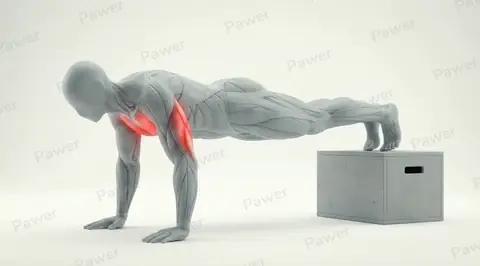
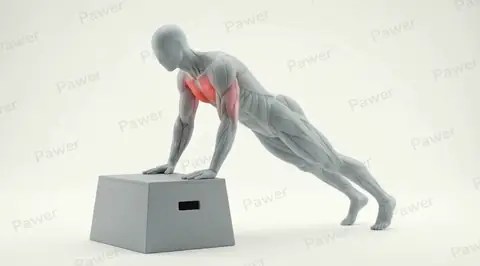
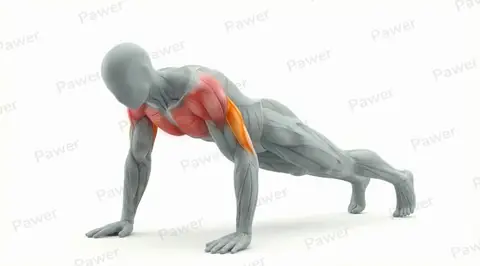
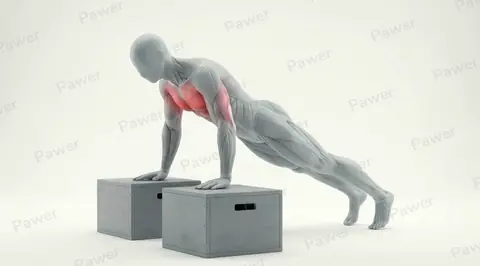
Without external load, the only way to make a chest exercise harder is to change the angle your body makes with the floor. That is the whole method here. A knee push-up, an incline push-up against a bench, a flat push-up, a decline push-up with your feet raised, and finally parallel bar dips form a single ladder, and each rung puts more of your bodyweight over your hands and shifts the emphasis higher or lower across the pecs.
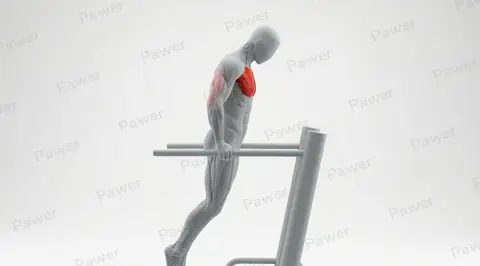
Decline push-ups and dips bias the lower and outer chest; incline push-ups take load off and let a beginner train the same pattern with clean form. Once flat push-ups stop being hard, elevate the feet before you add reps. Twenty slow decline push-ups build more chest than fifty sloppy flat ones.
Beginner4
Intermediate6
Advanced2
Other equipment for Chest
Frequently asked questions
Can you build a chest with bodyweight exercises alone?
Yes, up to a point. Push-ups and dips will build real chest size and strength as long as the movement keeps getting harder: feet elevated, a slower tempo, a pause at the bottom, then weighted dips. What bodyweight cannot easily give you is heavy low-rep work, so strength gains plateau earlier than they would with a barbell.
How do I make push-ups harder without weights?
In this order: elevate your feet, slow the lowering phase to three seconds, pause a beat at the bottom with your chest just off the floor, then move to a deficit by pressing from two raised surfaces so your chest drops below your hands. Each of these adds difficulty without changing the pattern.
Do push-ups and dips train the same part of the chest?
They overlap but are not identical. Parallel bar dips put the torso in a decline position and load the lower pec and triceps hard, while a standard push-up sits closer to a flat press. Running both is better than picking one.