Parallel Bar Dips
Also known as: Bar Dips and Parallel Dips
 Anton YefanovUpdated
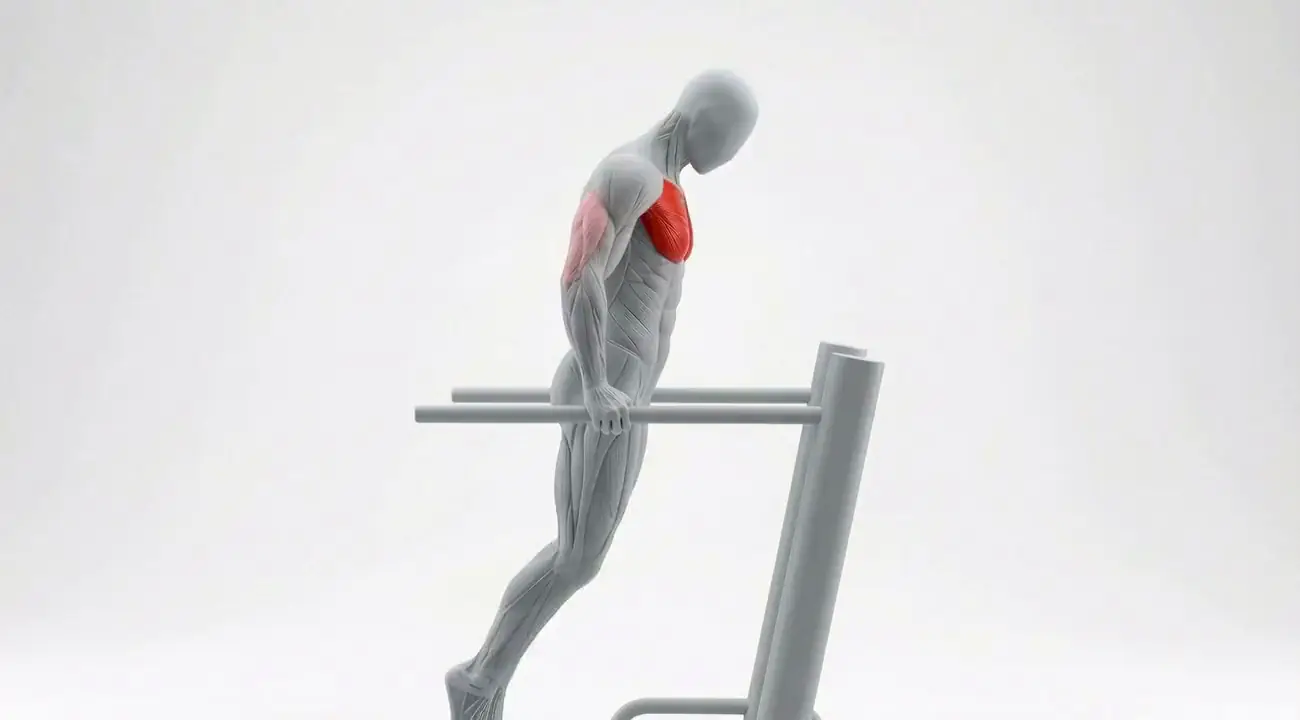
Parallel bar dips are one of the most respected bodyweight upper-body exercises in any program. Suspended between two bars, the lifter lowers themselves until the shoulders dip below the elbows, then drives back up to lockout. The movement loads the chest, triceps, and front shoulders hard and exposes any weakness in upper-body strength.
How to do the Parallel Bar Dips
- Grip the parallel bars with palms facing each other and press up to a strong, locked-out start position.
- Brace your core, squeeze the glutes, and cross the ankles to keep the body in a tight line.
- Lean your torso slightly forward to bias the chest, or stay upright to bias the triceps.
- Lower yourself slowly over 2 to 3 seconds until your shoulders drop just below your elbows.
- Pause briefly at the bottom with the chest open and the body still controlled.
- Press back up to full lockout by driving through the chest and triceps in one smooth motion.
Muscles worked
Parallel bar dips work the chest, especially its lower fibers, with the triceps straightening the elbows and the front delts assisting. The chest drives the shoulder as you push up from the bottom, where the shoulders sit just below the elbows and the pecs are under their deepest stretch. That bottom position is the hardest part of the rep.
As you rise, the triceps take more of the load to finish at lockout. Your torso angle decides the split. Leaning slightly forward lets the shoulders travel further in front of the hands, which puts more of the work on the chest. Staying upright keeps the elbows tracking back and shifts the emphasis onto the triceps. A slow lowering phase controls the stretch at the bottom, and a braced core with crossed ankles stops the body from swinging between reps.
Why train it
- Builds serious chest, triceps, and front-shoulder strength with bodyweight only.
- Trains a vertical press pattern that complements overhead and bench work.
- Develops the body-control needed for advanced calisthenics.
Common mistakes
- Letting the shoulders shrug up to the ears at the bottom, which strains the front shoulders.
- Cutting the depth short and only doing the easy top half of the rep.
- Swinging the legs to use momentum, which removes the controlled loading the dip is meant to deliver.
- Flaring the elbows wide on the press, which puts unnecessary strain on the joint.
Frequently asked questions
What equipment do I need for Parallel Bar Dips?
Only parallel bars or a dip station. Your own weight is the resistance, so there is nothing to load.
Are Parallel Bar Dips suitable for beginners?
With some training behind you. Parallel Bar Dips are rated intermediate, which means the setup matters as much as the effort. They are a reasonable first month goal rather than a first session one, and the alternatives below are the easier way in.
Can I do Parallel Bar Dips at home?
Only if your home setup runs to parallel bars or a dip station. Most do not, so this is usually a gym movement. The alternatives below cover the same muscles with kit you are more likely to have.
How many sets and reps of Parallel Bar Dips should I do?
Three to four sets taken within a rep or two of failure. There is no weight to add here, so progress by slowing the lowering phase, pausing at the hardest point, or moving to a harder variation once you can clear 15 clean reps.
What are good alternatives to Parallel Bar Dips?
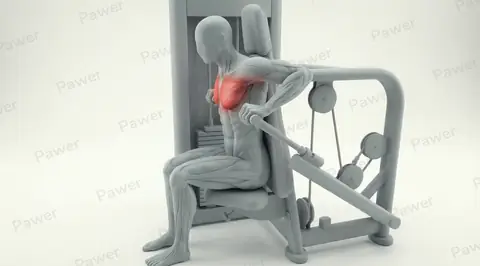
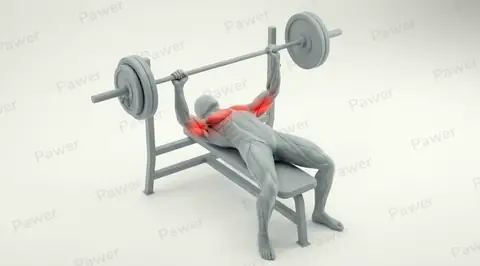
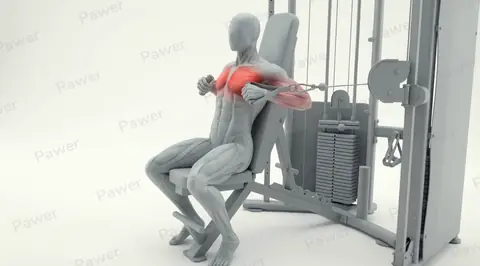
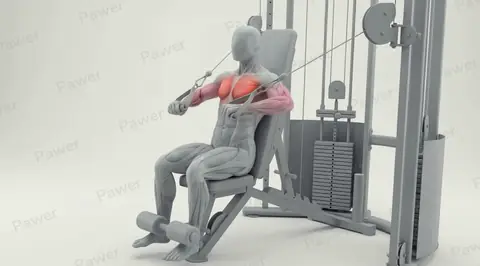
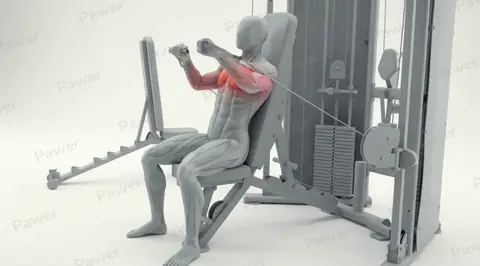
Barbell Bench Press, Cable Low-to-High Fly, and Decline Machine Chest Press train the same primary muscles as Parallel Bar Dips. Pick whichever one suits the equipment in front of you.
Similar exercises
By muscle
Every exercise is mapped to the muscles it trains. Browse by what you want to build.
By equipment
A full gym, a pair of dumbbells, or nothing at all: browse by what you have.