Dumbbell Bench Press
 Anton YefanovUpdated
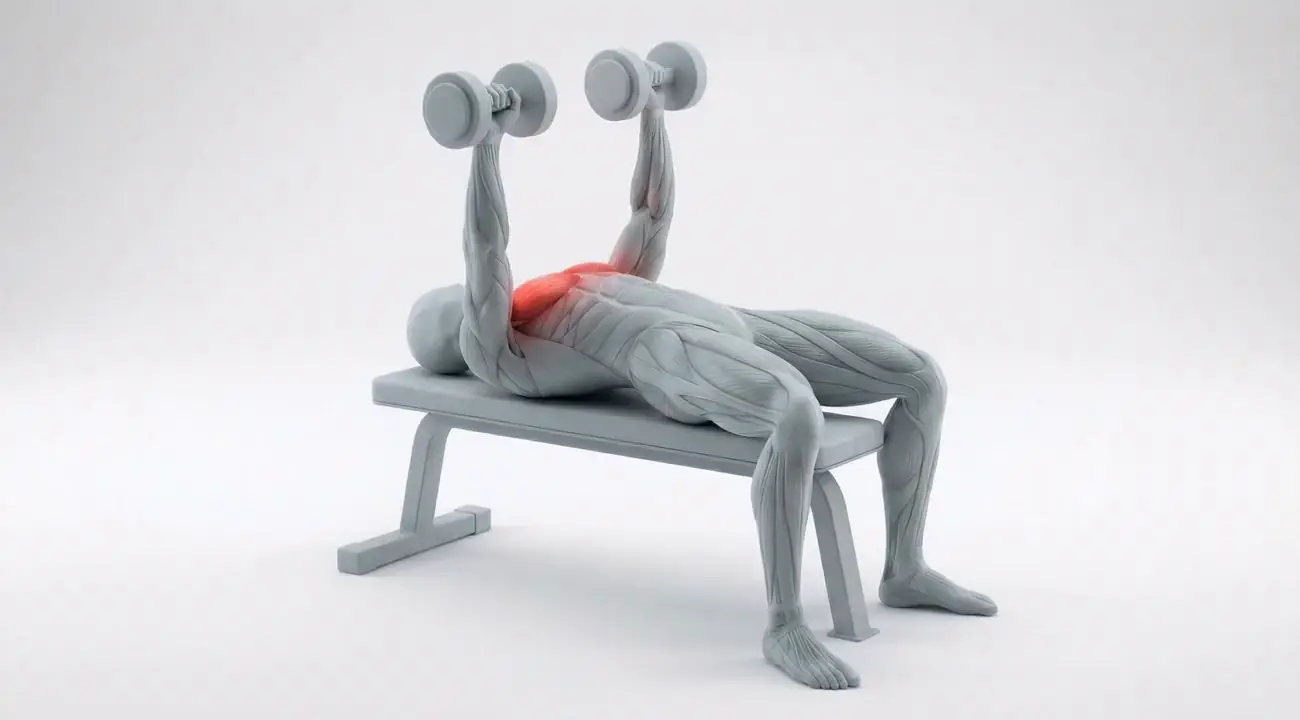
The dumbbell bench press is the dumbbell counterpart to the barbell bench press. Each arm presses an independent load, which deepens the available range, allows a more natural shoulder path, and forces both sides to do their share of the work. It's a chest, triceps, and front-shoulder builder that usually feels better on the shoulders than a barbell.
How to do the Dumbbell Bench Press
- Sit on a flat bench with a dumbbell on each thigh, then lie back as you kick the weights up to your chest.
- Plant your feet flat on the floor and pull your shoulder blades back and down into the bench.
- Press the dumbbells up until your arms are fully extended, with the weights stacked over your shoulders.
- Lower the dumbbells slowly to chest level with the elbows tracked at about 45 to 60 degrees.
- Pause briefly when the dumbbells reach the side of your chest, keeping full upper-back tension.
- Press the dumbbells back up explosively by driving through the chest and triceps to the top.
Muscles worked
Why train it
- Builds chest size, triceps, and front-delt strength with a deeper range than a barbell.
- Trains both sides independently so neither arm cheats the lift.
- Spares the shoulders compared to a fixed barbell pressing path.
Common mistakes
- Letting the elbows flare wide to 90 degrees, which strains the front shoulders and weakens the chest drive.
- Pressing the dumbbells together at the top so they clack. It wastes range and adds no extra chest work.
- Losing the upper-back squeeze mid-set, causing the shoulders to roll forward under load.
- Cutting the range short and pressing only the top half, missing the deepest stretch on the chest.
Frequently asked questions
How much should you dumbbell press compared to barbell?
Each dumbbell is usually around 35 to 40 percent of your barbell bench, so the pair adds up to 70 to 80 percent. If you bench 100 kg with a barbell, expect to press dumbbells of roughly 35 to 40 kg each for similar reps. The gap comes from the extra balance each arm needs.
Are dumbbell bench presses harder than barbell?
They feel harder because each arm has to balance its own weight, so you lift less. That balance work is useful: it stops your stronger side doing more of the work, and it lets your hands move into a path that suits your shoulders. Many lifters find dumbbells easier on sore shoulders.
How do you get heavy dumbbells into position?
Sit on the end of the bench with the dumbbells on your thighs. Lie back and kick each knee up as you go, so the dumbbells roll up into position over your chest. To finish, bring the dumbbells back to your chest and sit up the same way, rather than dropping them out to the sides.
Should you touch the dumbbells together at the top?
No. Clanking them together takes the tension off your chest at the top. Press up and slightly in, stopping when the dumbbells are a few centimetres apart over your shoulders. The work happens in the stretch at the bottom and the press, not in the touch.
What muscles does the Dumbbell Bench Press work?
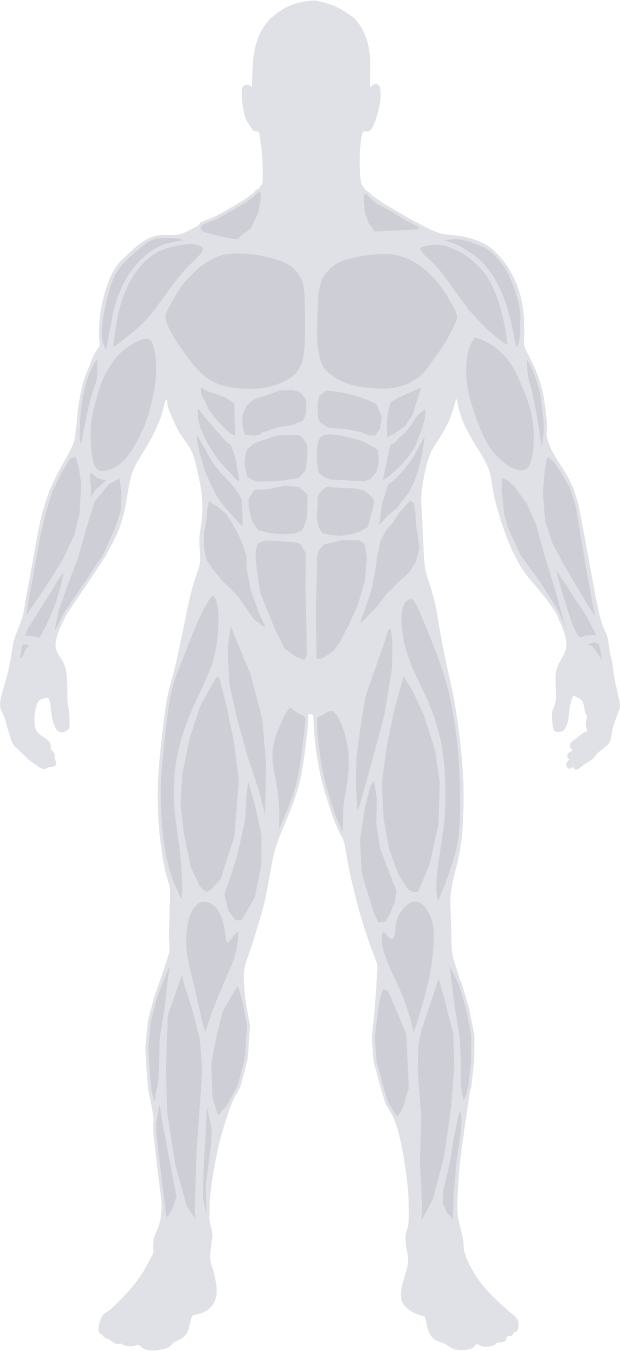
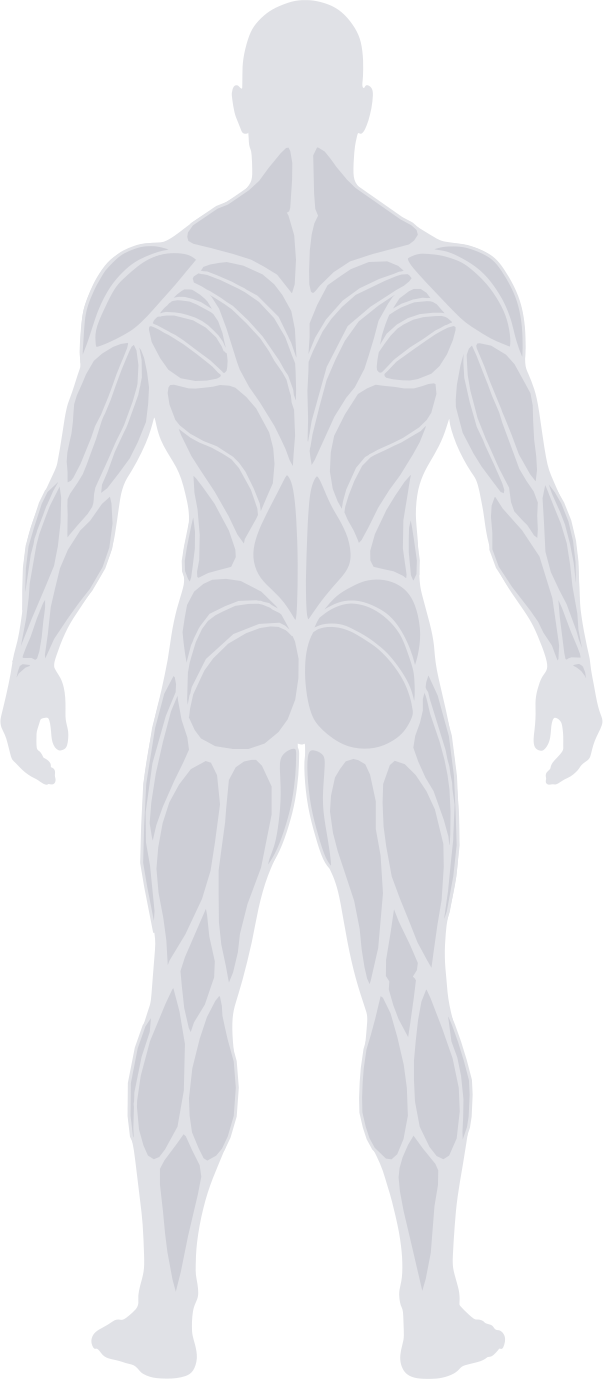
The Dumbbell Bench Press trains the chest as the main target. Expect the triceps to take some of the load as well.
What equipment do I need for the Dumbbell Bench Press?
Only a pair of dumbbells. Nothing beyond that is required to run the movement the way it is described above.
Is the Dumbbell Bench Press suitable for beginners?
Yes. The Dumbbell Bench Press is rated beginner: the pattern is quick to pick up and forgiving when a rep drifts. Start light and add weight once the form repeats itself without you thinking about it.
Can I do the Dumbbell Bench Press at home?
Yes, if you own a pair of dumbbells. That is the whole requirement, and it is the reason this one travels well between a home setup and a gym floor.
How many sets and reps of the Dumbbell Bench Press should I do?
Three to five sets of 6 to 12 reps. Sit at the lower end with heavier weight when you are chasing strength, and at the upper end when you are chasing size.
What are good alternatives to the Dumbbell Bench Press?
Bodyweight Knee Push Ups, Cable Bench Press, and Decline Machine Chest Press train the same primary muscles as the Dumbbell Bench Press. Pick whichever one suits the equipment in front of you.
Work out your Dumbbell Bench Press weights
Estimate your max from a recent set, then find the weight for your next one.
- One Rep Max CalculatorTurn a recent set into an estimated max. Compare Epley, Brzycki and Lombardi, then read off your training percentages and every rep max from 2RM to 12RM.
- RPE CalculatorRate a set by effort, get an estimated max, and read off the weight for your next target. Includes a full RPE chart of percentages by reps and effort.
Similar exercises
 Dumbbell Decline Bench PressDumbbell
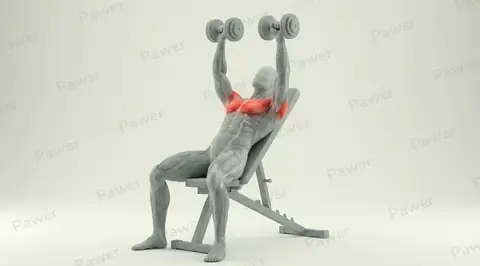 Dumbbell Incline Bench PressDumbbell
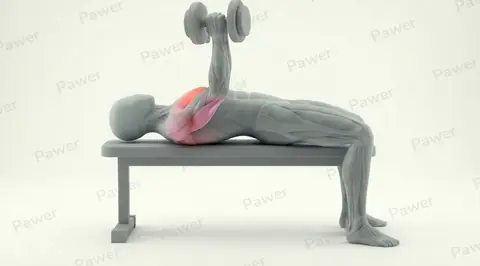 Neutral-Grip Dumbbell Bench PressDumbbell
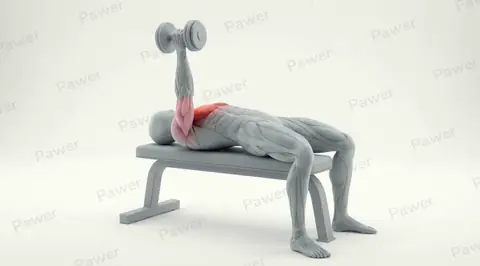 Dumbbell Single Arm Chest PressDumbbell
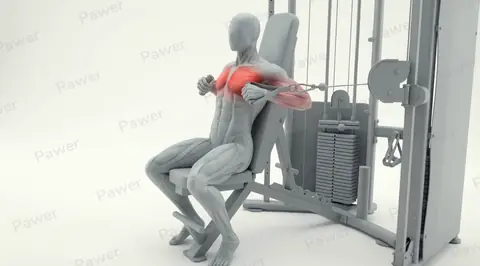 Cable Bench PressCable
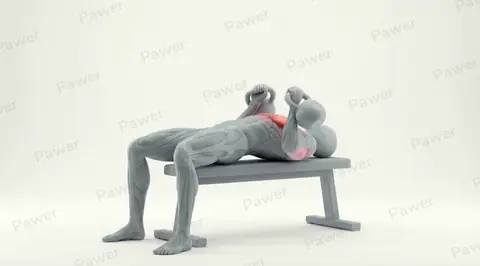 Kettlebell Bench PressKettlebell
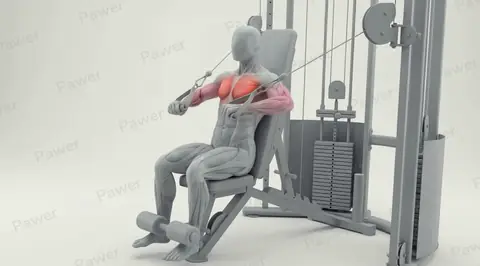 Cable Decline Bench PressCable
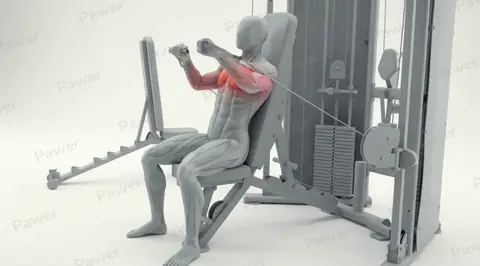 Cable Incline Bench PressCable
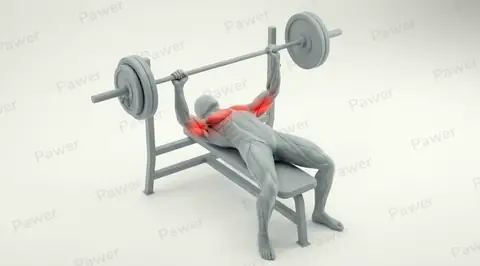 Barbell Bench PressBarbell
 Machine Chest PressMachine
By muscle
Every exercise is mapped to the muscles it trains. Browse by what you want to build.
By equipment
A full gym, a pair of dumbbells, or nothing at all: browse by what you have.