Swim Pull Drill
 Anton YefanovUpdated
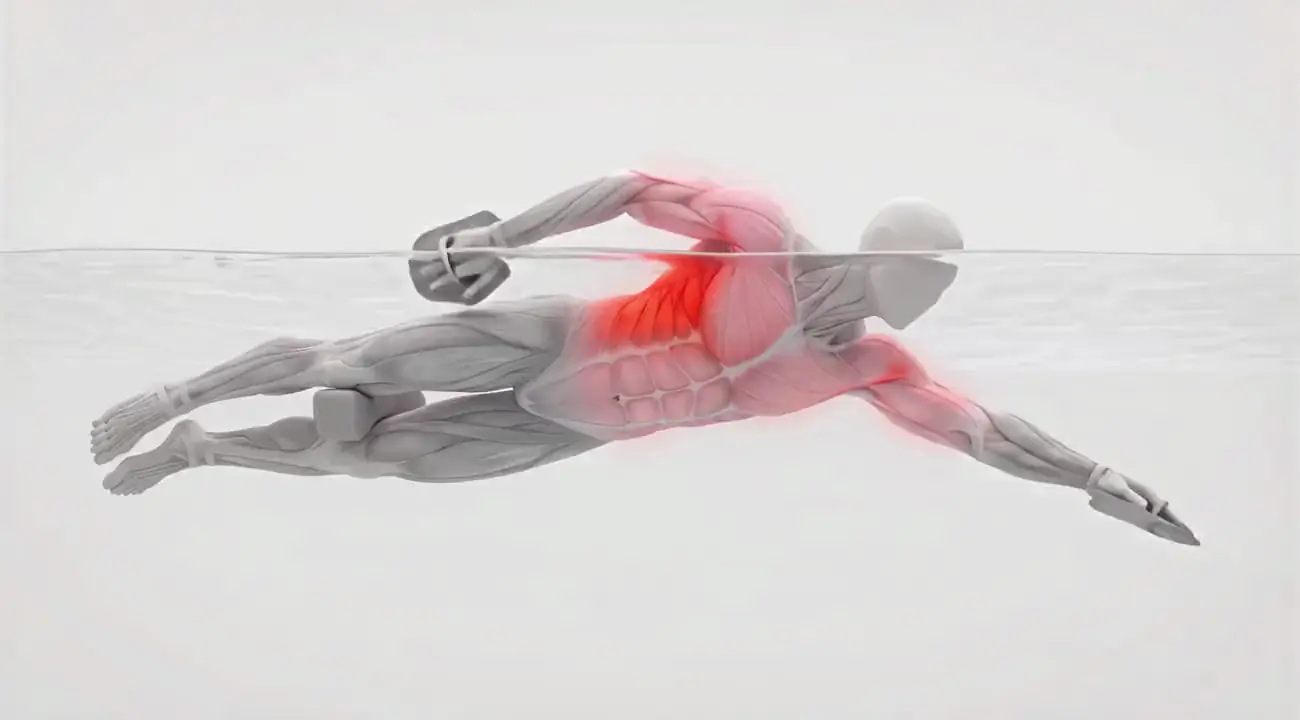
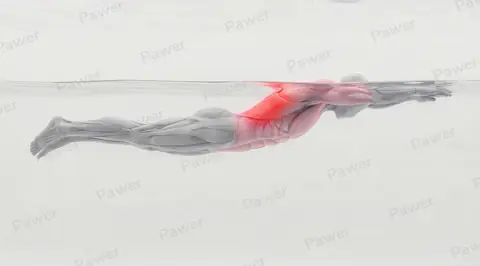
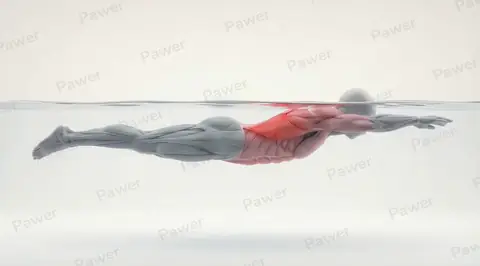
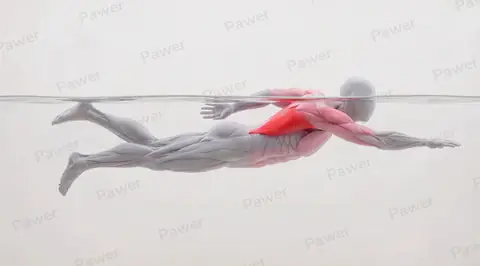
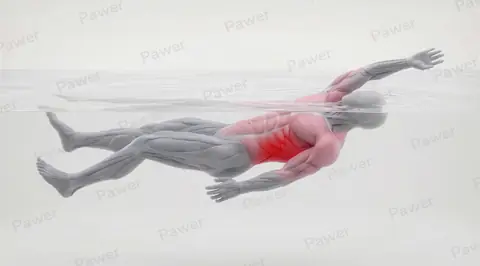
A pull drill removes the legs so the underwater arm stroke can be worked on its own. The hand enters about shoulder-width and slightly downward, then the catch drops the hand down and in while the elbow bends and points out to the side. From there the pull presses a large surface straight backward with increasing hand speed, and the hand exits just past the hip.
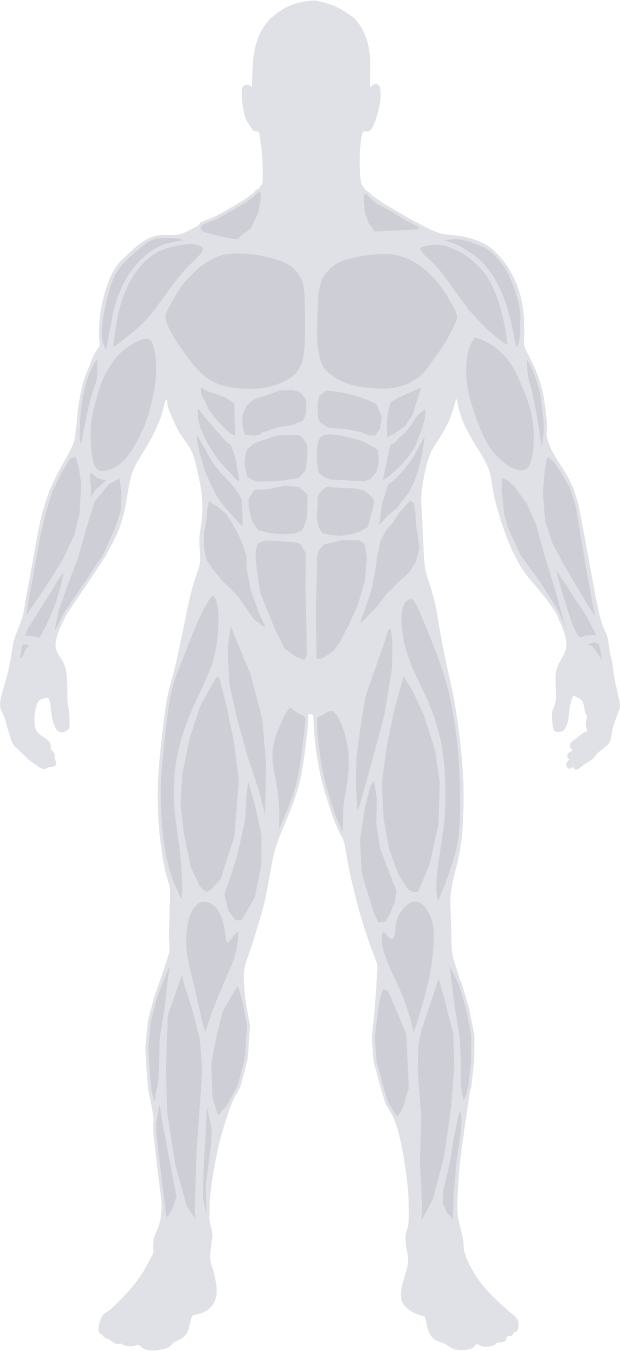
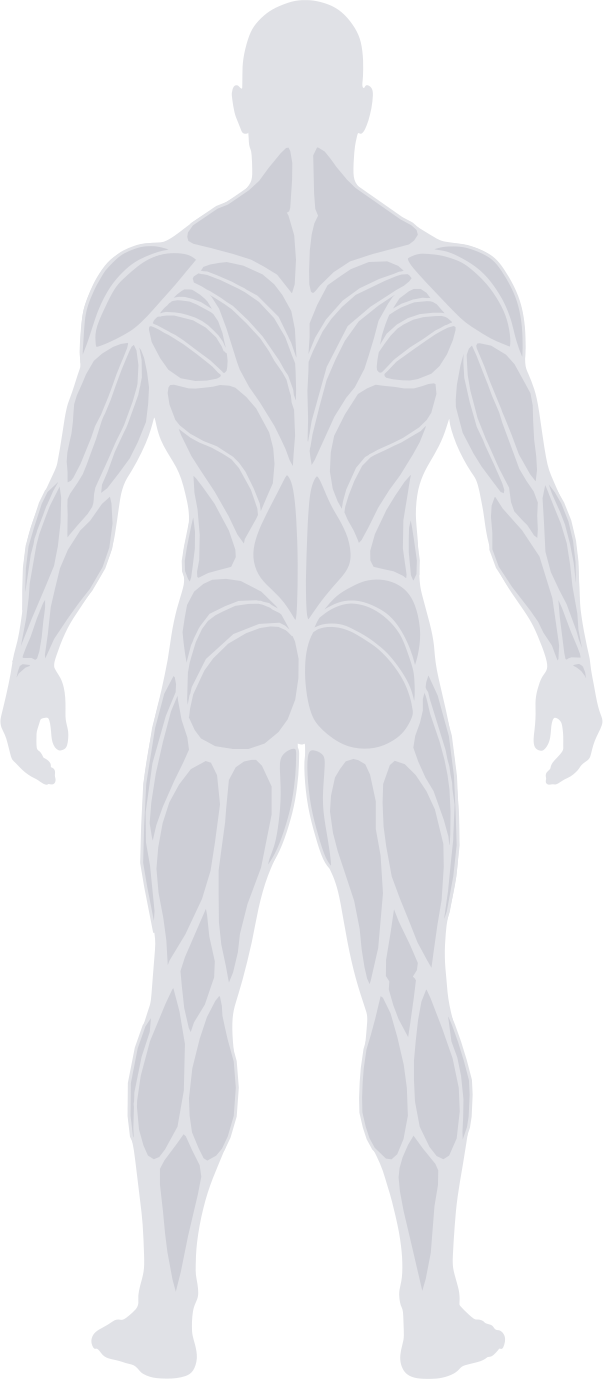
The muscles follow that sequence. Early pull-through is driven by pectoralis major, and late pull-through brings latissimus dorsi in to extend the shoulder. Pectoralis major, latissimus dorsi and teres major are the main force producers across this phase.
How to do the Swim Pull Drill
- Push off in a streamlined position with the legs quiet and the body long.
- Enter one hand about shoulder-width apart, moving forward and slightly down, with the palm flat.
- Set the catch by dropping the hand down and in while the elbow bends and points out to the side.
- Press the hand and forearm straight backward as one surface, accelerating as the hand passes under you.
- Finish the stroke just past the hip, thinking back and up rather than pulling straight through.
- Recover the arm forward while the other side repeats the same sequence, keeping the legs still.
Muscles worked
Why train it
- Isolates the catch and pull so hand path and elbow position can be corrected without leg compensation.
- Loads the main propulsive muscles of freestyle, which contribute the majority of forward force.
- Builds upper-body endurance in a non-impact environment with no external load.
Common mistakes
- Entering the hand too wide or too narrow, which compromises every phase that follows.
- Rushing the catch and overpowering it, so the arm never gets oriented backward for the pull.
- Sculling side to side instead of pressing straight back, which moves water sideways rather than behind you.
- Dropping the elbow below the hand, a position linked to painful shoulders in competitive swimmers.
Frequently asked questions
What muscles does the Swim Pull Drill work?
The Swim Pull Drill works the back and chest hardest, with the shoulders, triceps, and core pitching in. As cardio, though, the bigger demand is on your heart and lungs rather than any one muscle.
What equipment do I need for the Swim Pull Drill?
Only a pool, ideally with a pull buoy. There is nothing to lift: your own body does the work.
Is the Swim Pull Drill suitable for beginners?
Once you can swim comfortably. The Swim Pull Drill is rated intermediate: it assumes you can already float in a good position and breathe in rhythm, so a few lessons do more for it than any amount of gym work.
Can I do the Swim Pull Drill at home?
Not unless you have a pool. The Swim Pull Drill needs water deep enough to swim in, so it happens at a lap pool or in open water. The alternatives below train the same muscles on dry land.
How long should I do the Swim Pull Drill for?
Four to eight lengths inside a longer swim, with rest at the wall between them. Drills are technique work, so stop once the form starts to slip rather than pushing through.
What are good alternatives to the Swim Pull Drill?
Breaststroke Swim, Barbell Bent Over Row, and Kettlebell Gorilla Row train the same primary muscles as the Swim Pull Drill. Pick whichever one suits the day.
Similar exercises
By muscle
Every exercise is mapped to the muscles it trains. Browse by what you want to build.
By equipment
A full gym, a pair of dumbbells, or nothing at all: browse by what you have.