Backstroke Swim
 Anton YefanovUpdated
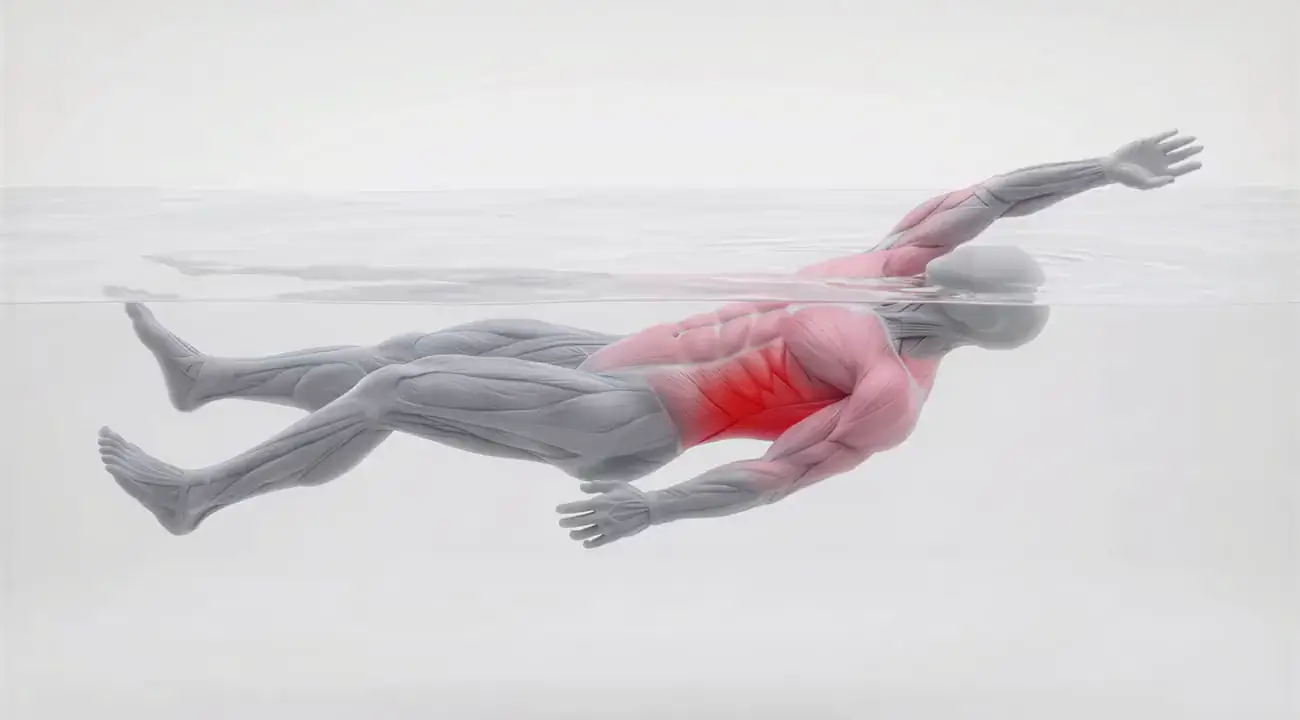
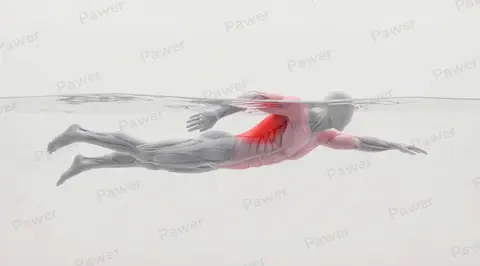
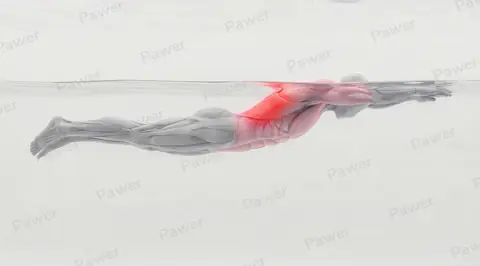
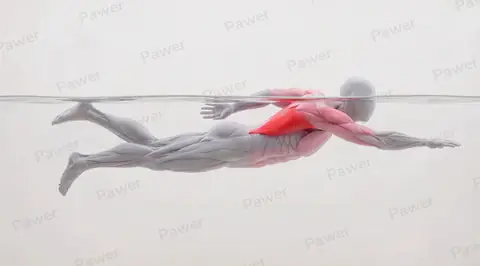
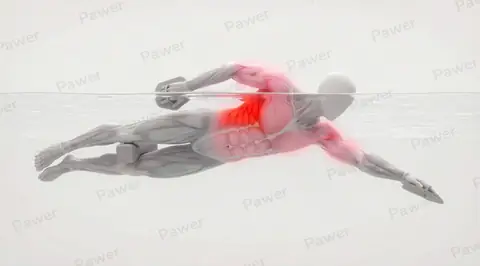
Backstroke is swum face up with continuous alternating arms: one arm pulls underwater while the other recovers straight over the surface. Rolling the body toward the pulling arm is what lets the lats and the large trunk muscles drive the pull instead of the shoulder working alone, and a steady flutter kick keeps the hips near the surface so the body travels in one line. The pulling elbow bends underwater and the hand stays submerged, while the head stays still because lifting it drops the hips and adds drag.
How to do the Backstroke Swim
- Float face up with your body flat, ears in the water and eyes looking up.
- Hold a long body line with hips near the surface and a steady flutter kick.
- Enter one arm overhead with the little finger first and the palm turned out.
- Roll your shoulders and hips toward the entering arm so the back muscles can pull.
- Bend the elbow underwater and press the water toward your hip to finish the stroke.
- Recover that arm straight over the surface as the other arm starts its pull.
Muscles worked
- Primary:
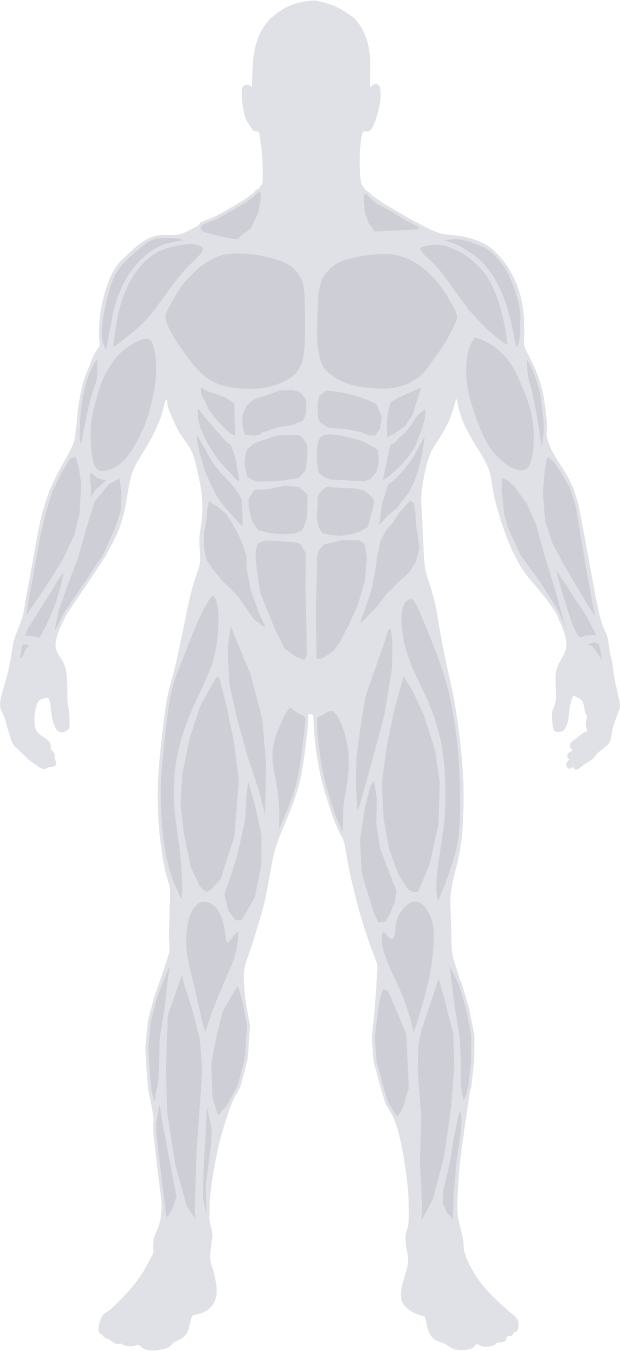
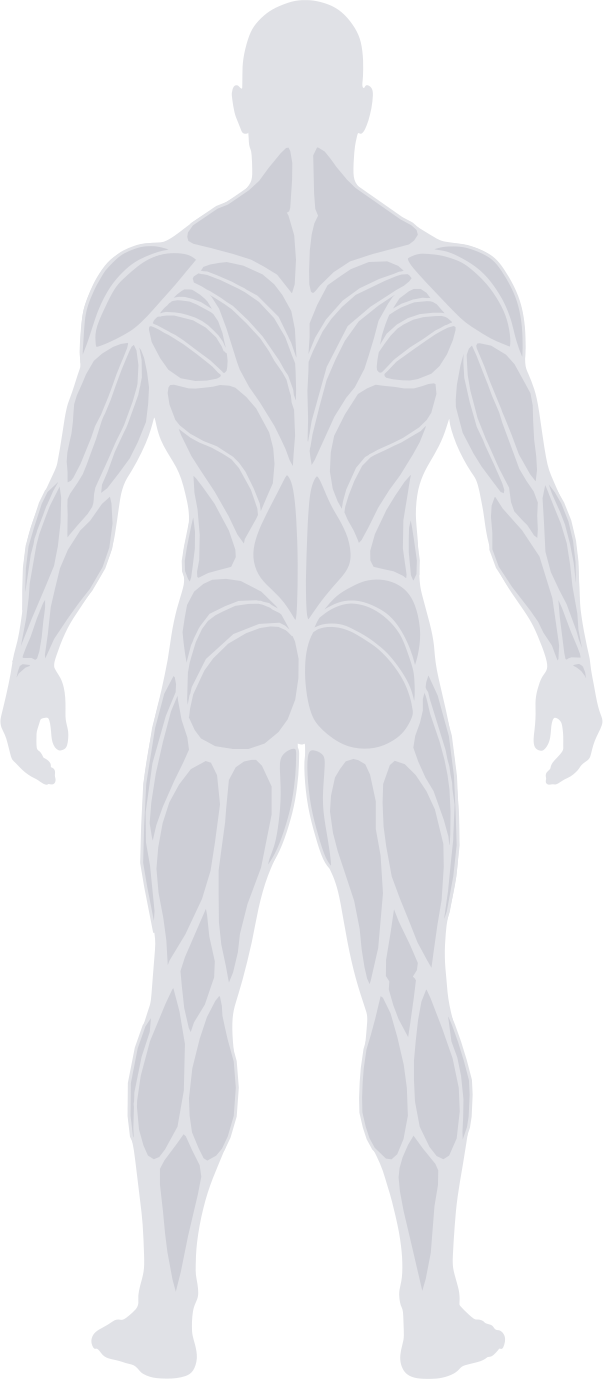
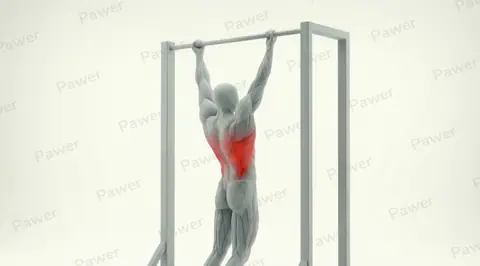
- Back
Why train it
- Trains the lats and shoulders through a full overhead pulling range.
- Keeps breathing unrestricted, so effort can be held steady for long sets.
- Adds a supine stroke that balances the forward-facing strokes in a swim plan.
Common mistakes
- Swimming flat with no body roll, which loads the shoulder instead of the back.
- Letting the hips sink, so the legs drag and stroke rate has to rise to compensate.
- Lifting the head to look forward, which drops the hips and breaks the body line.
- Crossing the entry arm past the midline, which forces the shoulder into an end-range position.
Frequently asked questions
What muscles does the Backstroke Swim work?
The Backstroke Swim works the back hardest, with the shoulders, core, triceps, and glutes pitching in. As cardio, though, the bigger demand is on your heart and lungs rather than any one muscle.
What equipment do I need for the Backstroke Swim?
Only a pool. There is nothing to lift: your own body does the work.
Is the Backstroke Swim suitable for beginners?
Once you can swim comfortably. The Backstroke Swim is rated intermediate: it assumes you can already float in a good position and breathe in rhythm, so a few lessons do more for it than any amount of gym work.
Can I do the Backstroke Swim at home?
Not unless you have a pool. The Backstroke Swim needs water deep enough to swim in, so it happens at a lap pool or in open water. The alternatives below train the same muscles on dry land.
How long should I do the Backstroke Swim for?
20 to 45 minutes, or a set distance broken into repeats of 100 to 200 metres with a short rest at the wall. Add distance before you add speed.
What are good alternatives to the Backstroke Swim?
Rowing Intervals, Man Maker, and Breaststroke Swim train the same primary muscles as the Backstroke Swim. Pick whichever one suits the day.
Similar exercises
By muscle
Every exercise is mapped to the muscles it trains. Browse by what you want to build.
By equipment
A full gym, a pair of dumbbells, or nothing at all: browse by what you have.