Neutral-Grip Pull-Up
Also known as: Parallel Grip Pull-Up and Hammer Grip Pull-Up
 Anton YefanovUpdated
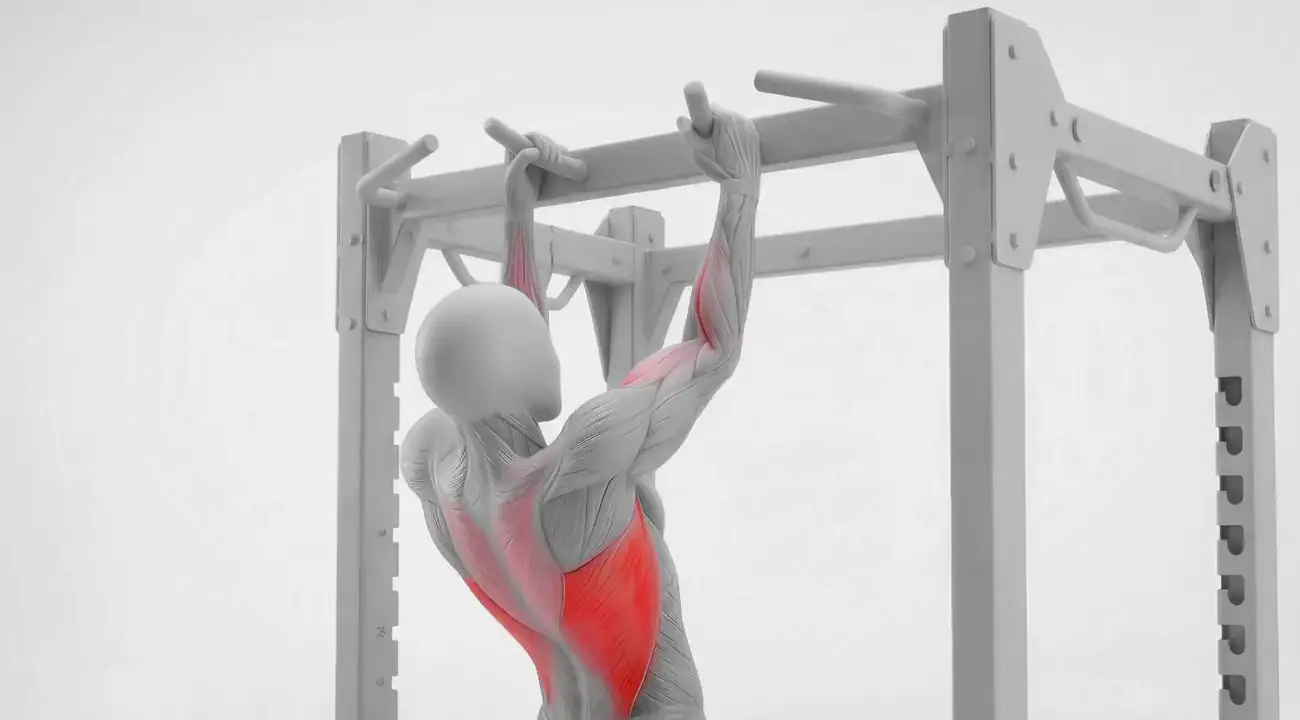
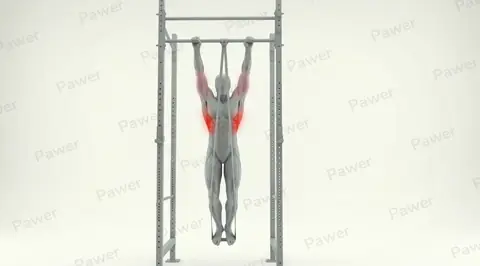
A neutral grip pull-up uses a V-bar or parallel handles so the palms face each other and the forearms stay mid-position. Compared with a pronated pull-up the shoulder is not driven into abduction and internal rotation, a common source of impingement complaints, and the elbows track closer to the ribs. The lats and rhomboids remain the prime movers, with the biceps, brachialis, mid trapezius and rear delts assisting more than in a wide pronated pull-up.
How to do the Neutral-Grip Pull-Up
- Hook a V-bar or parallel handles over a pull-up bar.
- Grip the handles so your palms face each other and hang with straight arms.
- Brace your core and squeeze your glutes to stop your legs swinging.
- Pull your shoulder blades down and back to begin the movement.
- Drive your elbows toward your ribs until your chest reaches the handles.
- Lower under control to a near-straight hang and repeat.
Muscles worked
The neutral-grip pull-up works the lats and rhomboids of the back as the prime movers, with the biceps, brachialis, mid traps and rear delts assisting. With the palms facing each other, the elbows drive down and back close to the ribs, so pulling yourself up is mostly shoulder extension, which the lats handle along with the muscles that pull the shoulder blades together.
The lats are stretched hardest in the hang and keep working as the elbows pass your ribs. Near the top, when your chest reaches the handles, the rhomboids and mid traps squeeze the shoulder blades down and back. The neutral grip puts the forearm in a mid position, which lets the brachialis and biceps contribute more than in a wide overhand pull-up. Starting each rep by pulling the shoulder blades down sets the back muscles to work before the arms bend.
- Primary:
- Back
Why train it
- Neutral shoulder position reduces impingement risk versus a wide pronated grip.
- Strong biceps and brachialis contribution makes the pull feel achievable.
- Needs only a bar and a handle, so it fits minimal-equipment programs.
Common mistakes
- Kipping or swinging the legs, which reduces the load the back actually handles.
- Pulling only with the arms, so the biceps fail before the lats are trained.
- Stopping partway up, which limits the contraction at the top of the range.
- Dropping into a hard dead hang each rep, which stresses the elbows and shoulders.
Frequently asked questions
What equipment do I need for the Neutral-Grip Pull-Up?
Only a pull-up bar with parallel handles. Your own weight is the resistance, so there is nothing to load.
Is the Neutral-Grip Pull-Up suitable for beginners?
With some training behind you. The Neutral-Grip Pull-Up is rated intermediate, which means the setup matters as much as the effort. It is a reasonable first month goal rather than a first session one, and the alternatives below are the easier way in.
Can I do the Neutral-Grip Pull-Up at home?
Yes, if you own a pull-up bar with parallel handles. That is the whole requirement, and it is the reason this one travels well between a home setup and a gym floor.
How many sets and reps of the Neutral-Grip Pull-Up should I do?
Three to four sets taken within a rep or two of failure. There is no weight to add here, so progress by slowing the lowering phase, pausing at the hardest point, or moving to a harder variation once you can clear 15 clean reps.
What are good alternatives to the Neutral-Grip Pull-Up?
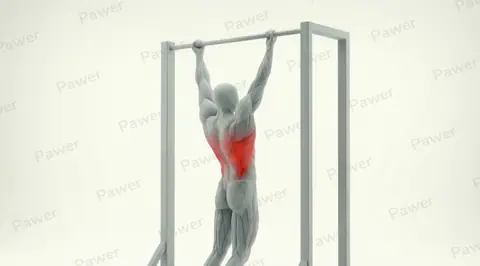
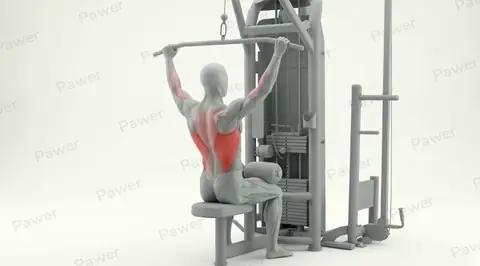
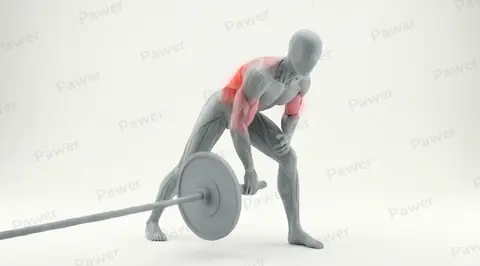
Barbell Bent Over Row, Kettlebell Gorilla Row, and Smith Machine Bent-Over Row train the same primary muscles as the Neutral-Grip Pull-Up. Pick whichever one suits the equipment in front of you.
Similar exercises
By muscle
Every exercise is mapped to the muscles it trains. Browse by what you want to build.
By equipment
A full gym, a pair of dumbbells, or nothing at all: browse by what you have.