Pull workout routine: the complete pull day workout
 Anton YefanovUpdated
10 min read
A pull workout routine trains the muscles that draw weight toward you: lats, upper back, rear shoulders and biceps. The best pull day pairs a heavy row or pull-up with a pulldown or a second row, then finishes with rear shoulder work and curls. Below is the full pull day with every set, rep and rest time, a second pull day for weeks when you pull twice, a dumbbell version, a beginner version on machines, and an answer on where the deadlift belongs. Pull day is one third of the push pull legs routine and pairs with the push day workout; for other ways to plan the week, browse all workout routines.
- Muscles
- Back, rear shoulders, biceps
- Session length
- 50 to 60 min
- Level
- Beginner to advanced
- Equipment
- Full gym or dumbbells
Key takeaways
- A pull day trains lats, upper back, rear shoulders and biceps: every exercise where you pull a weight toward your body.
- The best pull day has 5 to 6 exercises: a heavy row or pull-up, a second back exercise in the other direction, a rear shoulder move and two curls.
- Aim for 13 to 18 hard sets in total: 6 to 10 reps on the first lift, 8 to 12 on the other back work and 10 to 20 on small muscles.
- Rest 2 to 3 minutes on rows and pull-ups and 1 minute on face pulls and most curls.
- Keep the deadlift off pull day by default. It tires the lower back before your rows; put it on leg day or swap it in as the first lift.
What is a pull day workout?
Pull day is the session in a push pull legs split that trains every muscle used to pull. When you row or pull down, the back moves the upper arm and the biceps bend the elbow, so the muscles that work together also recover together. Your push day and leg day stay free for chest, shoulders, triceps and lower body.
| Muscle | What it does | Pull day exercises that train it most |
|---|---|---|
| Lats | Pull the upper arm down and back | Pull-ups, pulldowns, rows with elbows close to the body |
| Mid back and traps | Pull the shoulder blades back and together | Barbell rows, chest supported rows, cable rows, shrugs |
| Rear shoulders | Pull the upper arm back and out | Face pulls, reverse flies |
| Biceps and forearms | Bend the elbow and hold the grip | Curls, hammer curls, chin-ups, every row |
A good pull day has both directions of pulling. Vertical pulls (pull-ups and pulldowns) bring the arms down from overhead. Horizontal pulls (rows) bring them back toward the ribs. Doing only one leaves part of the back with less work, so the routine below uses both in each session.
The best pull day workout routine
Pull A is the main session. It opens with the barbell row while your lower back and grip are fresh, moves to the lat pulldown, and ends with rear shoulders and curls. Pull B is for weeks when you train pull twice: it leads with pull-ups and uses a chest supported row so the lower back gets a break. Switch between them in the planner.
Weekly schedule
Pull A · Barbell row first, then lats, upper back, biceps
Hover or tap an exercise to see it
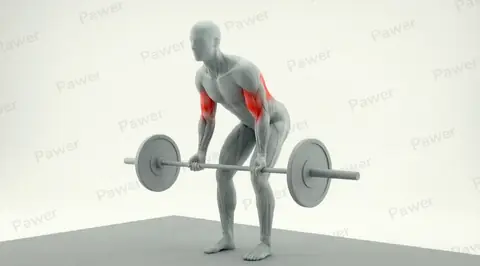
3 × 6-8
Rest 3 min
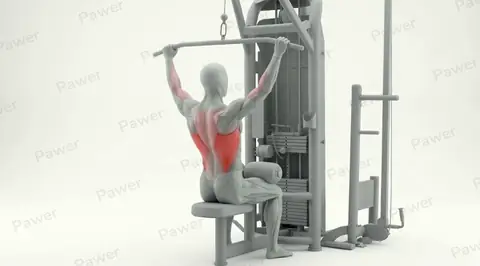 Lat Pulldown
Back
3 × 8-12
Rest 2 min
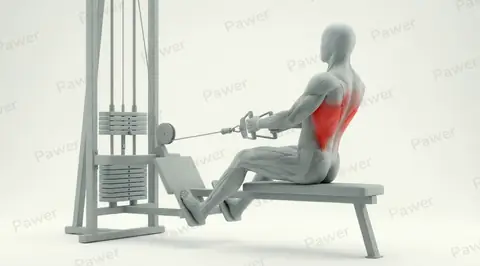
2 × 10-12
Rest 2 min
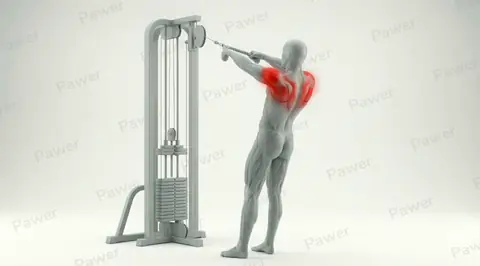 Cable Rope Face Pulls
Shoulders
3 × 12-15
Rest 1 min
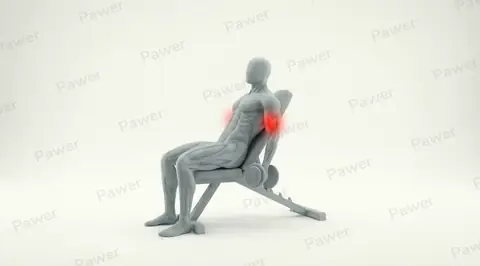 Dumbbell Incline Curl
Biceps
3 × 10-12
Rest 1-2 min
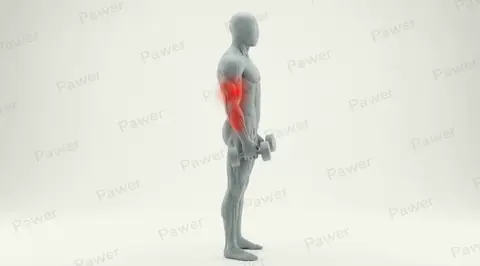 Dumbbell Hammer Curl
Biceps
2 × 10-15
Rest 1 min
The empty days are your push day, leg day or rest. Stop each set with one to three good reps left; take only the last set of an isolation exercise close to failure.
Each session is 16 sets and takes 50 to 60 minutes with full rest. If you are short on time, drop the hammer curl or the shrug first. Keep the two main back lifts, the rear shoulder work and one curl.
Why the exercises go in this order
Put what you most want to improve first. A review of exercise order studies found that people complete more reps on an exercise placed at the start of a session, and that untrained lifters gained the most strength on the first exercise and the least on the last (Simão et al., 2012). Rows and pull-ups need your grip, biceps and back all at once, so curls before them would only make them weaker.
- Heavy row or pull-up: 6 to 10 reps, longest rest.
- Second back lift in the other direction: 8 to 12 reps.
- Third back lift: 10 to 12 reps, machine or cable so it stays stable when you are tired.
- Rear shoulders: 12 to 20 reps.
- Biceps: one curl with a stretched arm or a barbell, then a hammer curl if time allows.
Best pull day exercises and why they made the list
Every pull day exercise in the planner earns its place by adding something the others do not. This table is the reason behind each pick and what to swap it for if your gym lacks the equipment.
| Exercise | Main target | Why it is here | Swap |
|---|---|---|---|
| Barbell row | Mid back, lats | The heaviest row you can load and progress | Machine row, dumbbell row |
| Pull-up or lat pulldown | Lats | The main vertical pull | Assisted pull-up, machine pulldown |
| Chest supported row | Mid back | Hard back work without lower back fatigue | Machine row, T-bar row |
| Face pull or reverse pec deck | Rear shoulders | Rows leave these with less direct work | Dumbbell rear delt fly |
| Incline dumbbell curl | Biceps | Trains the biceps with the arm behind the body | Bayesian cable curl |
| Hammer curl | Biceps, forearms | Adds forearm work and a stronger grip | Rope hammer curl |
| Shrug | Upper traps | Direct work that pulls do not fully replace | Barbell or machine shrug |
Does grip width matter on pulldowns and pull-ups?
Less than most gym advice claims. When 40 men with at least five years of training did seven lat pulldown variations, muscle activity did not differ significantly across the variations overall; the only difference found was more rear shoulder activity with a wide overhand grip and a 30 degree lean back (Buonsenso et al., 2025). EMG shows activity and not growth, but it is a good reason to stop chasing the one perfect grip. Choose the handle that feels strongest and lets you pull with a full range of motion.
Palms facing you do change things a little on the bar. In a comparison of 25 adults, the lats worked hard in pull-ups and chin-ups alike, while the biceps and chest were more active in the chin-up and the lower traps were more active in the pull-up (Youdas et al., 2010). If you want more biceps from the same exercise, use chin-ups. If they are too hard, a machine assisted pull-up gives the same movement with less bodyweight.
Do you need curls if you already row?
If bigger arms are a goal, yes. In an eight week study, ten untrained men trained one arm with dumbbell rows and the other with curls. The elbow flexors of the curl arm grew 11.06%, against 5.16% for the row arm (Mannarino et al., 2021). It is a small study in beginners, but it matches the logic: rows are limited by the back and grip, so the biceps rarely get pushed as hard as they do in a curl.
Should you deadlift on pull day?
You can, but it is not the default here. The deadlift is a hip and back extension: most of the work comes from the glutes, hamstrings and spinal erectors, with the upper back holding position. Done first, it leaves the lower back and grip tired for the barbell row, which is the lift this session is built around. Many pull days list it first simply because you are pulling a bar off the floor.
| Your goal | Where it goes | How to set it up |
|---|---|---|
| Muscle, general fitness | Leg day, after squats or in place of the Romanian deadlift | 2 to 3 sets of 5 to 8 |
| Bigger deadlift | First on Pull A | 3 sets of 3 to 6, then replace the barbell row with a chest supported row |
| Sore lower back | Leave it out | Use Pull B with the chest supported row |
Pull day sets, reps and rest times
Most pull days need 13 to 18 hard sets across 5 to 6 exercises. Stop most sets with one to three reps left in the tank; the RPE scale explains how to judge it.
| Exercise type | Sets | Reps | Rest | Effort |
|---|---|---|---|---|
| First back lift | 3 | 6 to 10 | 3 min | 2 to 3 reps left |
| Other back lifts | 2 to 3 | 8 to 12 | 2 min | 1 to 2 reps left |
| Rear shoulders | 3 | 12 to 20 | 1 min | 0 to 2 reps left |
| Barbell or incline curl | 3 | 8 to 12 | 1 to 2 min | 0 to 2 reps left |
| Hammer curl, shrug | 2 | 10 to 15 | 1 min | 0 to 2 reps left |
Do not rush the big lifts to save time. In a study of 21 trained men on the same program, the group resting 3 minutes between sets gained more strength and thigh muscle than the group resting 1 minute (Schoenfeld et al., 2016). The study did not test back exercises directly, but tired rows mean fewer reps on the next set. Save the time on face pulls and curls.
Weekly sets per muscle
| Muscle or pattern | Pull A only (once a week) | Pull A and Pull B (twice a week) |
|---|---|---|
| Vertical pulls (lats) | 3 | 8 |
| Rows (mid back and lats) | 5 | 8 |
| Rear shoulders | 3 | 6 |
| Biceps (curls) | 5 | 8 |
| Upper traps (shrugs) | 0 | 2 |
Once a week, Pull A gives the back 8 hard sets and the biceps 5 direct sets. That is enough to grow on a 3 day split, especially early on. Twice a week, the back gets 16 sets and the biceps get 8 on top of all the rowing, which is a solid dose for an intermediate lifter.
Dumbbell pull day and beginner pull day
The dumbbell pull day needs only dumbbells and an adjustable bench, so it works at home. The beginner pull day uses a pulldown, a cable row and curls on a cable stack, which are easy to learn and safe to push hard without a spotter. Both keep the same order: back first, small muscles last.
Weekly schedule
Dumbbell pull · Dumbbells and a bench only
Hover or tap an exercise to see it
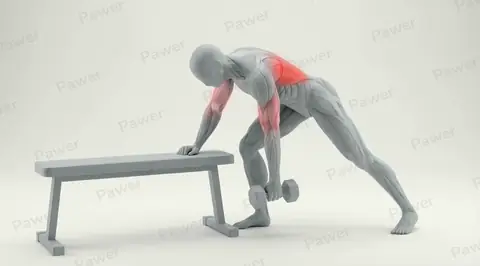 Dumbbell Single Arm Row
Back · per arm
4 × 8-12
Rest 2 min
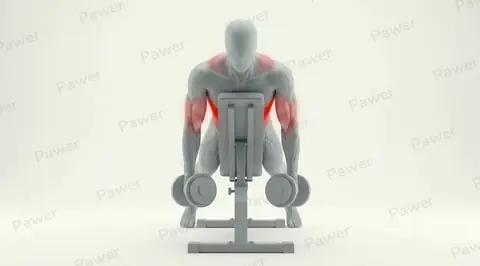 Chest-Supported Dumbbell Row
Back, Traps
3 × 8-12
Rest 2 min
 Dumbbell Rear Delt Fly
Shoulders
3 × 12-20
Rest 1 min
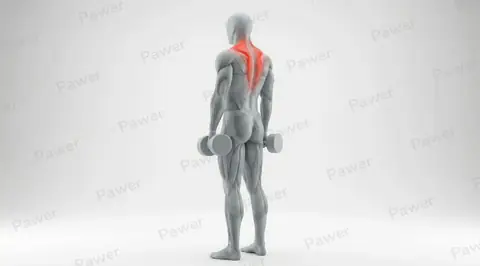 Dumbbell Shrug
Traps
2 × 10-15
Rest 1 min
- Dumbbell Incline Curl
Biceps
3 × 10-12
Rest 1-2 min
- Dumbbell Hammer Curl
Biceps
3 × 10-15
Rest 1 min
Beginners: pick a weight you can lift for the top of the rep range with two or three reps left, and add weight only when every set gets there.
The dumbbell version has 18 sets. Its one gap is a vertical pull, so if you have a bar at home, replace the second row with pull-ups. The beginner version has 13 sets on five exercises, which is enough while every session still brings new strength. After two or three months, move to Pull A. For a whole week of dumbbell training, see the dumbbell workout plan.
Women can run any of these pull days as written. Nothing in them needs changing. If upper body is not a priority, the beginner session works as a once a week pull day beside lower body days, as in the workout split for women.
How often should you do pull day?
Pull once a week if you train three days, twice a week if you train six. Both work. Pooling 25 studies, Schoenfeld and colleagues found no significant difference in muscle growth between training frequencies when the weekly sets were the same, and concluded that people can choose by preference (Schoenfeld et al., 2019). Two sessions simply make 16 back sets easier to do well.
| Split | Pull days per week | Which pull days | Weekly back sets |
|---|---|---|---|
| 3 day push pull legs | 1 | Pull A | 8 |
| 5 day split | 1 or 2 | Pull A, then Pull B | 8 to 16 |
| 6 day push pull legs | 2 | Pull A and Pull B | 16 |
Leave at least two days between pull sessions. Avoid scheduling a heavy deadlift the day before, since your lower back and grip will carry the fatigue into your rows. The full week plans are in the 3 day workout split and the 6 day workout split.
How to progress your pull day
Use double progression. Pick a weight that lets you reach the bottom of the rep range with one to three reps left. Keep it until every set hits the top of the range, then add the smallest jump and work back up. Write each set down so you know what to beat next week.
| Lift | Rep range | Add weight when | Jump |
|---|---|---|---|
| Barbell row | 6 to 8 | All 3 sets reach 8 reps | 2.5 kg / 5 lb |
| Pull-ups | 6 to 10 | All 3 sets reach 10 reps | Add a small weight with a belt |
| Pulldowns and machine rows | 8 to 12 | All sets reach 12 reps | Next plate on the stack |
| Face pulls, curls, shrugs | 10 to 20 | All sets reach the top with clean reps | Smallest available |
Warm up before the first lift with two or three lighter sets; the warm-up calculator works out the weights and the plate calculator loads the bar. Grip often fails before the back on heavy rows. Straps are a fair tool for the last set if your back still has reps left, but train without them on your warm-ups so your hands keep up.
Common pull day mistakes
| Mistake | Fix |
|---|---|
| Only rows, or only pulldowns | Use at least one of each every session |
| No rear shoulder work | Three sets of face pulls or reverse flies every pull day |
| Curls before rows | Back first, biceps last |
| Swinging the row with the hips | Lower the weight until the torso stays still |
| Stopping pull-ups halfway | Full hang at the bottom, or use an assisted machine |
| One minute of rest on heavy rows | Two to three minutes on the main back lifts |
| Far more pushing than pulling | Match pull day with a push day of similar volume |
Frequently asked questions
What muscles do you work on pull day?
Lats, mid back, traps, rear shoulders, biceps and forearms. Rows and pulldowns train the back and biceps together, face pulls cover the rear shoulders, and curls finish the arms.
How many exercises should a pull day have?
Five to six. Two or three back exercises, one rear shoulder move and one or two curls cover every pulling muscle in about an hour.
What is the best pull day exercise?
The barbell row or the pull-up. Both train the back and biceps heavily and are easy to progress. Use one first and the other direction second.
Should I do deadlifts on pull day?
Only if a bigger deadlift is your goal. Otherwise put it on leg day, because it tires the lower back and grip before your rows.
How long should a pull day take?
About 50 to 60 minutes with full rest. If you are short on time, drop the shrug or hammer curl and keep the rest times on your main back lifts.
Can I do pull day with only dumbbells?
Yes. Single arm rows, chest supported rows, rear delt flies, shrugs and curls make a full session. Add pull-ups if you have a bar.
Studies and sources
Every study below was read for this article. Links go to PubMed or the publisher.
- Exercise order in resistance training
Simão R, de Salles BF, Figueiredo T, Dias I, Willardson JM. Sports Medicine, 2012;42(3):251-265
Review: more total reps on exercises placed first; untrained lifters gained the most strength on the first exercise and the least on the last.
- Electromyographic Analysis of Back Muscle Activation During Lat Pulldown Exercise: Effects of Grip Variations and Forearm Orientation
Buonsenso A, Di Fonza D, Di Claudio G, Carangelo M, Centorbi M, di Cagno A, Calcagno G, Fiorilli G. Journal of Functional Morphology and Kinesiology, 2025;10(3):345
40 experienced men, seven pulldown variations: no significant overall difference in muscle activity; a wide overhand grip with a 30 degree lean raised rear shoulder activity.
- Surface electromyographic activation patterns and elbow joint motion during a pull-up, chin-up, or perfect-pullup rotational exercise
Youdas JW, Amundson CL, Cicero KS, Hahn JJ, Harezlak DT, Hollman JH. Journal of Strength and Conditioning Research, 2010;24(12):3404-3414
25 adults: biceps and pectoralis major more active in the chin-up, lower trapezius more active in the pull-up.
- Single-Joint Exercise Results in Higher Hypertrophy of Elbow Flexors Than Multijoint Exercise
Mannarino P, Matta T, Lima J, Simão R, Freitas de Salles B. Journal of Strength and Conditioning Research, 2021;35(10):2677-2681
10 untrained men, 8 weeks, one arm each: curls grew the elbow flexors 11.06%, dumbbell rows 5.16%.
- Longer Interset Rest Periods Enhance Muscle Strength and Hypertrophy in Resistance-Trained Men
Schoenfeld BJ, Pope ZK, Benik FM, Hester GM, Sellers J, Nooner JL, et al. Journal of Strength and Conditioning Research, 2016;30(7):1805-1812
21 trained men, 8 weeks: 3 minute rests gave more bench and squat strength and more thigh growth than 1 minute rests.
- How many times per week should a muscle be trained to maximize muscle hypertrophy? A systematic review and meta-analysis
Schoenfeld BJ, Grgic J, Krieger J. Journal of Sports Sciences, 2019;37(11):1286-1295
25 studies: with volume matched, training frequency made no significant difference to growth.