6 day workout split: the complete 6 day gym plan
 Anton YefanovUpdated
11 min read
A 6 day workout split spreads your training over six gym days and one rest day, and trains every muscle twice a week. The best version for most people is push pull legs run twice, with the first three days heavy and the last three built for volume, so no lift is hammered at full weight twice in one week. Below is the full 6 day gym workout schedule with every set, rep and rest time, the weekly sets it gives each muscle, two ways to place the rest day, an Arnold split for those who prefer it, and an honest answer to whether six days is too much. For other ways to divide the week, see how to choose a workout split or browse all workout routines.
- Days per week
- 6
- Session length
- 45 to 65 min
- Level
- Intermediate to advanced
- Equipment
- Full gym
Key takeaways
- The best 6 day workout split for most lifters is push pull legs twice a week: every muscle gets two sessions.
- Make the first round heavy (5 to 8 reps on barbell lifts) and the second round volume (8 to 20 reps on dumbbells, cables and machines), so joints never take two heavy sessions of the same lift.
- Train Monday to Saturday with Sunday off, or rest midweek if six days in a row wear you down.
- The plan gives 11 to 15 hard sets a week to chest, back and quads, in sessions of 45 to 65 minutes.
- Six days is not required for growth: studies find 3 and 6 days give similar gains when weekly sets match. Six days buys shorter sessions and room for more sets.
What is a 6 day workout split?
A workout split is the way you divide your muscles across the week. A 6 day split fills six sessions and leaves one day of rest. Because six divides cleanly by three, the most common versions run a three day cycle twice: push pull legs, or the Arnold split of chest and back, shoulders and arms, and legs. Either way each muscle is trained twice a week, with two or three days between sessions.
That is the main difference from a five day week. With six sessions you do not have to bolt two splits together or leave one muscle with a single session. You also get shorter workouts: the same weekly work spread over six days instead of four means less to do each time you walk in.
| Split | The six days | Each muscle per week | Best for |
|---|---|---|---|
| Push pull legs, heavy and volume | Push A, Pull A, Legs A, Push B, Pull B, Legs B | Twice | Most lifters chasing size and strength |
| Arnold split | Chest and back, Shoulders and arms, Legs, then repeat | Twice | Lifters who like supersets and arm volume |
| Upper lower, three rounds | Upper, Lower, Upper, Lower, Upper, Lower | Three times | Strength focus, short sessions |
| Six day bro split | Chest, Back, Shoulders, Legs, Arms, Weak point | Once (arms twice) | Bodybuilders who prefer one long session per muscle |
The first two are the strongest choices and both are written out in full below. Upper lower three times a week works too, but six sessions of the same two workouts gets repetitive, and the 4 day upper lower split already covers that structure well.
The best 6 day workout split: push pull legs, heavy and volume
Running the same push, pull and legs workouts twice a week is the simple way to do six days, and the full push pull legs routine shows it. This version goes one step further: the A days are heavy and the B days are for volume. Push A opens with the bench press at 5 to 7 reps, Pull A with the barbell row, Legs A with the squat. The B days train the same muscles with dumbbells, cables and machines for 8 to 20 reps. You get heavy practice on each big lift once a week, and your elbows, shoulders and lower back get a lighter day before the next heavy one.
Weekly schedule
Push A · Heavy: bench press, overhead press
Hover or tap an exercise to see it
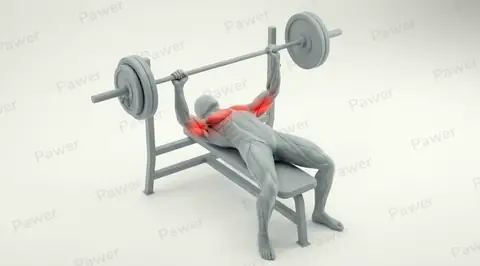 Barbell Bench Press
Chest
4 × 5-7
Rest 3 min
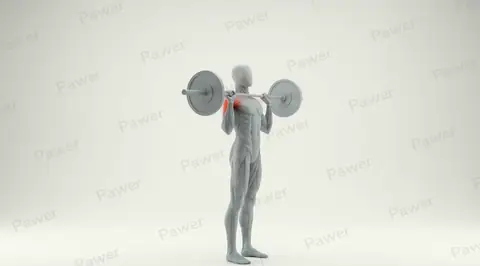 Barbell Overhead Press
Shoulders
3 × 6-8
Rest 2-3 min
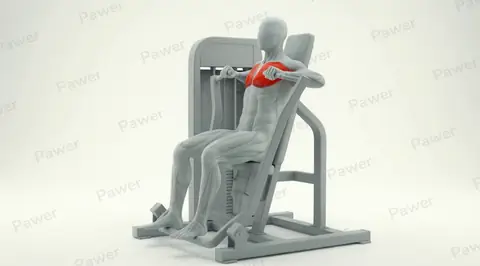 Machine Chest Press
Chest
3 × 10-12
Rest 1-2 min
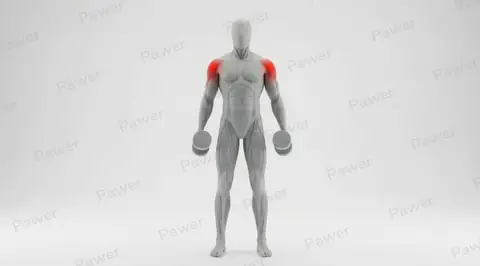 Dumbbell Lateral Raise
Shoulders
3 × 12-15
Rest 1 min
 Cable Rope Pushdown
Triceps
3 × 10-12
Rest 1 min
Stop each set with one to three good reps left. The A days carry the heavy barbell lifts; the B days skip the bench, row and squat so the same joints never take two heavy sessions in one week.
Pull A uses pull-ups; swap in the lat pulldown until you can do six clean reps. Legs B starts with the hip thrust so glutes get their hardest work while you are fresh, and the Bulgarian split squat adds single leg work without loading the spine after Legs A's squats and Romanian deadlifts.
Weekly sets per muscle
| Muscle | A days (heavy) | B days (volume) | Per week |
|---|---|---|---|
| Chest | 7 | 7 | 14 |
| Back (lats and upper back) | 7 | 8 | 15 |
| Front shoulders (overhead press) | 3 | 0 | 3 |
| Side shoulders | 3 | 4 | 7 |
| Rear shoulders | 3 | 3 | 6 |
| Biceps | 3 | 5 | 8 |
| Triceps | 3 | 3 | 6 |
| Quads | 4 | 7 | 11 |
| Hamstrings | 6 | 3 | 9 |
| Glutes (hip thrust, split squat) | 0 | 5 | 5 |
| Calves | 4 | 3 | 7 |
| Abs | 3 | 0 | 3 |
Chest, back and quads land between 11 and 15 direct sets a week, and every other muscle is topped up by the compound lifts. That is enough for steady growth in an intermediate lifter. No session goes past 17 sets, which is why the workouts stay between 45 and 65 minutes. If arms or side shoulders lag, add one set to each of their exercises on the B days; those sessions have the room.
6 day gym workout schedule: where to put the rest day
The planner above switches between these two weeks. Both keep two or three days between sessions for the same muscle; they differ only in when you rest.
| Week | Mon | Tue | Wed | Thu | Fri | Sat | Sun |
|---|---|---|---|---|---|---|---|
| Mon to Sat | Push A | Pull A | Legs A | Push B | Pull B | Legs B | Rest |
| Rest midweek | Push A | Pull A | Legs A | Rest | Push B | Pull B | Legs B |
Monday to Saturday is the classic: train six days, take Sunday off. It suits people with a fixed routine and gyms that are quiet on Saturday mornings. Rest midweek splits the week into two blocks of three, which is easier on sleep and joints, and leaves Thursday free for whatever comes up. If one day of rest is not enough, there is a third option the planner does not show: run the six workouts as a rolling cycle of three on, one off. Each muscle then gets slightly less than two sessions a week, and you never miss a workout because the calendar moved.
The 6 day Arnold split
The Arnold split pairs opposing muscles: chest with back, shoulders with arms, then legs, and repeats the cycle. Pairing chest and back means you can alternate a press and a pull with little rest, so the session moves fast. Shoulders and arms on the same day gives the arms more direct work than any push pull legs plan. The cost is that the arms are already tired from the presses and rows of the day before, so this version keeps each session between 15 and 20 sets rather than the marathon days the split is famous for.
Weekly schedule
Chest & back · Presses and pulls, paired
Hover or tap an exercise to see it
- Barbell Bench Press
Chest
3 × 6-8
Rest 2-3 min
 Pull Ups
Back · or lat pulldown
3 × 6-10
Rest 2 min
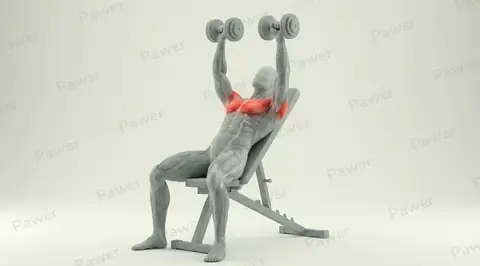
3 × 8-12
Rest 2 min
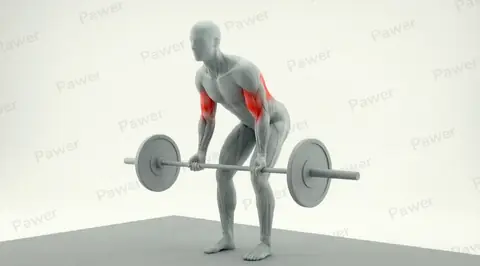
3 × 8-10
Rest 2 min
 Cable Pec Fly
Chest
2 × 12-15
Rest 1 min

2 × 12-15
Rest 1 min
Alternate the paired chest and back exercises (bench, then pull-ups, then bench) with 90 seconds between them to save time. Keep the heavy squat on both leg days at 6 to 8 reps, never to failure.
| Muscle | Push pull legs, A and B | Arnold split |
|---|---|---|
| Chest | 14 | 16 |
| Back | 15 | 16 |
| Side shoulders | 7 | 6 |
| Rear shoulders | 6 | 4 |
| Biceps | 8 | 10 |
| Triceps | 6 | 10 |
| Quads | 11 | 12 |
| Hamstrings | 9 | 12 |
| Calves | 7 | 8 |
Pick the Arnold split if you enjoy supersets, want bigger arms, and recover well from heavy squats twice a week. Pick push pull legs with A and B days if you want one heavy session per lift and a lighter one after it. Both reach similar weekly volume, which is what drives growth.
How to progress on a 6 day split
Use double progression on every exercise. Start with a weight you can lift for the bottom of the rep range with one to three reps left in the tank, which is RPE 7 to 9 on the effort scale. Stay at that weight until you reach the top of the range on every set, then add the smallest jump and build the reps back up.
| Lift type | Rep range | Add weight when | Jump |
|---|---|---|---|
| Heavy upper (bench, row, overhead press) | 5 to 8 | All sets at the top of the range | 2.5 kg / 5 lb |
| Heavy lower (squat, Romanian deadlift) | 5 to 8 | All sets at the top of the range | 5 kg / 10 lb |
| Dumbbell and machine work | 8 to 12 | All sets at the top of the range | Next dumbbell or plate |
| Isolation (raises, curls, calves) | 12 to 20 | All sets at the top of the range, clean reps | Smallest available |
Warm up with two or three lighter sets before the first lift of each day; the warm-up calculator works out the weights and the plate calculator loads the bar. To start the heavy lifts from a percentage of your max, estimate it from a recent set with the one rep max calculator.
Six days a week leaves little slack. Every four to six weeks, or as soon as two lifts stall for two weeks in a row, take a lighter week: same exercises, half the sets, a couple of reps further from failure. Then pick up from your last good numbers.
Is a 6 day workout split too much? What the research says
Six days is not too much if the weekly sets are sensible. It is also not better by itself. The most direct test put 27 trained men on the same weekly volume, spread over either 3 or 6 sessions, for six weeks. Both groups gained lower body strength (+22% on three days, +18% on six) and grew the triceps and quads by similar amounts, with no significant difference between them (Saric et al., 2019).
That fits the larger picture. Pooling 25 studies, Schoenfeld and colleagues found no significant difference in muscle growth between higher and lower frequencies when weekly volume was matched, and concluded that people can pick a frequency on preference (Schoenfeld et al., 2019). For strength, a meta-analysis of 22 studies saw effect sizes rise from 0.74 at once a week to 1.08 at four or more times, but that gap disappeared in the studies that matched volume (Grgic et al., 2018). More frequent training helps mainly because it makes more total work easy to fit in.
And total work does matter. A meta-analysis of 15 studies found that each extra weekly set was linked to a slightly larger gain in muscle size, and the higher-volume groups gained about 3.9 percentage points more than the lower-volume ones (Schoenfeld et al., 2017). This is the real case for six days: it lets you reach 12 to 16 sets per muscle in sessions of under an hour. The split type itself matters little. A 2024 meta-analysis of 14 studies and 392 people found split and full body routines gave similar strength and muscle growth when volume was equal (Ramos-Campo et al., 2024).
Pros and cons of a 6 day split
- Pro: short sessions. High weekly volume, with no workout past about an hour.
- Pro: every muscle twice. Two sessions a week without stacking two splits together.
- Pro: heavy and light days. Each big lift gets one heavy day and a lighter day for its muscles.
- Con: one rest day. Poor sleep or a hard week at work shows up fast.
- Con: easy to overdo. Adding sets because you have the time is the most common way six days goes wrong.
- Con: missed days cost more. Lose one session and the week's order shifts.
Who should run a 6 day workout split?
Intermediate and advanced lifters with a year or more of steady training, who enjoy being in the gym most days and sleep seven hours or more. If you already run the 5 day workout split and want shorter sessions, moving to six days with the same weekly sets is a natural step.
Beginners should not start here. Six days of new lifts is a lot of soreness and a lot to learn, and three days already builds muscle fast at the start. Begin with a three day full body workout routine or the 3 day workout split, and add days once your sessions run past an hour.
Women can run either plan as written. If glutes are the priority, add a set of hip thrusts at the end of Legs A and a set to the Bulgarian split squat on Legs B. For fat loss, keep the lifting as it is, eat in a moderate calorie deficit and walk on the rest day; drop the last isolation exercise of each session if recovery suffers. At home with dumbbells and a bench, run the dumbbell versions in the dumbbell workout plan.
Common 6 day split mistakes
| Mistake | Fix |
|---|---|
| Doing the same heavy workouts twice a week | One heavy day and one volume day per muscle group |
| Adding sets because sessions feel short | Keep 10 to 16 weekly sets per muscle and spend the spare time resting |
| Every set to failure, six days in a row | Leave one to three reps in the tank on most sets |
| Heavy squats and Romanian deadlifts on back to back days | Keep Legs A and Legs B three days apart |
| Skipping the lighter week | Take one every four to six weeks, or when lifts stall |
| Not writing numbers down | Log every set, so next week's target is clear |
Frequently asked questions
What is the best 6 day workout split?
For most lifters, push pull legs run twice, with heavy A days and volume B days. It trains every muscle twice a week in sessions under an hour. The Arnold split is a good choice if you want more arm work.
Is a 6 day workout split too much?
Not if weekly sets stay around 10 to 16 per muscle and most sets stop short of failure. It is too much if you sleep badly, cannot eat enough, or add sets just because you have the time.
Does a 6 day split hit each muscle twice a week?
Push pull legs and the Arnold split both do. A six day bro split trains most muscles only once, with arms or a weak point on the sixth day.
Is a 6 day split better than 3 days for muscle gain?
Not when weekly sets are the same. A study of trained men found similar strength and muscle gains on 3 and 6 days a week. Six days mainly makes high volume easier to fit into shorter sessions.
Can beginners do a 6 day workout split?
It is not a good first program. Beginners grow well on three full body sessions and recover more easily. Move to six days after a year or so of steady training.
How long should each workout take on a 6 day split?
About 50 to 65 minutes for the heavy A days with long rests, and 45 to 55 minutes for the volume B days. If you run over, drop an isolation exercise rather than your rest on the big lifts.
Can I do a 6 day split to lose weight?
Yes. Lift as written to keep muscle, eat in a moderate deficit and walk on the rest day. If recovery drops, cut one isolation exercise per session before you cut a training day.
Studies and sources
Every study below was read for this article. Links go to PubMed or the publisher.
- Resistance Training Frequencies of 3 and 6 Times Per Week Produce Similar Muscular Adaptations in Resistance-Trained Men
Saric J, Lisica D, Orlic I, Grgic J, Krieger JW, Vuk S, Schoenfeld BJ. Journal of Strength and Conditioning Research, 2019;33(Suppl 1):S122-S129
27 trained men, 6 weeks, volume equated: 3 and 6 sessions a week gave similar strength gains and muscle thickness gains.
- How many times per week should a muscle be trained to maximize muscle hypertrophy? A systematic review and meta-analysis
Schoenfeld BJ, Grgic J, Krieger J. Journal of Sports Sciences, 2019;37(11):1286-1295
25 studies: with volume matched, frequency made no significant difference to growth.
- Effect of Resistance Training Frequency on Gains in Muscular Strength: A Systematic Review and Meta-Analysis
Grgic J, Schoenfeld BJ, Davies TB, Lazinica B, Krieger JW, Pedisic Z. Sports Medicine, 2018;48(5):1207-1220
22 studies: strength effect sizes rose from 0.74 (once a week) to 1.08 (4+ times), with no significant effect of frequency in volume-equated studies.
- Dose-response relationship between weekly resistance training volume and increases in muscle mass: A systematic review and meta-analysis
Schoenfeld BJ, Ogborn D, Krieger JW. Journal of Sports Sciences, 2017;35(11):1073-1082
15 studies: more weekly sets meant more growth; higher-volume groups gained 3.9 percentage points more than lower-volume groups.
- Efficacy of Split Versus Full-Body Resistance Training on Strength and Muscle Growth: A Systematic Review With Meta-Analysis
Ramos-Campo DJ, Benito-Peinado PJ, Andreu-Caravaca L, Rojo-Tirado MA, Rubio-Arias JÁ. Journal of Strength and Conditioning Research, 2024;38(7):1330-1340
14 studies, 392 people: with volume equated, split and full body routines gave similar strength gains and muscle growth.