Dumbbell workout plan: 3, 4 and 5 day dumbbell only routines
 Anton YefanovUpdated
11 min read
A dumbbell workout plan is a weekly training program you can run with nothing but a pair of dumbbells and, ideally, a bench. Dumbbells cover every movement a barbell gym does (squat, hinge, press, row), so they build muscle and strength at home or in the gym. Below are three complete dumbbell only routines: a 3 day full body plan for beginners, a 4 day upper lower plan and a 5 day split, with every set, rep and rest time, the weekly sets each gives every muscle, what weights to start with, swaps if you have no bench, and how to keep progressing when your dumbbells feel light. For gym plans, browse all workout routines.
- Days per week
- 3, 4 or 5
- Session length
- 45 to 65 min
- Level
- Beginner to intermediate
- Equipment
- Dumbbells and a bench
Key takeaways
- Beginners: run the 3 day full body dumbbell plan, Monday, Wednesday, Friday. Every muscle is trained three times a week in about 50 minutes.
- With four days, the upper lower dumbbell plan gives chest, back and legs 10 or more sets a week.
- With five days, run push, pull, legs, upper, lower: the most volume, with every muscle still trained twice.
- You need adjustable dumbbells and a bench. No bench? Floor presses and supported rows cover it.
- Light dumbbells still build muscle: studies find sets of 25 to 35 reps grow muscle about as well as 8 to 12, if you take them close to failure.
Which dumbbell workout plan should you run?
Pick the plan by how many days you can train, not by how advanced you feel. All three use the same small set of dumbbell exercises; what changes is how many sessions each muscle gets and how many sets it collects over the week.
| Plan | Days | Each muscle per week | Session length | Best for |
|---|---|---|---|---|
| Full body | 3 | Three times | 45 to 55 min | Beginners, busy weeks |
| Upper lower | 4 | Twice | 55 to 65 min | Muscle gain after a few months |
| Push, pull, legs, upper, lower | 5 | Twice | 45 to 60 min | Intermediates who like training most days |
If you are new to lifting, start with the 3 day plan for at least two or three months. It is also the plan to fall back on in busy weeks. To see how these structures compare with gym splits, read how to choose a workout split.
3 day full body dumbbell workout plan (beginner)
Three different full body days, each led by a different leg exercise and press. Day A opens with the goblet squat and dumbbell bench press. Day B moves to the dumbbell deadlift and seated overhead press. Day C uses single-leg work, the Bulgarian split squat and single leg Romanian deadlift, which load each leg hard without needing heavy dumbbells. Sessions are 15 to 17 sets.
Weekly schedule
Full body A · Goblet squat, bench press, row
Hover or tap an exercise to see it
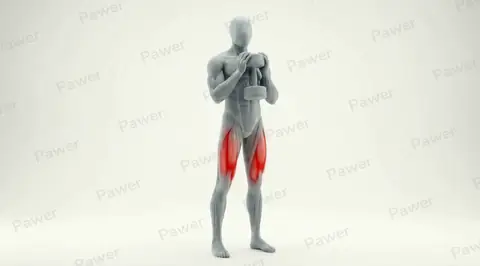 Dumbbell Goblet Squat
Glutes, Quads
3 × 8-12
Rest 2 min
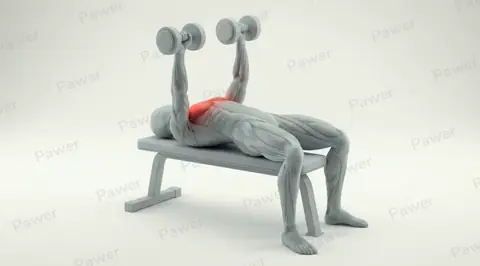 Dumbbell Bench Press
Chest · or floor press
3 × 8-12
Rest 2 min
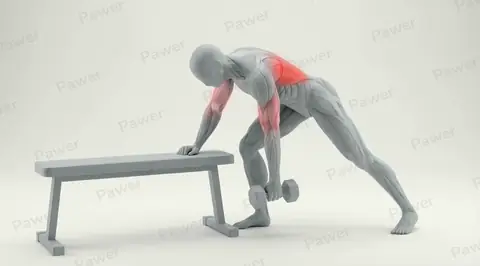 Dumbbell Single Arm Row
Back · per arm
3 × 10-12
Rest 1-2 min
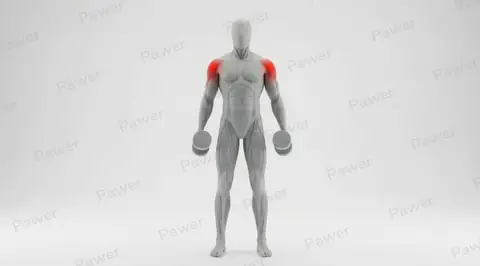 Dumbbell Lateral Raise
Shoulders
2 × 12-20
Rest 1 min
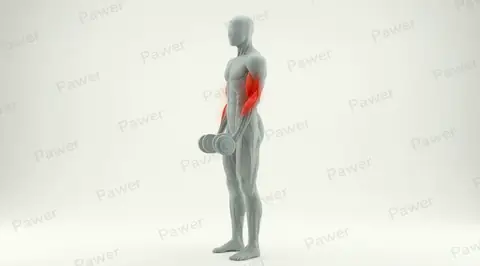 Dumbbell Curl
Biceps
2 × 10-15
Rest 1 min
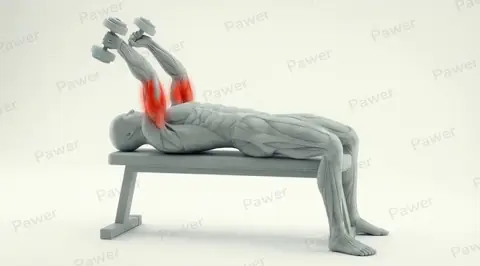 Dumbbell Skullcrusher
Triceps
2 × 10-15
Rest 1 min
Stop each set with one to three good reps left. For your first two weeks, do two sets of everything instead of three while you learn the movements.
Do the exercises in the order shown: the leg and press movements come first while you are fresh, the small arm and shoulder work last. If you are short on time, drop the last exercise, never the first two. This plan is a dumbbell-only cousin of the gym full body workout routine, which also has a 2 day schedule.
4 day upper lower dumbbell workout plan
Once full body sessions start to feel crowded, give the upper body and legs their own days. You train four times a week, every muscle still gets two sessions, and each session has room for more sets. Upper days run 20 to 21 sets; lower days 17 to 18, including a little core work.
Weekly schedule
Upper A · Bench press, rows, overhead press
Hover or tap an exercise to see it
- Dumbbell Bench Press
Chest
4 × 6-10
Rest 2-3 min
- Dumbbell Single Arm Row
Back · per arm
4 × 8-12
Rest 2 min
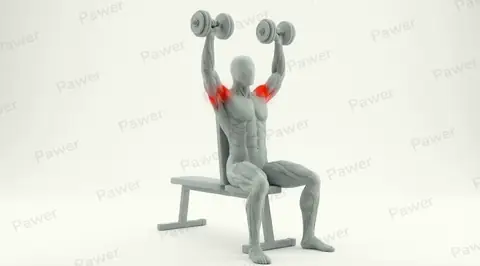 Dumbbell Seated Overhead Press
Shoulders
3 × 8-12
Rest 2 min
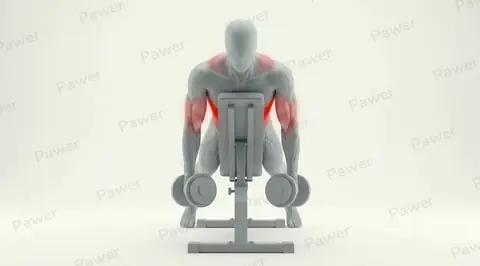 Chest-Supported Dumbbell Row
Back, Traps
3 × 10-12
Rest 1-2 min
- Dumbbell Lateral Raise
Shoulders
3 × 12-20
Rest 1 min
- Dumbbell Curl
Biceps
2 × 10-12
Rest 1 min
- Dumbbell Skullcrusher
Triceps
2 × 10-12
Rest 1 min
Lower B is all single-leg work, so it stays hard even when your heaviest pair is not heavy enough for squats.
Upper A is the heavier day: bench press for 6 to 10 reps with longer rest. Upper B uses the incline press, flyes and more shoulder work. The structure is the same as the barbell upper lower split, so you can move between them if you join a gym later.
5 day dumbbell workout plan
Five days a week, push, pull and legs first, then an upper and a lower day. Each muscle is trained twice, and with the work spread over five sessions none of them runs long. This is the plan with the most total volume, so only take it on once three or four days feel easy to recover from.
Weekly schedule
Push · Chest, shoulders, triceps
Hover or tap an exercise to see it
- Dumbbell Bench Press
Chest
4 × 6-10
Rest 2-3 min
- Dumbbell Seated Overhead Press
Shoulders
3 × 8-12
Rest 2 min
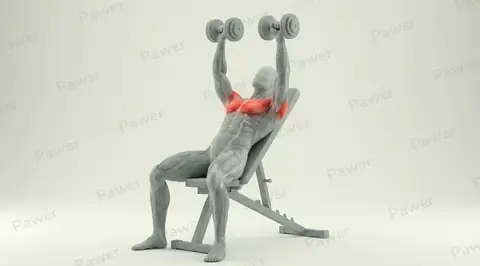
3 × 8-12
Rest 2 min
- Dumbbell Lateral Raise
Shoulders
3 × 12-20
Rest 1 min
- Dumbbell Skullcrusher
Triceps
3 × 10-12
Rest 1 min
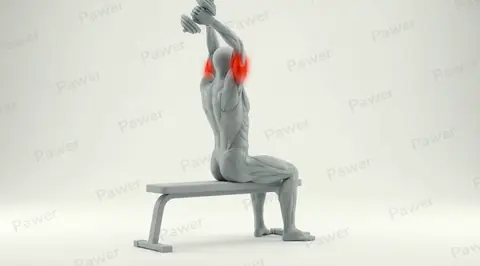
2 × 10-15
Rest 1 min
The rest day after Legs keeps three days between the two lower body sessions on the first schedule. On Monday to Friday, keep Lower light if your legs are still sore.
Many 5 day dumbbell plans online use one muscle per day, which trains each muscle once a week. This one trains each muscle twice for the same time in the gym. For a gym version with barbells and machines, see the 5 day workout split.
Weekly sets per muscle in each dumbbell plan
Here is what each plan gives every muscle per week, counted straight from the planners. Use it to check that the plan you picked trains what you want to grow.
| Muscle | 3 day full body | 4 day upper lower | 5 day split |
|---|---|---|---|
| Chest | 6 | 10 | 12 |
| Back (lats and upper back) | 9 | 11 | 10 |
| Front shoulders (overhead press) | 3 | 3 | 3 |
| Side shoulders | 4 | 6 | 6 |
| Rear shoulders | 2 | 3 | 3 |
| Biceps | 4 | 4 | 7 |
| Triceps | 4 | 4 | 7 |
| Quads | 8 | 11 | 10 |
| Hamstrings | 5 | 11 | 9 |
| Glutes (direct) | 0 | 3 | 3 |
| Calves | 3 | 6 | 7 |
| Sessions per muscle | 3 | 2 | 2 |
The 3 day plan lands the big muscles at 5 to 9 hard sets a week, a good dose for a beginner. The 4 and 5 day plans push chest, back and legs to 9 to 12, which is where most intermediates should be. If one muscle lags, add one set to one of its exercises in each session that trains it, then check the table again.
What dumbbells you need and how heavy to start
At home, buy adjustable dumbbells rather than fixed pairs: one set takes the space of two shoebox-sized blocks and covers every exercise here. A set that goes from about 2.5 to 24 kg (5 to 52.5 lb) per hand covers most beginners for their first year. A bench that sets flat and inclined is the best second purchase; it opens up the bench press, incline press, supported rows and split squats.
| Exercise type | Examples | New lifters | After 6 to 12 months |
|---|---|---|---|
| Small shoulder work | Lateral raise, rear delt fly | 2 to 5 kg / 5 to 10 lb | 6 to 12 kg / 12.5 to 25 lb |
| Arms | Curls, skullcrushers, kickbacks | 4 to 8 kg / 10 to 17.5 lb | 8 to 16 kg / 17.5 to 35 lb |
| Presses and rows | Bench press, overhead press, rows | 6 to 14 kg / 12.5 to 30 lb | 16 to 30 kg / 35 to 65 lb |
| Legs and hinge | Goblet squat, deadlift, split squat | 8 to 20 kg / 17.5 to 45 lb | 20 to 40 kg / 45 to 90 lb |
To find your weight on the first day, start light, do a set of the target reps, and go up one step at a time until the last two reps slow down. Write that number down. On later days, the warm-up calculator works out lighter sets to do before your first exercise.
Dumbbell workout plan without a bench
| In the plan | Without a bench |
|---|---|
| Dumbbell bench press | Floor press, or push-ups with feet raised when the dumbbells get too light |
| Incline bench press | Floor press with your hips raised in a glute bridge |
| Single arm row | Same row with your free hand on a sturdy chair or table |
| Chest-supported row | Two arm bent-over row |
| Bulgarian split squat | Rear foot on a low step or couch, or a reverse lunge |
| Seated overhead press and extension | Do them standing |
| Skullcrusher and chest fly | Lie on the floor; the shorter range is fine |
How to progress with dumbbells
Use double progression on every exercise. Keep a weight until every set reaches the top of the rep range with one to three reps left, which is RPE 7 to 9 on the effort scale. Then move up one step and work back up from the bottom of the range. With dumbbells the step is often 2 kg per hand, a bigger jump than on a barbell, so expect to stay on each weight for a few weeks.
| Week | Weight per hand | Reps |
|---|---|---|
| 1 | 16 kg / 35 lb | 10, 9, 8 |
| 2 | 16 kg / 35 lb | 12, 10, 9 |
| 3 | 16 kg / 35 lb | 12, 12, 12 |
| 4 | 18 kg / 40 lb | 9, 8, 8 |
When your heaviest dumbbells feel light
Sooner or later your legs outgrow your dumbbells. That does not stop progress, it changes how you add difficulty. Work down this list, one step at a time.
- Add reps. Stretch the range to 15 to 30 and take sets close to failure. The research below shows this still grows muscle.
- Go single-leg or single-arm. A Bulgarian split squat with 20 kg dumbbells is far harder than a goblet squat with one.
- Slow the lowering to three seconds and pause for one second at the bottom.
- Add a set to the exercise in each session, up to four or five sets.
- Buy the next weight range. When all four steps are used up, it is time.
Every six to eight weeks, or when several lifts stall for two weeks running, take a lighter week with half the sets, then carry on from your last good numbers. Logging every set is what makes all of this work, because next week's target is last week's numbers plus one rep.
Can you build muscle with just dumbbells?
Yes. Dumbbells load the same muscles as a barbell. In 12 trained men, the dumbbell bench press used a load 17% lighter than the barbell bench press, yet chest and front shoulder activity did not differ between the two; the dumbbell version used the biceps more and the triceps less (Saeterbakken et al., 2011). You lift less weight, the target muscles do the same work.
The bigger worry is that home dumbbells run out of weight. That matters less for muscle than for maximal strength. A meta-analysis of 21 studies with every set taken to failure found similar muscle growth with light loads (60% of max or less) and heavy loads, while heavy loads built more one-rep-max strength (Schoenfeld et al., 2017). A 2021 network meta-analysis of 28 studies and 747 adults reached the same conclusion for sets of more than 15 reps against sets of 8 or fewer (Lopez et al., 2021).
In trained lifters specifically, 18 men did 3 sets of 7 exercises three times a week for 8 weeks with either 25 to 35 reps or 8 to 12 reps per set. Both groups grew their biceps, triceps and quads by similar amounts (quads +9.5% with light loads, +9.3% with heavy), but squat strength rose more with heavy loads, 19.6% against 8.8% (Schoenfeld et al., 2015). The catch is effort: those light sets went to failure. A set of 30 easy reps you stop at 20 does not count the same.
What decides growth over months is how many hard sets you do. Across 15 studies, more weekly sets meant more growth, and the higher-volume groups gained 3.9 percentage points more than the lower-volume groups (Schoenfeld et al., 2017). That is why the weekly sets table above matters more than which dumbbell exercise you pick.
Common dumbbell workout mistakes
| Mistake | Fix |
|---|---|
| Random workouts from videos every day | Run one plan for 8 to 12 weeks and log it |
| Stopping light sets at the target reps | With light dumbbells, go to one or two reps short of failure |
| No back work beyond curls | At least 9 sets of rows a week |
| Only goblet squats for legs | Add split squats and single leg RDLs once one dumbbell is too light |
| Jumping weight before all sets hit the top of the range | Use double progression |
| Training the same muscles on back to back days | Follow the schedules in the planners |
Frequently asked questions
What is the best dumbbell workout plan for beginners?
The 3 day full body plan on this page: three different full body sessions on Monday, Wednesday and Friday, two sets of each exercise for the first two weeks, then three.
Can you build muscle with only dumbbells?
Yes. Dumbbell presses work the chest as much as barbell presses, and studies find light loads grow muscle as well as heavy ones when sets are taken close to failure.
How many days a week should I do dumbbell workouts?
Three is enough to build muscle, with a rest day after each. Move to four or five days when you want more sets per muscle and can recover from them.
What weight dumbbells should I buy?
Adjustable dumbbells from about 2.5 to 24 kg (5 to 52.5 lb) per hand cover most beginners for the first year. Stronger lifters will want up to 30 to 40 kg for legs.
Can I do a dumbbell workout plan without a bench?
Yes. Swap bench presses for floor presses or push-ups, brace rows on a chair, and do the seated exercises standing. A bench is still the best upgrade you can buy.
Is there a dumbbell workout plan PDF?
There is no separate PDF: all three plans are written out on this page with sets, reps and rest. A workout log works better than paper, because each session shows last week's weights.
How long should a dumbbell workout take?
45 to 65 minutes including rest. If you run over, cut the last isolation exercise rather than shortening rest on the first two lifts.
Studies and sources
Every study below was read for this article. Links go to PubMed or the publisher.
- A comparison of muscle activity and 1-RM strength of three chest-press exercises with different stability requirements
Saeterbakken AH, van den Tillaar R, Fimland MS. Journal of Sports Sciences, 2011;29(5):533-538
12 trained men: the dumbbell load was 17% lighter than the barbell load, with no difference in chest or front shoulder activity.
- Strength and Hypertrophy Adaptations Between Low- vs. High-Load Resistance Training: A Systematic Review and Meta-analysis
Schoenfeld BJ, Grgic J, Ogborn D, Krieger JW. Journal of Strength and Conditioning Research, 2017;31(12):3508-3523
21 studies, sets to failure: similar muscle growth with low and high loads; one rep max strength favored high loads.
- Resistance Training Load Effects on Muscle Hypertrophy and Strength Gain: Systematic Review and Network Meta-analysis
Lopez P, Radaelli R, Taaffe DR, Newton RU, Galvão DA, Trajano GS, Teodoro JL, Kraemer WJ, Häkkinen K, Pinto RS. Medicine and Science in Sports and Exercise, 2021;53(6):1206-1216
28 studies, 747 adults: no difference in muscle growth between low, moderate and high loads; strength gains were greater with heavier loads.
- Effects of Low- vs. High-Load Resistance Training on Muscle Strength and Hypertrophy in Well-Trained Men
Schoenfeld BJ, Peterson MD, Ogborn D, Contreras B, Sonmez GT. Journal of Strength and Conditioning Research, 2015;29(10):2954-2963
18 trained men, 8 weeks: 25 to 35 reps and 8 to 12 reps grew muscle similarly; squat strength rose 19.6% with heavy loads against 8.8% with light.
- Dose-response relationship between weekly resistance training volume and increases in muscle mass: A systematic review and meta-analysis
Schoenfeld BJ, Ogborn D, Krieger JW. Journal of Sports Sciences, 2017;35(11):1073-1082
15 studies: more weekly sets meant more growth; higher-volume groups gained 3.9 percentage points more than lower-volume groups.