5 day workout split: the complete 5 day workout plan
 Anton YefanovUpdated
11 min read
A 5 day workout split spreads your training over five gym days a week and gives each day its own set of muscles. The best version for most people is upper, lower, push, pull, legs: two heavy days early in the week and three lighter volume days after, so every muscle is trained twice. Below is the full 5 day workout routine with every set, rep and rest time, the weekly sets it gives each muscle, three ways to schedule it, a better version of the classic bro split, and how to add weight week after week. For other ways to divide the week, see how to choose a workout split or browse all workout routines.
- Days per week
- 5
- Session length
- 45 to 70 min
- Level
- Intermediate
- Equipment
- Full gym
Key takeaways
- The best 5 day workout split for most lifters is upper, lower, push, pull, legs: it trains every muscle twice a week in five sessions.
- Upper and Lower are heavy (5 to 8 reps on the barbell lifts). Push, Pull and Legs are for volume (8 to 20 reps on dumbbells, cables and machines).
- Run it Monday to Friday with weekends off, or put a rest day on Wednesday if your legs need it.
- It gives 9 to 15 hard sets per week to every major muscle, in sessions of 45 to 70 minutes.
- A bro split (chest, back, legs, shoulders, arms) also works when weekly sets are equal, but it packs each muscle into one long session.
What is a 5 day workout split?
A workout split is the way you divide your muscles across the week. A 5 day split does it over five sessions, usually with the weekend off. There are several ways to fill those five days, and they differ mainly in how often each muscle is trained: once a week in a bro split, twice a week in upper lower plus push pull legs, roughly twice in a rolling push pull legs cycle.
Five days is an odd number for most splits. Push pull legs needs three or six days, upper lower needs two or four. The fix that works best is to stack the two: an upper day and a lower day, then push, pull and legs. Each muscle gets one heavy session and one volume session, which is the program on this page.
| Split | The five days | Each muscle per week |
|---|---|---|
| Upper lower push pull legs | Upper, Lower, Push, Pull, Legs | Twice |
| Bro split | Chest, Back, Legs, Shoulders, Arms | Once |
| Upper lower plus arms | Upper, Lower, Upper, Lower, Arms and shoulders | Twice, arms three times |
| Rolling push pull legs | Push, Pull, Legs, Push, Pull, then continue next week | Five times every two weeks |
The best 5 day workout split: upper, lower, push, pull, legs
The first two days are heavy. Upper opens with the bench press and the barbell row at 5 to 8 reps with long rests; Lower opens with the squat and the Romanian deadlift. These are the days you push the numbers on the big lifts. The last three days repeat every muscle with dumbbells, cables and machines for 8 to 20 reps. They add most of the muscle-building sets without hitting the same joints with heavy barbells a second time.
Weekly schedule
Upper · Heavy: bench, row, overhead press
Hover or tap an exercise to see it
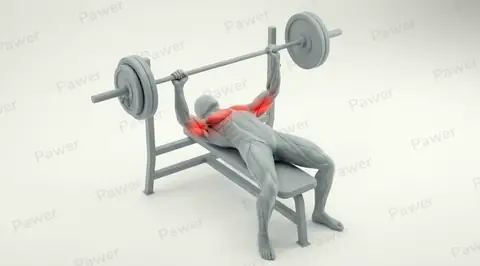 Barbell Bench Press
Chest
4 × 5-7
Rest 3 min
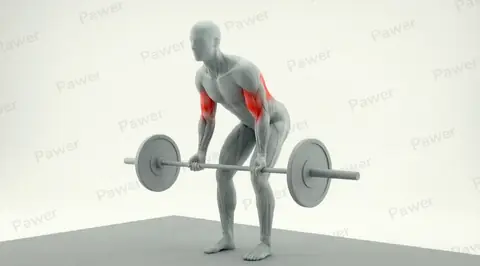
4 × 6-8
Rest 2-3 min
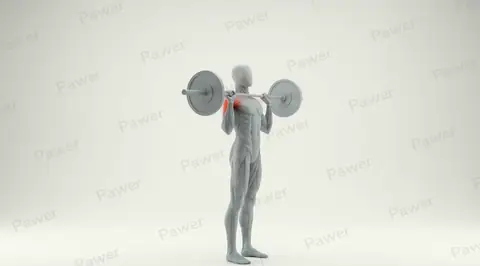 Barbell Overhead Press
Shoulders
3 × 6-8
Rest 2-3 min
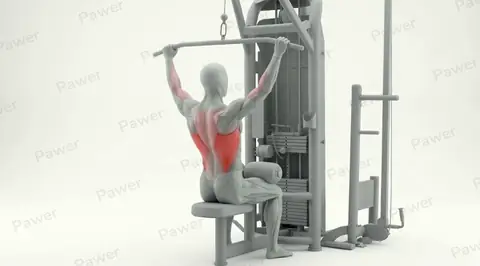 Lat Pulldown
Back
3 × 8-10
Rest 2 min
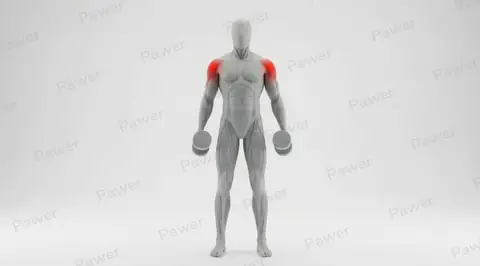 Dumbbell Lateral Raise
Shoulders
3 × 12-15
Rest 1 min
 Barbell Curl
Biceps
2 × 8-10
Rest 1-2 min
 Cable Rope Pushdown
Triceps
2 × 10-12
Rest 1 min
Stop each set with one to three good reps left. Upper and Lower are heavy; Push, Pull and Legs skip the barbell squat and bench so the week never stacks two heavy days for the same lift.
On the Pull day, swap pull-ups for the lat pulldown until you can do six clean reps. On the Legs day the hip thrust comes first, so glutes get their hardest work while you are fresh and the lower back gets a rest from the squat and Romanian deadlift of Lower.
Weekly sets per muscle
| Muscle | Upper and Lower | Push, Pull, Legs | Per week |
|---|---|---|---|
| Chest | 4 | 8 | 12 |
| Back (lats and upper back) | 7 | 8 | 15 |
| Front shoulders (overhead press) | 3 | 0 | 3 |
| Side shoulders | 3 | 4 | 7 |
| Rear shoulders | 0 | 3 | 3 |
| Biceps | 2 | 5 | 7 |
| Triceps | 2 | 3 | 5 |
| Quads | 7 | 5 | 12 |
| Hamstrings | 6 | 3 | 9 |
| Glutes (hip thrust) | 0 | 3 | 3 |
| Calves | 4 | 3 | 7 |
| Abs | 3 | 0 | 3 |
Every major muscle lands between 9 and 15 hard sets a week. That is more than the upper lower split gives on four days, and it comes from the fifth session, not from longer workouts. If arms or side shoulders lag, add one set to each of their exercises on Push and Pull; those days are short enough to take it.
5 day workout schedule: three ways to run the week
The planner above switches between these three weeks. Pick the one you can keep for two months, not the one that looks best on paper.
| Week | Mon | Tue | Wed | Thu | Fri | Sat | Sun |
|---|---|---|---|---|---|---|---|
| Mon to Fri | Upper | Lower | Push | Pull | Legs | Rest | Rest |
| Rest Wednesday | Upper | Lower | Rest | Push | Pull | Legs | Rest |
| Weekend heavy | Rest | Push | Pull | Legs | Rest | Upper | Lower |
Monday to Friday is the most popular because it keeps both weekend days free. It works because the heavy days come first: by Wednesday's Push you have had a full day away from chest. Rest Wednesday is better if your legs are still sore from Lower when Legs comes round, or if four sessions in a row wear you down. The weekend heavy week puts the two long, heavy sessions on Saturday and Sunday, when there is more time, and the shorter volume days midweek.
The 5 day bro split, done right
The classic bodybuilding week gives each muscle group its own day: chest Monday, back Tuesday, legs Wednesday, shoulders Thursday, arms Friday. It is the most searched 5 day split, and it does work. The problem with most versions is volume: 20 or more sets for one muscle in one session, with the last third done on muscles too tired to lift much. The version below keeps each day between 14 and 19 sets: chest and back get 14 to 15 hard sets for the week, legs and shoulders a little less, with arms topped up on Friday.
Weekly schedule
Chest · Chest, with dips for triceps
Hover or tap an exercise to see it
- Barbell Bench Press
Chest
4 × 6-8
Rest 3 min
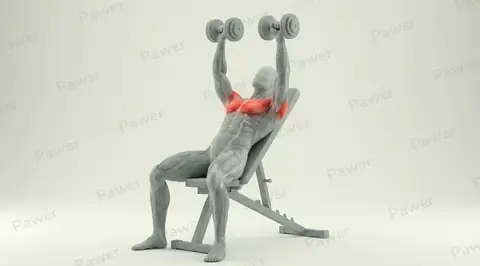
3 × 8-12
Rest 2 min
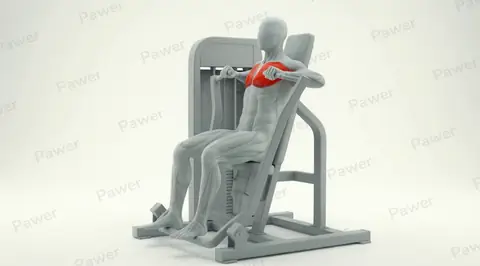 Machine Chest Press
Chest
3 × 10-12
Rest 1-2 min
 Cable Pec Fly
Chest
3 × 12-15
Rest 1 min
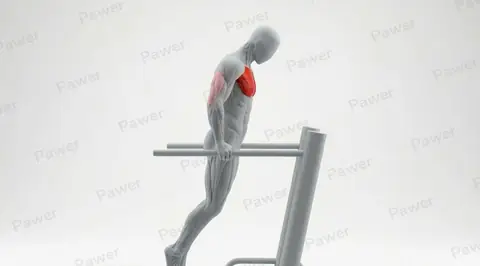 Parallel Bar Dips
Chest
2 × 8-12
Rest 2 min
Chest and arms are three days apart so the triceps recover between dips, presses and Friday's arm work.
| Muscle | Upper lower push pull legs | Bro split |
|---|---|---|
| Chest | 12 (2 days) | 15 (1 day) |
| Back | 15 (2 days) | 14 (1 day) |
| Side shoulders | 7 (2 days) | 7 (1 day) |
| Biceps | 7 (2 days) | 9 (1 day) |
| Triceps | 5 (2 days) | 11 (2 days) |
| Quads | 12 (2 days) | 9 (1 day) |
| Hamstrings | 9 (2 days) | 6 (1 day) |
Pick the bro split if you enjoy long, focused sessions on one muscle and recover well from them. Pick upper lower push pull legs if you want each big lift practiced twice a week and shorter sessions. Both build muscle when the weekly sets are similar; the research section below explains why.
How to progress on a 5 day split
Use double progression on every exercise. Start with a weight you can lift for the bottom of the rep range with one to three reps left in the tank, which is RPE 7 to 9 on the effort scale. Stay at that weight until you reach the top of the range on every set, then add the smallest jump and build the reps back up.
| Lift type | Rep range | Add weight when | Jump |
|---|---|---|---|
| Heavy upper (bench, row, overhead press) | 5 to 8 | All sets at the top of the range | 2.5 kg / 5 lb |
| Heavy lower (squat, Romanian deadlift) | 5 to 8 | All sets at the top of the range | 5 kg / 10 lb |
| Dumbbell and machine work | 8 to 12 | All sets at the top of the range | Next dumbbell or plate |
| Isolation (raises, curls, calves) | 12 to 20 | All sets at the top of the range, clean reps | Smallest available |
Warm up with two or three lighter sets before the first lift of each day; the warm-up calculator works out the weights and the plate calculator loads the bar. To start the heavy lifts from a percentage of your max, estimate it from any recent set with the one rep max calculator.
Five days a week adds up. Every five to eight weeks, or as soon as two lifts stall for two weeks in a row, take a lighter week: same exercises, half the sets, a couple of reps further from failure. Then carry on from your last good numbers.
Is a 5 day split good? What the research says
Five days is not magic, and neither is any particular split. A 2024 meta-analysis of 14 studies and 392 people found that split routines and full body routines gave similar strength gains and similar muscle growth when total volume was equal, and concluded that people can choose a routine on personal preference (Ramos-Campo et al., 2024).
What does matter is the number of hard sets. A meta-analysis of 15 studies found a graded dose-response: each extra weekly set was linked to a slightly larger gain in muscle size, and the higher-volume groups in each study gained about 3.9 percentage points more than the lower-volume ones (Schoenfeld et al., 2017). This is the real case for a fifth day. It lets you fit 10 to 15 sets per muscle into sessions of about an hour.
Frequency matters less than most people think. Pooling 25 studies, Schoenfeld and colleagues found no significant difference in growth between training a muscle more or less often when weekly volume was the same. In studies where volume was not matched, higher frequencies came out ahead, but the gap between once and three or more times a week was modest (Schoenfeld et al., 2019). Training twice a week mostly helps by making high volume easier to spread out.
The bro split has one direct test in trained lifters. Twenty men were matched on strength and split into a group training each muscle once a week with several exercises per session, and a group training the whole body three times a week with one exercise per muscle. Strength gains in the bench press and squat were not significantly different, while the forearm flexors grew more in the total body group (Schoenfeld et al., 2015). It is one small study, but it fits the pattern: a bro split works, and twice a week is a safer default.
Pros and cons of a 5 day split
- Pro: room for volume. Five sessions fit 10 to 15 sets per muscle without any workout running past 70 minutes.
- Pro: weekends free. The Monday to Friday week leaves Saturday and Sunday for rest, sport or life.
- Pro: heavy and light days. Barbell work twice a week, the rest on joint-friendly machines and cables.
- Con: five days is a real commitment. Miss one and a muscle drops to one session that week.
- Con: recovery is on you. Sleep, food and the lighter week matter more at five days than at three.
Who should run a 5 day workout split?
Intermediate lifters with six months or more of steady training, five free days and a goal of building muscle. If you already run a four day upper lower split and sessions are getting long, adding Push, Pull and Legs in place of the second upper and lower day is a natural next step. If you can train six days, three day push pull legs run twice is the other option.
Beginners do better on fewer days. Five sessions mean five sets of new lifts to learn and a lot of soreness. Start with a three day full body workout routine, and move to this plan once your sessions start running past an hour.
Women can run the plan as written. If glutes are the priority, add a set to the hip thrust on Legs and a set of hip thrusts at the end of Lower. For fat loss, keep every lifting session as it is and add walking or easy cardio on rest days; the program does the muscle-keeping, your diet does the fat loss. At home with dumbbells and a bench, swap each barbell lift for its dumbbell version and keep the sets and reps.
Common 5 day split mistakes
| Mistake | Fix |
|---|---|
| Training each muscle once with 20 or more sets in one session | Train it twice, or cap bro split days at about 15 sets |
| Heavy squats on both lower body days | Squat heavy on Lower, use hack squat or leg press on Legs |
| Lower and Legs on back-to-back days | Keep at least two days between them |
| Every set to failure, five days a week | Leave one to three reps in the tank on most sets |
| Skipping the lighter week | Take one every five to eight weeks, or when lifts stall |
| Not writing numbers down | Log every set, so next week's target is clear |
Frequently asked questions
What is the best 5 day workout split?
For most lifters, upper, lower, push, pull, legs. It trains every muscle twice a week with a heavy and a volume session, and fits Monday to Friday. A bro split also works if you prefer one long session per muscle.
Is a 5 day split good for building muscle?
Yes. This plan gives every major muscle 9 to 15 hard sets a week, which is plenty for intermediate lifters. Studies show weekly sets matter more than the split, and five days makes high volume easy to fit in.
Does a 5 day split hit each muscle twice a week?
Upper, lower, push, pull, legs does: every muscle gets an upper or lower session and a push, pull or legs session. A classic bro split trains each muscle only once.
Is a 5 day workout split good for beginners?
Usually not as a first program. Beginners grow well on three full body sessions a week and recover more easily. Move to five days once sessions run long or progress slows.
Is 5 or 6 days a week better?
Neither, if the weekly sets are the same. Five days suits people who want weekends off; six days of push pull legs gives shorter sessions. Pick the one you will actually attend.
Can I do a 5 day split to lose weight?
Yes. Run the lifting plan as written to keep muscle, eat in a moderate calorie deficit and add walking or light cardio on rest days. The diet drives the fat loss; the training protects muscle.
How long should each workout take?
About 60 to 70 minutes for Upper and Lower with their long rests, and 45 to 55 minutes for Push, Pull and Legs. If you run over, cut an isolation exercise rather than your rest on the big lifts.
Studies and sources
Every study below was read for this article. Links go to PubMed or the publisher.
- Efficacy of Split Versus Full-Body Resistance Training on Strength and Muscle Growth: A Systematic Review With Meta-Analysis
Ramos-Campo DJ, Benito-Peinado PJ, Andreu-Caravaca L, Rojo-Tirado MA, Rubio-Arias JÁ. Journal of Strength and Conditioning Research, 2024;38(7):1330-1340
14 studies, 392 people: with volume equated, split and full body routines gave similar strength gains and muscle growth.
- Dose-response relationship between weekly resistance training volume and increases in muscle mass: A systematic review and meta-analysis
Schoenfeld BJ, Ogborn D, Krieger JW. Journal of Sports Sciences, 2017;35(11):1073-1082
15 studies: more weekly sets meant more growth; higher-volume groups gained 3.9 percentage points more than lower-volume groups.
- How many times per week should a muscle be trained to maximize muscle hypertrophy? A systematic review and meta-analysis
Schoenfeld BJ, Grgic J, Krieger J. Journal of Sports Sciences, 2019;37(11):1286-1295
25 studies: with volume matched, frequency made no significant difference; without matching, higher frequencies came out modestly ahead.
- Influence of Resistance Training Frequency on Muscular Adaptations in Well-Trained Men
Schoenfeld BJ, Ratamess NA, Peterson MD, Contreras B, Tiryaki-Sonmez G. Journal of Strength and Conditioning Research, 2015;29(7):1821-1829
20 trained men: a once-a-week split and a three-times-a-week total body routine gave similar strength gains; the total body group grew the forearm flexors more.