Barbell Hip Thrust
Also known as: Hip Thrust
 Anton YefanovUpdated
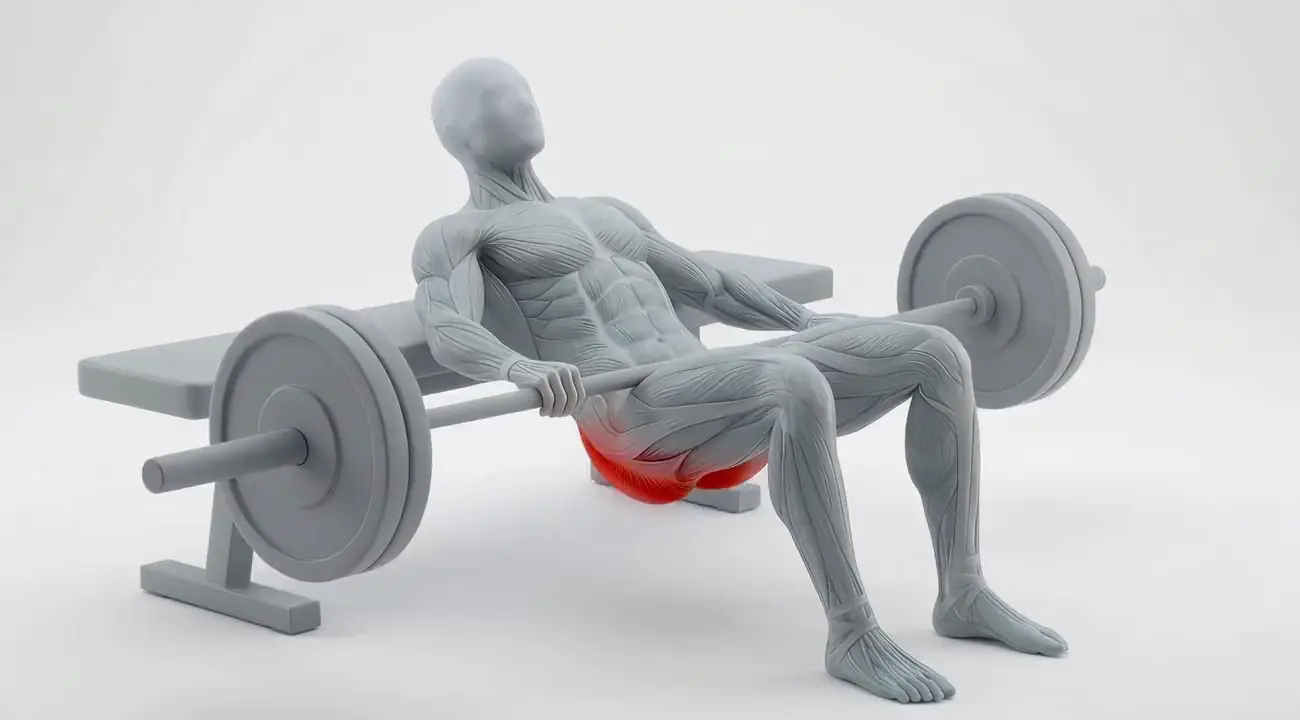
The barbell hip thrust loads hip extension horizontally instead of vertically. You sit with your upper back against a bench, roll a padded barbell into the hip crease, then press the hips up until the torso is parallel with the floor. Because the load sits on the hips rather than the spine, the glutes stay under tension across the whole range. An EMG comparison of barbell, band and American hip thrust variations found the barbell version produced the highest mean gluteus maximus amplitude. The hamstrings assist and the abdominals hold a posterior pelvic tilt at lockout.
How to do the Barbell Hip Thrust
- Sit on the floor with your upper back against the long edge of a bench.
- Roll a padded barbell over your legs into the crease of your hips.
- Set your feet flat at about shoulder width with the shins vertical at the top.
- Brace your abdominals and tuck your ribs down toward your hips.
- Drive both feet into the floor and extend the hips until the torso is parallel with the floor.
- Lower the bar under control back toward the floor and repeat.
Muscles worked
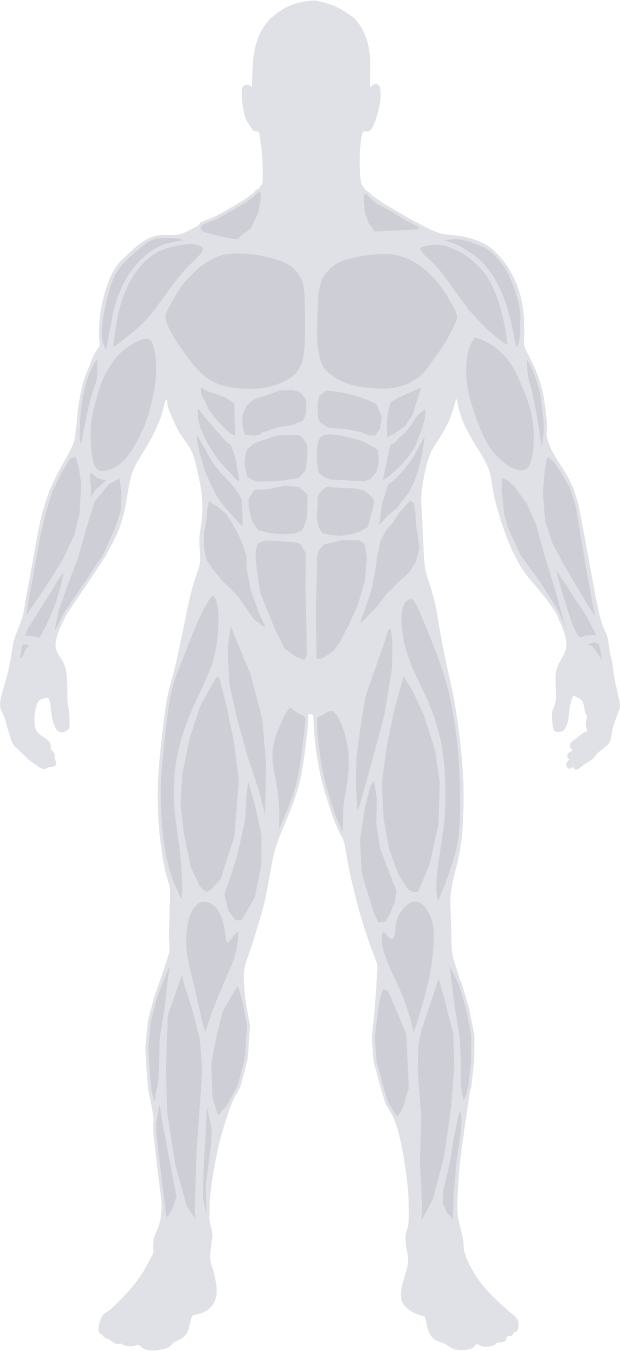
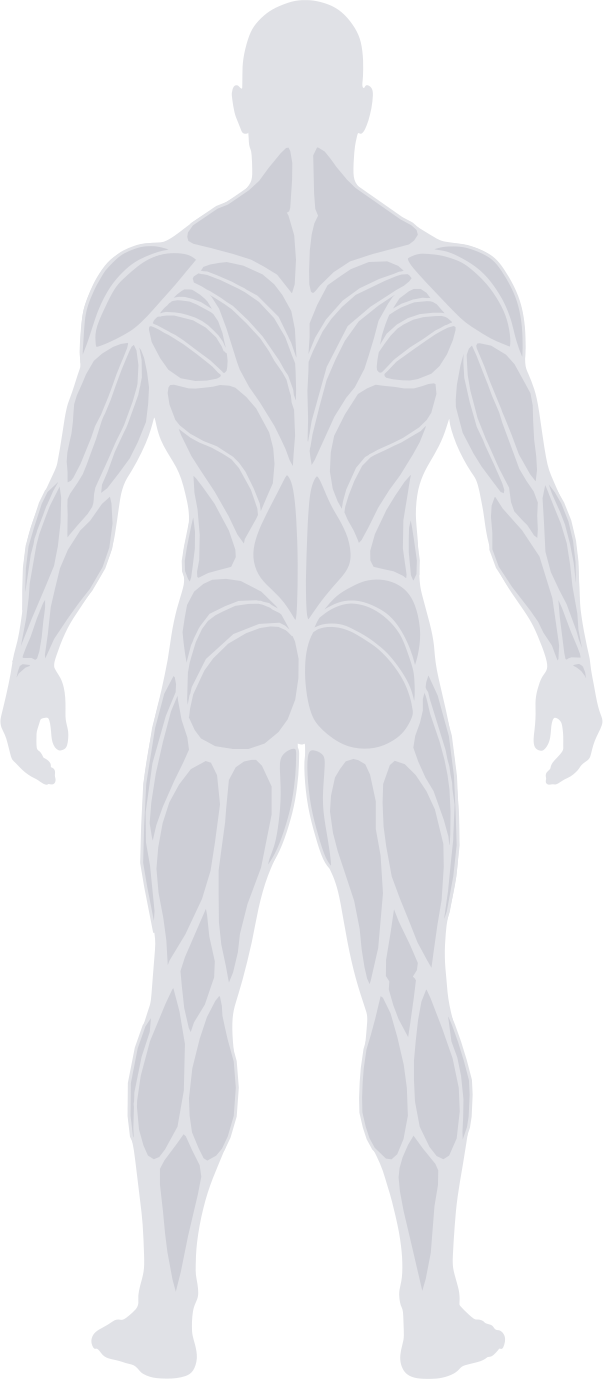
The barbell hip thrust works the glutes, mainly the gluteus maximus, with the hamstrings assisting and the core holding the pelvis in position. The glutes drive hip extension as you press the bar up, and because the load sits across the hips and pushes straight down, the resistance is greatest at the top, when the torso is parallel to the floor and the glutes are fully shortened.
That lockout emphasis is what separates the hip thrust from squats and deadlifts, which are hardest near the bottom. The hamstrings also extend the hip, but keeping the shins vertical at the top bends the knees enough to limit how much they contribute. Tucking the ribs down holds a slight posterior pelvic tilt, which keeps the abdominals engaged and stops the lower back from arching to finish the rep.
- Primary:
- Glutes
- Secondary:
- Hamstrings and Core
Why train it
- Keeps the glutes under tension across the entire range of motion.
- Loads hip extension without compressing the spine under a bar.
- Applies force horizontally, which matches the hip demand of sprinting.
Common mistakes
- Arching the lower back at lockout instead of finishing with the glutes, which loads the lumbar spine.
- Letting the hips drop or rotate on the way up, so one side does more of the work.
- Setting the feet too far forward, which shifts the drive onto the hamstrings.
- Cutting the range short at the top, which skips the peak glute contraction the lift exists for.
Frequently asked questions
Are hip thrusts better than squats for glutes?
They are about equal for glute growth. In a 2023 study, nine weeks of hip thrusts and nine weeks of squats grew the glutes by similar amounts, while squats also grew the quads and inner thighs. The hip thrust is easier to recover from and easier on the knees, so plenty of people run both: squats for the legs, hip thrusts for extra glute work.
Why do I feel hip thrusts in my quads?
Your feet are probably too close to the bench. When the feet sit under your knees, your shins tilt forward and the quads take over. Move the feet out until your shins are vertical at the top. Feet too far out shifts it to the hamstrings, so adjust in small steps until the glutes do most of the work.
Should hip thrusts hurt your lower back?
No. Lower back strain on a hip thrust almost always comes from arching at the top instead of finishing with the glutes. Keep your chin tucked and your ribs down, and stop when your torso is in line with your thighs. Rising any higher than that comes from your spine, not your hips.
Is a hip thrust the same as a glute bridge?
Nearly. They are the same movement, but a glute bridge is done flat on the floor, while a hip thrust puts your upper back on a bench. The bench gives you a bigger range of motion and room to load heavy, so the hip thrust is the one to progress on. The bridge is a good warm-up or home option.
Can hip thrusts cause infertility?
No. That claim spread on social media and has no evidence behind it. Hip thrusts load the glutes and hamstrings, not the reproductive organs. Hip thrusts are also not known to cause pelvic pain, and pain during them is worth checking out the same as any other pain.
What equipment do I need for the Barbell Hip Thrust?
Only a barbell. Nothing beyond that is required to run the movement the way it is described above.
Is the Barbell Hip Thrust suitable for beginners?
With some training behind you. The Barbell Hip Thrust is rated intermediate, which means the setup matters as much as the effort. It is a reasonable first month goal rather than a first session one, and the alternatives below are the easier way in.
Can I do the Barbell Hip Thrust at home?
Yes, if you own a barbell. That is the whole requirement, and it is the reason this one travels well between a home setup and a gym floor.
How many sets and reps of the Barbell Hip Thrust should I do?
Three to five sets of 5 to 8 reps for strength, or 8 to 12 for size. A hinge is heavy on the lower back, so leave a rep in the tank and rest two to three minutes between sets.
What are good alternatives to the Barbell Hip Thrust?
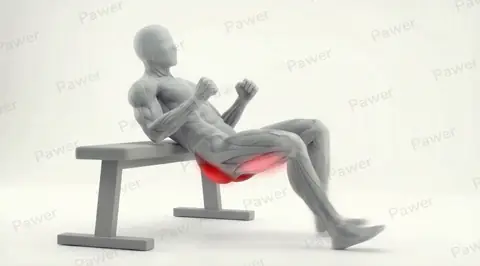
B-Stance Hip Thrust, Deficit Dumbbell Romanian Deadlift, and Kettlebell Swing train the same primary muscles as the Barbell Hip Thrust. Pick whichever one suits the equipment in front of you.
Work out your Barbell Hip Thrust weights
Estimate your max from a recent set, then find the weight for your next one.
- One Rep Max CalculatorTurn a recent set into an estimated max. Compare Epley, Brzycki and Lombardi, then read off your training percentages and every rep max from 2RM to 12RM.
- RPE CalculatorRate a set by effort, get an estimated max, and read off the weight for your next target. Includes a full RPE chart of percentages by reps and effort.
- Barbell Plate CalculatorSee which plates go on each side of the bar for any weight, using only what your gym stocks. Count a loaded bar, add collars, and switch bars.
- Warm-Up CalculatorGet every warm-up set for your working weight, with reps, rest and the plates per side. Ramps for work sets, heavy singles, meets and 5x5 programs.
Similar exercises
By muscle
Every exercise is mapped to the muscles it trains. Browse by what you want to build.
By equipment
A full gym, a pair of dumbbells, or nothing at all: browse by what you have.