Full body workout routine: the complete 3 day plan
 Anton YefanovUpdated
11 min read
A full body workout routine trains every major muscle in every session, usually three times a week with a rest day between workouts. Below is a complete 3 day full body plan with three different days, every set, rep and rest time written out, the weekly sets it gives each muscle, 2 and 4 day schedules, a dumbbell version for home, a beginner start and how to add weight week after week. To compare it with other ways of dividing the week, see how to choose a workout split or browse all workout routines.
- Days per week
- 3 (or 2 or 4)
- Session length
- 50 to 65 min
- Level
- Beginner to intermediate
- Equipment
- Full gym or dumbbells
Key takeaways
- A full body workout routine trains every major muscle in every session, so three workouts a week give each muscle three sessions.
- This plan rotates three different days: A (squat and bench), B (hinge and overhead press) and C (machines and dumbbells for volume).
- The standard schedule is Monday, Wednesday, Friday. On two days, keep rotating A, B and C; on four days, add the next workout in line.
- It gives 6 to 9 hard sets per week to the big muscles in sessions of about an hour, enough for beginners and most early intermediates.
- With equal weekly sets, full body and split routines build similar strength and muscle. Full body wins on frequency and on forgiving missed days.
What is a full body workout routine?
A full body workout routine trains the legs, chest, back, shoulders and arms in every session instead of giving each body part its own day. Each workout has one main exercise per movement: a squat or leg press, a hip hinge, a press and a pull, then a few smaller exercises for the shoulders, arms, calves or abs.
Because every session covers everything, you only need two or three sessions a week to train each muscle two or three times. That makes it the simplest way to reach the frequency most evidence-based coaches recommend, and it is why almost every well-known beginner program is full body.
| Full body routine | |
|---|---|
| Muscles per session | All major muscles |
| Sessions per week | 2 to 4, usually 3 |
| Each muscle per week | 2 to 4 times |
| Exercises per session | 6 to 7, one or two per muscle |
| Session length | 50 to 65 min |
The 3 day full body workout routine
Many full body routines repeat the same workout three times a week. This one uses three different days so the joints get variety and each big lift is trained hard once a week, not three times. Day A is built around the squat and bench press. Day B moves to the Romanian deadlift and overhead press. Day C is the volume day: leg press, an incline dumbbell press and a cable row for 8 to 12 reps, plus the arm and shoulder work the first two days leave short.
Weekly schedule
Day A · Squat, bench press, row
Hover or tap an exercise to see it
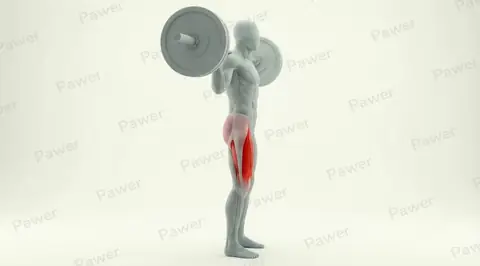 Barbell Squat
Quads
3 × 5-8
Rest 3 min
 Barbell Bench Press
Chest
3 × 6-8
Rest 2-3 min
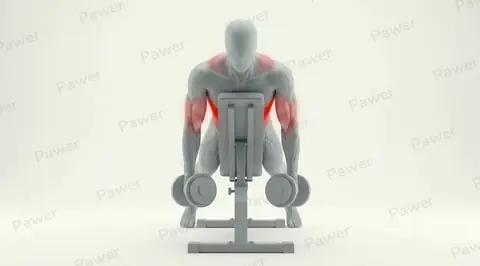 Chest-Supported Dumbbell Row
Back, Traps
3 × 8-12
Rest 2 min
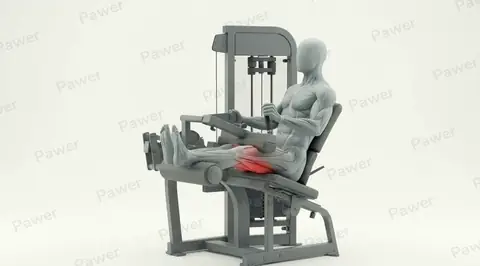 Seated Leg Curl
Hamstrings
2 × 10-12
Rest 1-2 min
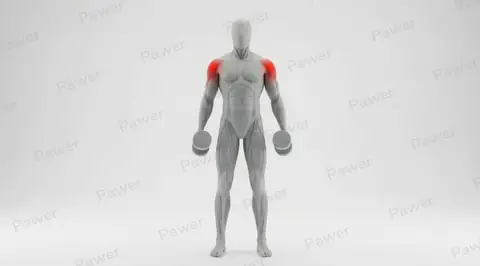 Dumbbell Lateral Raise
Shoulders
2 × 12-15
Rest 1 min
 Barbell Curl
Biceps
2 × 8-12
Rest 1 min

2 × 10-15
Rest 1 min
Stop each set with one to three good reps left. On the 2 and 4 day schedules keep rotating: each session is the next day in line, A, B, C, A.
The order inside each day matters. The heaviest lift comes first while you are fresh, then the second compound, then the pull, then the smaller exercises. If a session runs long, cut the last exercise, never the first three. Pull-ups on Day B can replace the lat pulldown once you can do six clean reps, and the chest-supported row on Day A spares your lower back the day after squats.
Weekly sets per muscle
| Muscle | Day A | Day B | Day C | Per week |
|---|---|---|---|---|
| Chest | 3 | 0 | 3 | 6 |
| Back (lats and upper back) | 3 | 3 | 3 | 9 |
| Front shoulders (overhead press) | 0 | 3 | 0 | 3 |
| Side shoulders | 2 | 0 | 2 | 4 |
| Biceps | 2 | 0 | 2 | 4 |
| Triceps | 0 | 2 | 2 | 4 |
| Quads | 3 | 2 | 3 | 8 |
| Hamstrings | 2 | 3 | 0 | 5 |
| Glutes (hip thrust) | 0 | 0 | 2 | 2 |
| Calves | 0 | 3 | 0 | 3 |
| Abs | 2 | 0 | 0 | 2 |
The big muscles land between 5 and 9 direct sets a week, more once you count the overlap. That is deliberately moderate. Beginners grow on very little, and lean sessions leave energy for learning the lifts and adding weight. When progress slows after a few months, the progression section shows where to add sets first.
Full body workout schedule: 2, 3 and 4 days
Three days a week is the classic layout, and the one to choose if you can. The same three workouts also fit a two or four day week. Pick the row that matches the days you can train without fail.
| Days | Mon | Tue | Wed | Thu | Fri | Sat | Sun |
|---|---|---|---|---|---|---|---|
| 3 (classic) | Day A | Rest | Day B | Rest | Day C | Rest | Rest |
| 2 | Next day | Rest | Rest | Next day | Rest | Rest | Rest |
| 4 | Next day | Next day | Rest | Next day | Next day | Rest | Rest |
2 day full body workout
With two days, keep cycling A, B, C in order across the weeks: A and B in week one, C and A in week two, and so on. Each muscle still gets two sessions a week. Add one set to the first two exercises of each day so the weekly total does not drop too far. Two days is enough to make real progress, especially in your first year.
4 day full body workout
With four days, train two days on, one off, two on, and keep rotating. Each muscle gets four sessions a week and the weekly sets rise by about a third. Two full body days in a row are hard on the legs, so keep the heaviest squat (Day A) away from the day after Day B's Romanian deadlifts when you can. If four full body sessions feel like too much, a four day upper lower split gives the same frequency with less leg work per session.
Full body workout with dumbbells (at home)
If you train at home with a pair of adjustable dumbbells and a bench, run the two workouts below in turn, three days a week: A, B, A one week and B, A, B the next. Rep ranges are higher than in the gym plan because dumbbells top out sooner. When you can do the top of the range easily with your heaviest pair, slow the lowering phase to three seconds or move to a harder single-leg version.
Weekly schedule
Home A · Goblet squat, bench, row
Hover or tap an exercise to see it
 Dumbbell Goblet Squat
Glutes, Quads
3 × 10-15
Rest 2 min
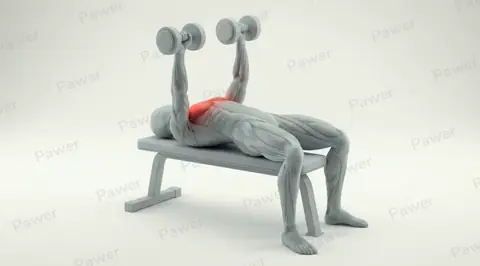 Dumbbell Bench Press
Chest · or floor press
3 × 8-12
Rest 2 min
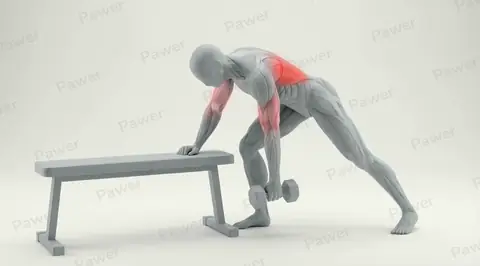 Dumbbell Single Arm Row
Back · per arm
3 × 10-12
Rest 1-2 min
- Dumbbell Lateral Raise
Shoulders
2 × 12-20
Rest 1 min
 Dumbbell Curl
Biceps
2 × 10-15
Rest 1 min
Alternate the two workouts. No bench? Do the presses on the floor and the rows with one hand on a chair.
| Gym exercise | Dumbbell swap |
|---|---|
| Barbell squat or leg press | Goblet squat or Bulgarian split squat |
| Barbell bench press | Dumbbell bench press or push-up |
| Barbell Romanian deadlift | Dumbbell deadlift with a long hip hinge |
| Barbell overhead press | Seated dumbbell overhead press |
| Lat pulldown or cable row | Single arm dumbbell row or inverted row under a table |
| Machine calf raise | Single leg dumbbell calf raise |
Full body workout routine for beginners
If you have never lifted before, run the same 3 day plan with a gentler start. The goal of the first month is to learn the movements and build the habit, not to find your limits. Most beginners can then add weight to the main lifts almost every week for several months.
| Week | Sets per exercise | Effort | Focus |
|---|---|---|---|
| 1 | 2 | 4 or more reps left | Learn each movement with light weights |
| 2 | 2 | 3 to 4 reps left | Find working weights, write them down |
| 3 | 2 to 3 | 2 to 3 reps left | Add weight when all reps are clean |
| 4 | 3 (as written) | 1 to 3 reps left | Run the plan as written from here |
Swap anything you cannot yet do safely: the goblet squat for the barbell squat, the leg press for the Bulgarian split squat, the dumbbell bench press for the barbell version. Keep the sets and reps. Use the warm-up calculator before the first lift of each day, and log every set so you know what to beat next time.
Women can run the plan exactly as written; the exercises and rep ranges are the same. If glutes are the priority, add one set to the hip thrust on Day C and the Bulgarian split squat on Day B, and add two sets of hip thrusts at the end of Day A.
How to progress on a full body routine
Use double progression. Pick a weight you can lift for the bottom of the rep range with one to three reps left in the tank, which is RPE 7 to 9 on the effort scale. Keep that weight until you hit the top of the range on every set, then add the smallest jump and build the reps back up.
| Lift type | Rep range | Add weight when | Jump |
|---|---|---|---|
| Squat, Romanian deadlift | 5 to 10 | All sets at the top of the range | 5 kg / 10 lb |
| Bench press, overhead press | 6 to 8 | All sets at the top of the range | 2.5 kg / 5 lb |
| Dumbbell, machine and cable work | 8 to 12 | All sets at the top of the range | Next dumbbell or plate |
| Isolation (raises, curls, calves) | 10 to 20 | All sets at the top of the range, clean reps | Smallest available |
Rest is part of the program. In trained men running three total-body workouts a week, resting 3 minutes between sets instead of 1 minute led to bigger gains in squat and bench press strength and more growth in the front of the thigh over 8 weeks (Schoenfeld et al., 2016). That is why the first lift of each day gets 2 to 3 minutes. To save time, cut an isolation exercise, not the rests. The plate calculator loads the bar, and the one rep max calculator estimates your max from any recent set.
After two or three months, when two or more lifts stall for two weeks in a row, add sets before changing the program. Go to 4 sets on the first exercise of each day, then add a third set to the arm and shoulder exercises. Every six to eight weeks, take a lighter week with half the sets, then continue from your last good numbers. When sessions pass 75 minutes, it is time to move to an upper lower split.
Is a full body routine better than a split?
Not better, but every bit as good. A 2024 meta-analysis of 14 studies and 392 people compared split routines with full body routines and found no significant difference in bench press strength, leg strength, arm growth, thigh growth or lean body mass when total volume was the same. The authors concluded that people can choose based on preference (Ramos-Campo et al., 2024).
Some single studies lean toward full body. In 20 well-trained men, training every muscle three days a week grew the elbow flexors more than a split that trained each muscle once a week, with no difference in bench press or squat strength (Schoenfeld et al., 2015). A meta-analysis of 25 studies puts that in context: with weekly sets matched, frequency made no meaningful difference to growth; without matching, higher frequencies came out modestly ahead (Schoenfeld et al., 2019). The practical edge of full body is that frequency makes it easy to get enough sets in short sessions.
Sets are what really move the needle. A meta-analysis of 15 studies found a graded dose-response: each extra weekly set per muscle was linked to a little more growth, about 0.37% on average (Schoenfeld et al., 2017). So the useful question is not full body or split, but which routine lets you do enough sets, recover from them and keep showing up.
| Routine | Days | Each muscle per week | Best for |
|---|---|---|---|
| Full body | 2 to 4 | 2 to 4 times | Beginners, busy or unpredictable weeks |
| Upper lower | 4 | Twice | Intermediates with four days |
| Push pull legs | 3 or 6 | Once or twice | Six days a week, building size |
| Bro split | 5 | Once | Long single-muscle sessions |
Pros and cons
- Pro: high frequency on few days. Three sessions train every muscle three times.
- Pro: forgiving. Miss a day and nothing goes untrained; the next session covers it.
- Pro: lots of practice on the big lifts, which is how beginners learn them.
- Con: limited room per muscle. One or two exercises each, so lagging muscles need extra sets.
- Con: tiring sessions. Squatting and pressing hard in the same hour takes focus; keep the order and the rests.
How to build your own full body workout
If you want to write your own instead, fill the same slots every session and pick a different exercise for each slot on different days:
- Squat or knee-dominant leg exercise: squat, leg press, goblet squat, split squat. 3 sets.
- Hip hinge: Romanian deadlift, hip thrust, leg curl. 2 to 3 sets.
- Horizontal or incline press: bench press, incline dumbbell press, push-up. 3 sets.
- Pull: row on one day, pulldown or pull-up on the next. 3 sets.
- Overhead press or shoulders: overhead press or lateral raises. 2 to 3 sets.
- Arms, calves or abs: one or two of these, 2 sets each, rotated across the week.
Keep it to six or seven exercises and about 15 to 18 hard sets per session. Beyond that, the sets at the end of the workout are done tired and count for less.
Common full body workout mistakes
| Mistake | Fix |
|---|---|
| Doing the same heavy workout three times a week | Rotate three different days, one heavy focus each |
| Ten or more exercises per session | Six or seven, one slot per movement |
| Training full body on back to back days with hard sets | At least one day between sessions on a 3 day plan |
| Saving the squat for the end | Put the hardest lift first while you are fresh |
| Changing the program every few weeks | Run it 8 to 12 weeks and change only what stalls |
| Not writing numbers down | Log every set, so next session's target is clear |
Frequently asked questions
Is a full body workout routine good for building muscle?
Yes. Studies find full body and split routines build similar muscle when weekly sets are equal. Full body trains each muscle two to four times a week, which makes it easy to get enough sets in short sessions.
How many days a week should I do a full body workout?
Three is the classic choice, with a rest day between sessions. Two days still works well, especially for beginners, and four days suits lifters who want more weekly sets.
Can I do a full body workout every day?
Not with hard sets. Muscles need about 48 hours to recover from demanding training. Keep full body sessions to two to four days a week and use other days for walking, cardio or mobility.
How long should a full body workout take?
About 50 to 65 minutes for this plan, including warm-up sets. If sessions run past 75 minutes, cut an isolation exercise or move to an upper lower split.
Is full body better than push pull legs?
Neither is better with the same weekly sets. Full body fits two to four days a week; push pull legs fits three or six. Pick the one that matches your schedule.
Can I do a full body workout with just dumbbells?
Yes. The dumbbell version on this page covers every major muscle with goblet squats, split squats, presses, rows and deadlifts. Use higher reps and slower lowering once your heaviest pair gets easy.
When should I switch from full body to a split?
When sessions get too long to fit the sets you need, usually after six to twelve months. A four day upper lower split is the natural next step.
Studies and sources
Every study below was read for this article. Links go to PubMed or the publisher.
- Efficacy of Split Versus Full-Body Resistance Training on Strength and Muscle Growth: A Systematic Review With Meta-Analysis
Ramos-Campo DJ, Benito-Peinado PJ, Andreu-Caravaca L, Rojo-Tirado MA, Rubio-Arias JÁ. Journal of Strength and Conditioning Research, 2024;38(7):1330-1340
14 studies, 392 people: with volume equated, split and full body routines gave similar strength gains and muscle growth.
- Influence of Resistance Training Frequency on Muscular Adaptations in Well-Trained Men
Schoenfeld BJ, Ratamess NA, Peterson MD, et al. Journal of Strength and Conditioning Research, 2015;29(7):1821-1829
20 well-trained men: total body three days a week grew the elbow flexors more than a once-a-week split; bench press and squat strength did not differ.
- How many times per week should a muscle be trained to maximize muscle hypertrophy? A systematic review and meta-analysis
Schoenfeld BJ, Grgic J, Krieger J. Journal of Sports Sciences, 2019;37(11):1286-1295
25 studies: with volume matched, frequency made no meaningful difference; without matching, higher frequencies came out modestly ahead.
- Dose-response relationship between weekly resistance training volume and increases in muscle mass: A systematic review and meta-analysis
Schoenfeld BJ, Ogborn D, Krieger JW. Journal of Sports Sciences, 2017;35(11):1073-1082
15 studies: each extra weekly set per muscle was linked to about 0.37% more growth.
- Longer Interset Rest Periods Enhance Muscle Strength and Hypertrophy in Resistance-Trained Men
Schoenfeld BJ, Pope ZK, Benik FM, et al. Journal of Strength and Conditioning Research, 2016;30(7):1805-1812
21 trained men, 8 weeks of three total-body workouts a week: 3 minute rests gave bigger squat and bench press gains and more thigh growth than 1 minute rests.