Push day workout: the complete push day routine
 Anton YefanovUpdated
10 min read
A push day workout trains the muscles that press weight away from you: chest, shoulders and triceps. The best push day opens with a heavy press, adds an incline press for the upper chest, then finishes with side raises and an overhead triceps extension. Below is the full push day routine with every set, rep and rest time, a second push day for weeks when you push twice, a dumbbell version, a beginner version on machines, and the studies behind the exercise choices. Push day is one third of the push pull legs routine; for other ways to plan the week, browse all workout routines.
- Muscles
- Chest, shoulders, triceps
- Session length
- 50 to 65 min
- Level
- Beginner to advanced
- Equipment
- Full gym or dumbbells
Key takeaways
- A push day trains chest, shoulders and triceps: every exercise where you press a weight away from your body.
- The best push day has 6 to 7 exercises: a heavy press first, an incline press, a shoulder press, a fly, side raises and two triceps moves.
- Aim for 16 to 20 hard sets in total: 2 to 3 sets per exercise, 5 to 8 reps on the first press and 8 to 20 on the rest.
- Rest 2 to 3 minutes on the presses and 1 minute on raises and triceps work. Longer rest on the big lifts builds more strength and muscle.
- Push once a week on a 3 day split or twice on a 6 day split; use Push A and Push B so the second day is not a repeat.
What is a push day workout?
Push day is the session in a push pull legs split that trains every pressing muscle together. When you bench press, the chest does most of the work, the front of the shoulders helps, and the triceps straighten the elbows. When you press overhead, the shoulders lead and the triceps finish. Training all three on one day means the muscles that work together recover together, and your pull day and leg day are free for back, biceps and lower body.
| Muscle | What it does | Push day exercises that train it most |
|---|---|---|
| Chest (pecs) | Brings the arms forward and across the body | Bench press, incline press, chest press, flies, dips |
| Front shoulders | Lifts the arms forward and overhead | Overhead press, every chest press |
| Side shoulders | Lifts the arms out to the side, gives shoulder width | Lateral raises (presses barely reach them) |
| Triceps | Straightens the elbow | Pushdowns, overhead extensions, skull crushers, dips, every press |
Two muscles are easy to miss. The side shoulders get little from pressing, so they need their own raises. The long head of the triceps crosses the shoulder joint, so it is stretched most when the arm is overhead; a pushdown alone leaves it short of work. The routine below covers both.
The best push day workout routine
Push A is the main session. It starts with the bench press while you are fresh, moves to the incline dumbbell press for the upper chest, then trains the shoulders and triceps with lighter, higher rep work. Push B is a second push day for weeks when you train push twice: it leads with the overhead press instead, so each big press gets one heavy day a week. Switch between them in the planner.
Weekly schedule
Push A · Bench press first, then upper chest, shoulders, triceps
Hover or tap an exercise to see it
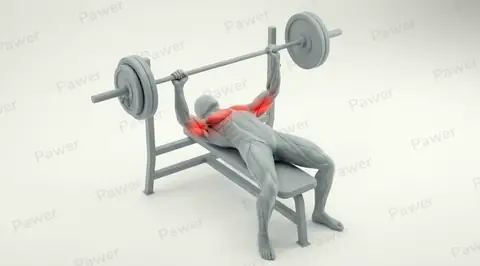 Barbell Bench Press
Chest
3 × 5-8
Rest 3 min
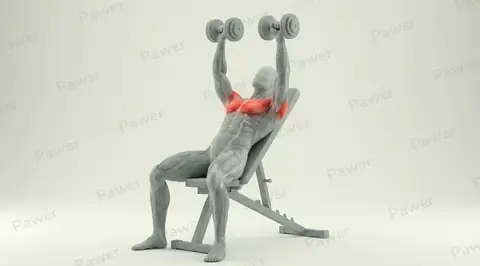
3 × 8-12
Rest 2 min
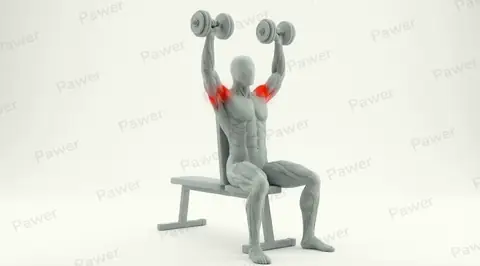 Dumbbell Seated Overhead Press
Shoulders
2 × 8-12
Rest 2 min
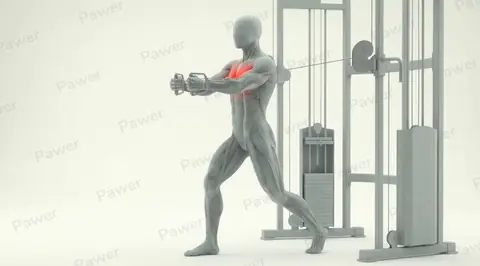 Cable Pec Fly
Chest
2 × 12-15
Rest 1 min
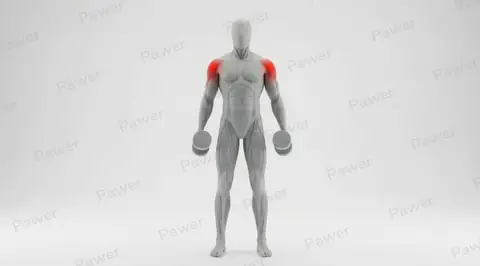 Dumbbell Lateral Raise
Shoulders
3 × 12-20
Rest 1 min
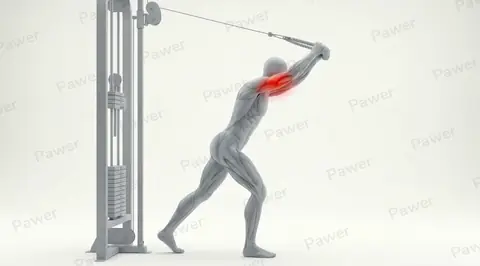
3 × 10-12
Rest 1-2 min
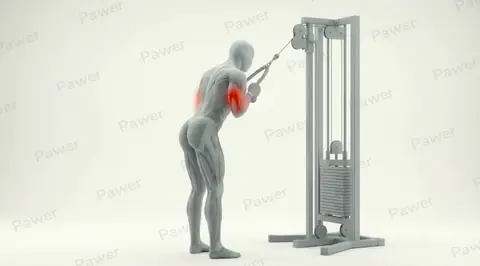 Cable Rope Pushdown
Triceps
2 × 10-15
Rest 1 min
The empty days are your pull day, leg day or rest. Stop each set with one to three good reps left; take only the last set of an isolation exercise close to failure.
Push A is 18 sets and takes about an hour with full rest. Push B is 16 sets and a little shorter. If you are short on time, drop the cable fly and the rope pushdown from Push A first; the presses, raises and overhead extension carry the session.
Why the exercises go in this order
Whatever you do first, you do best. A review of exercise order studies found that people complete more reps on an exercise placed at the start of a session, and over weeks of training the first exercise gained the most strength while the last one gained the least (Simão et al., 2012). So the press you most want to improve goes first, and the small muscles, which tire fast but recover fast, go last. Flies before pressing to "pre-exhaust" the chest did not increase how hard the chest worked in that review, so there is no reason to start with them.
- Heavy press (bench or overhead): 5 to 8 reps, longest rest.
- Second press at a different angle: 8 to 12 reps.
- Shoulder press or dips: 8 to 12 reps.
- Fly: 12 to 15 reps, a stretch the presses do not give.
- Side raises: 12 to 20 reps.
- Triceps: one overhead extension, one pushdown or skull crusher.
Best push day exercises and why they made the list
Every push day exercise in the planner earns its place by training a part of a muscle the others miss. This table is the reason behind each pick and what to swap it for if your gym lacks the equipment.
| Exercise | Main target | Why it is here | Swap |
|---|---|---|---|
| Barbell bench press | Chest, front shoulders, triceps | The heaviest press you can load and progress week to week | Dumbbell bench press, Smith machine bench |
| Incline dumbbell press | Upper chest | Grows the upper chest more than a flat press | Incline barbell or incline machine press |
| Overhead press | Front shoulders, triceps | The heavy vertical press; leads Push B | Seated dumbbell or machine shoulder press |
| Cable or machine fly | Chest | Loads the chest in a deep stretch with no triceps limit | Dumbbell fly, pec deck |
| Lateral raise | Side shoulders | The only push day lift that trains shoulder width directly | Cable or machine lateral raise |
| Overhead triceps extension | Triceps, mainly the long head | Trains the triceps stretched, which grows them faster | Dumbbell overhead extension |
| Rope pushdown or skull crusher | Triceps | Easy to load at the end of the session | Bar pushdown, machine extension |
The incline press is there for a measured reason. In a study of 47 untrained men who trained once a week for eight weeks with the same number of sets, the incline bench group grew the upper part of the chest more than the flat bench group (a mean difference of 0.62 cm at that site), while strength gains were similar across all groups (Chaves et al., 2020). Flat for load, incline for the upper chest is a sound pair.
The overhead extension is the strongest triceps choice. When 21 adults trained one arm with cable extensions overhead and the other arm with the elbow at the side for 12 weeks, the overhead arm grew the long head of the triceps by 28.5% against 19.6%, and the whole triceps by 19.9% against 13.9%, even though it lifted lighter weights (Maeo et al., 2023). That is why Push A has the overhead rope extension before the pushdown, and Push B uses the skull crusher, which also works the triceps with the arm raised.
Push day sets, reps and rest times
Most push days need 16 to 20 hard sets across 5 to 7 exercises. The first press uses heavier weights for 5 to 8 reps, the other presses 8 to 12, and flies, raises and triceps work 10 to 20. Stop most sets with one to three reps left in the tank; the RPE scale explains how to judge it.
| Exercise type | Sets | Reps | Rest | Effort |
|---|---|---|---|---|
| First press (bench or overhead) | 3 | 5 to 8 | 2 to 3 min | 2 to 3 reps left |
| Second press | 2 to 3 | 8 to 12 | 2 min | 1 to 2 reps left |
| Fly | 2 | 12 to 15 | 1 min | 1 to 2 reps left |
| Side raises | 3 | 12 to 20 | 1 min | 0 to 2 reps left |
| Triceps | 2 to 3 | 10 to 15 | 1 to 2 min | 0 to 2 reps left |
Do not cut the rest on the presses to save time. In a study of 21 trained men doing the same program, those who rested 3 minutes between sets gained more bench press and squat strength than those who rested 1 minute, and grew their thighs more, with a trend toward more triceps growth as well (Schoenfeld et al., 2016). Short rests only make you lift less on the next set. Save time on the raises and triceps instead, where one minute is enough.
Weekly sets per muscle
| Muscle | Push A only (once a week) | Push A and Push B (twice a week) |
|---|---|---|
| Chest | 8 | 15 |
| Front shoulders (shoulder and overhead press) | 2 | 5 |
| Side shoulders | 3 | 6 |
| Triceps | 5 | 8 |
Once a week, Push A gives the chest 8 hard sets. That is enough to grow on a 3 day split, especially early on. Twice a week, Push A and Push B together bring the chest to 15 and the side shoulders and triceps to 6 to 8 direct sets on top of all the pressing, which is a solid weekly dose for an intermediate lifter.
Dumbbell push day and beginner push day
Not everyone has a free bench and a cable stack. The dumbbell push day needs only dumbbells and an adjustable bench, so it works at home or in a crowded gym. The beginner push day uses machines and one cable, which are easier to learn and safer to push hard on without a spotter. Both keep the same order: presses first, raises and triceps last.
Weekly schedule
Dumbbell push · Dumbbells and a bench only
Hover or tap an exercise to see it
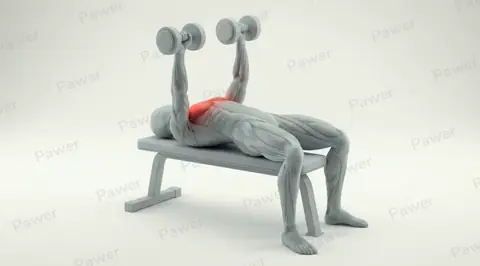 Dumbbell Bench Press
Chest
4 × 8-12
Rest 2 min
3 × 8-12
Rest 2 min
- Dumbbell Seated Overhead Press
Shoulders
3 × 8-12
Rest 2 min
- Dumbbell Lateral Raise
Shoulders
3 × 12-20
Rest 1 min
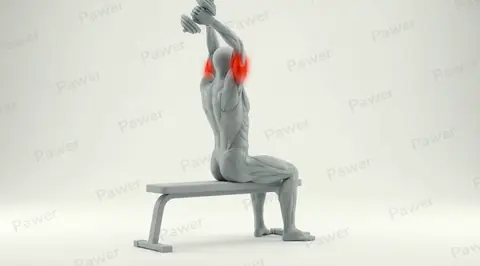
3 × 10-12
Rest 1 min
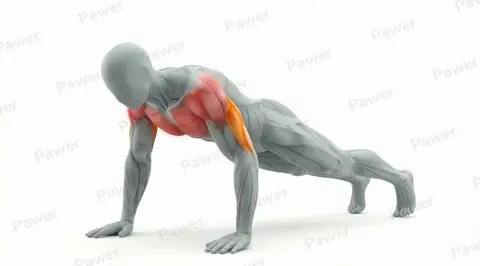 Push Up
Chest · stop 2 reps short of failure
2 × 10-20
Rest 1 min
Beginners: pick a weight you can lift for the top of the rep range with two or three reps left, and add weight only when every set gets there.
The dumbbell version has 18 sets, the same as Push A, with the dumbbell bench press in place of the barbell and push-ups as the finisher. The beginner version has 14 sets on five exercises, which is enough while every session still brings new strength. After two or three months, move to Push A. For a whole week of dumbbell training, see the dumbbell workout plan.
Women can run any of these push days as written. Nothing in them needs changing, and the lateral raises are what shape the shoulders. If upper body is not a priority, the beginner session is a good once a week push day next to two lower body days, as in the workout split for women.
How often should you do push day?
Push once a week if you train three days, push twice a week if you train six. Both work. Pooling 25 studies, Schoenfeld and colleagues found no significant difference in muscle growth between training a muscle once or several times a week when the weekly sets were the same, and concluded that people can choose their frequency by preference (Schoenfeld et al., 2019). What twice a week gives you is room: 15 sets for the chest fit far more comfortably in two sessions than in one.
| Split | Push days per week | Which push days | Weekly chest sets |
|---|---|---|---|
| 3 day push pull legs | 1 | Push A | 8 |
| 4 day split (push, pull, legs, upper) | 1, plus upper day | Push A | 8 plus upper day |
| 5 day split | 1 or 2 | Push A, then Push B | 8 to 15 |
| 6 day push pull legs | 2 | Push A and Push B | 15 |
Keep at least two days between push sessions, and do not put push day right after an upper body or shoulder day. The full week plans are written out in the 3 day workout split and the 6 day workout split.
How to progress your push day
Use double progression. Pick a weight that lets you reach the bottom of the rep range with one to three reps left. Keep it until every set hits the top of the range, then add the smallest jump and work back up. Write each set down so you know what to beat next week.
| Lift | Rep range | Add weight when | Jump |
|---|---|---|---|
| Bench press, overhead press | 5 to 8 | All 3 sets reach 8 reps | 2.5 kg / 5 lb |
| Dumbbell and machine presses | 8 to 12 | All sets reach 12 reps | Next dumbbell or plate |
| Flies, raises, triceps | 10 to 20 | All sets reach the top with clean reps | Smallest available |
Warm up before the first press with two or three lighter sets; the warm-up calculator works out the weights, the plate calculator loads the bar, and the one rep max calculator estimates your max from a recent set. Lateral raises stall the fastest. When the next dumbbell is too big a jump, add reps up to 20 before moving up, or switch to the leaning cable lateral raise, where the weight steps are smaller.
Common push day mistakes
| Mistake | Fix |
|---|---|
| Three or four flat chest presses and nothing else | One flat, one incline, then shoulders and triceps |
| No lateral raises | Three sets every push day; presses do not train the side shoulders |
| Only pushdowns for triceps | Add an overhead extension or skull crusher |
| Flies or triceps before the bench press | Heaviest press first, small muscles last |
| One minute of rest on heavy presses | Two to three minutes on presses, one minute on isolation work |
| Every set to failure | One to three reps left on presses; only the last isolation set near failure |
| Pushing far more than pulling | Match push day with a pull day of similar volume |
Frequently asked questions
What muscles do you work on push day?
Chest, shoulders and triceps. The presses train the chest, front shoulders and triceps together, lateral raises train the side shoulders, and extensions and pushdowns finish the triceps.
How many exercises should a push day have?
Five to seven. Two or three presses, a fly, a lateral raise and one or two triceps exercises cover every pushing muscle in about an hour.
Is 4 exercises on push day enough?
Yes, if they cover the chest, side shoulders and triceps: for example bench press, incline dumbbell press, lateral raise and overhead triceps extension, with three sets each.
What is the best push day exercise?
The bench press, because it trains chest, shoulders and triceps at once and is the easiest press to load heavier each week. Pair it with an incline press for the upper chest.
How long should a push day workout take?
About 50 to 65 minutes with full rest. If you run short on time, drop the fly or the second triceps exercise rather than cutting rest on the presses.
Can I do push day with only dumbbells?
Yes. Flat and incline dumbbell presses, a seated dumbbell shoulder press, lateral raises, an overhead dumbbell extension and push-ups make a complete push day.
How often should I do push day?
Once a week on a 3 day push pull legs split, twice a week on a 6 day split. Studies find similar growth either way when weekly sets match.
Studies and sources
Every study below was read for this article. Links go to PubMed or the publisher.
- Exercise order in resistance training
Simão R, de Salles BF, Figueiredo T, Dias I, Willardson JM. Sports Medicine, 2012;42(3):251-265
Review: more reps on exercises placed first; the first exercise gained the most strength and the last the least; pre-exhausting the chest with a fly did not raise its activation in the bench press.
- Effects of Horizontal and Incline Bench Press on Neuromuscular Adaptations in Untrained Young Men
Chaves SFN, Rocha-Júnior VA, Encarnação IGA, Martins-Costa HC, Freitas EDS, Coelho DB, et al. International Journal of Exercise Science, 2020;13(6):859-872
47 untrained men, 8 weeks, equal sets: the incline group grew the upper chest more (mean difference 0.62 cm); strength gains were similar.
- Triceps brachii hypertrophy is substantially greater after elbow extension training performed in the overhead versus neutral arm position
Maeo S, Wu Y, Huang M, Sakurai H, Kusagawa Y, Sugiyama T, Kanehisa H, Isaka T. European Journal of Sport Science, 2023;23(7):1240-1250
21 adults, 12 weeks: overhead cable extensions grew the long head 28.5% vs 19.6% and the whole triceps 19.9% vs 13.9%, with lighter loads.
- Longer Interset Rest Periods Enhance Muscle Strength and Hypertrophy in Resistance-Trained Men
Schoenfeld BJ, Pope ZK, Benik FM, Hester GM, Sellers J, Nooner JL, et al. Journal of Strength and Conditioning Research, 2016;30(7):1805-1812
21 trained men, 8 weeks: 3 minute rests gave more bench and squat strength and more thigh growth than 1 minute rests, with a trend for the triceps.
- How many times per week should a muscle be trained to maximize muscle hypertrophy? A systematic review and meta-analysis
Schoenfeld BJ, Grgic J, Krieger J. Journal of Sports Sciences, 2019;37(11):1286-1295
25 studies: with volume matched, training frequency made no significant difference to growth.