Back Extension
 Anton YefanovUpdated
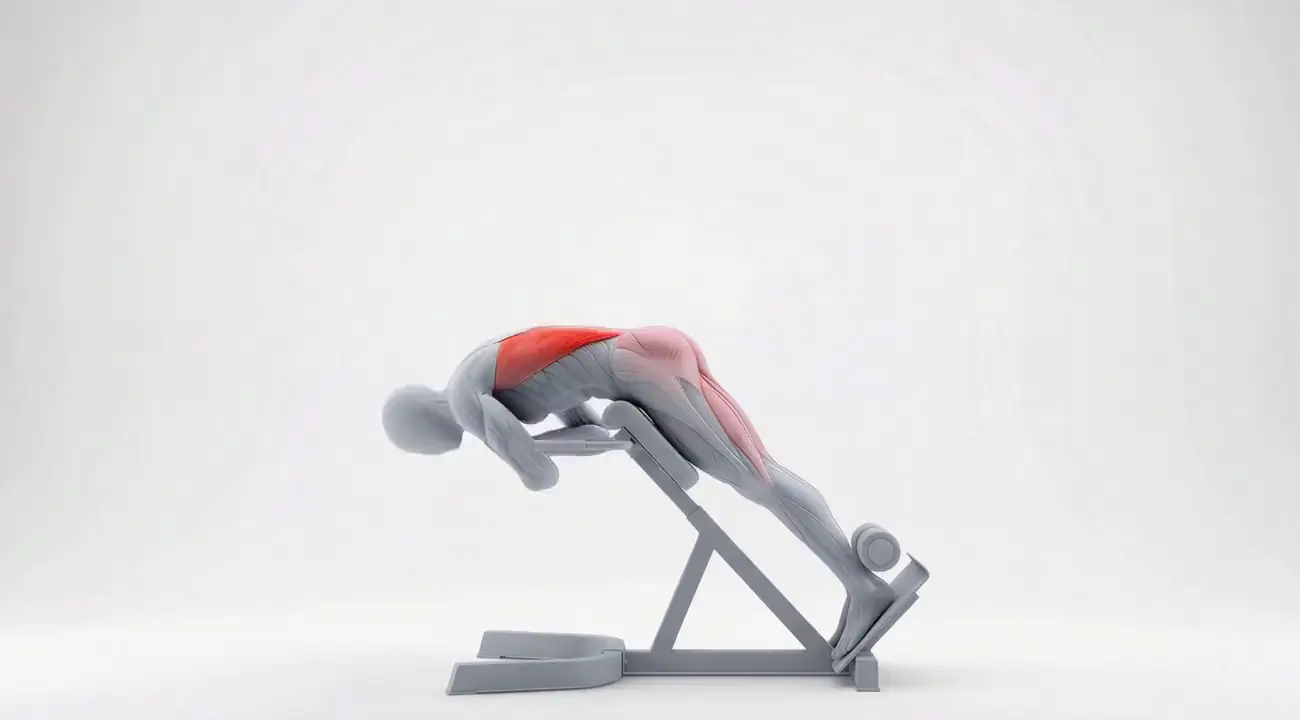
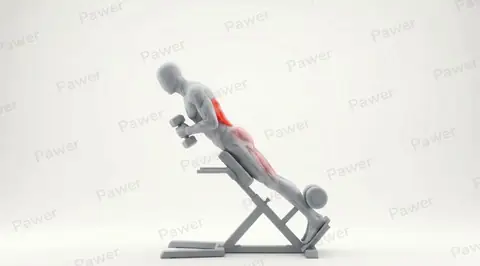
The back extension is performed on a 45-degree bench with the hip pad set just below the pelvis and both ankles locked under the roller. From that position the torso lowers by folding at the hips, then returns until the body forms one straight line from head to heels. The spinal erectors hold the spine steady through the whole range while the glutes and hamstrings produce the hip extension. Because the load is bodyweight and the range is bounded by the bench, it is an easy way to train the posterior chain.
How to do the Back Extension
- Set the hip pad of a 45-degree back extension bench just below your pelvis.
- Step onto the platform and lock both ankles under the roller pad with your legs straight.
- Cross your arms over your chest, brace your abdominals, and align your head, spine and hips.
- Hinge at the hips and lower your torso until you feel the hamstrings lengthen.
- Squeeze the glutes and extend the hips until your body forms a straight line.
- Hold the top position briefly, lower under control, and repeat for the prescribed reps.
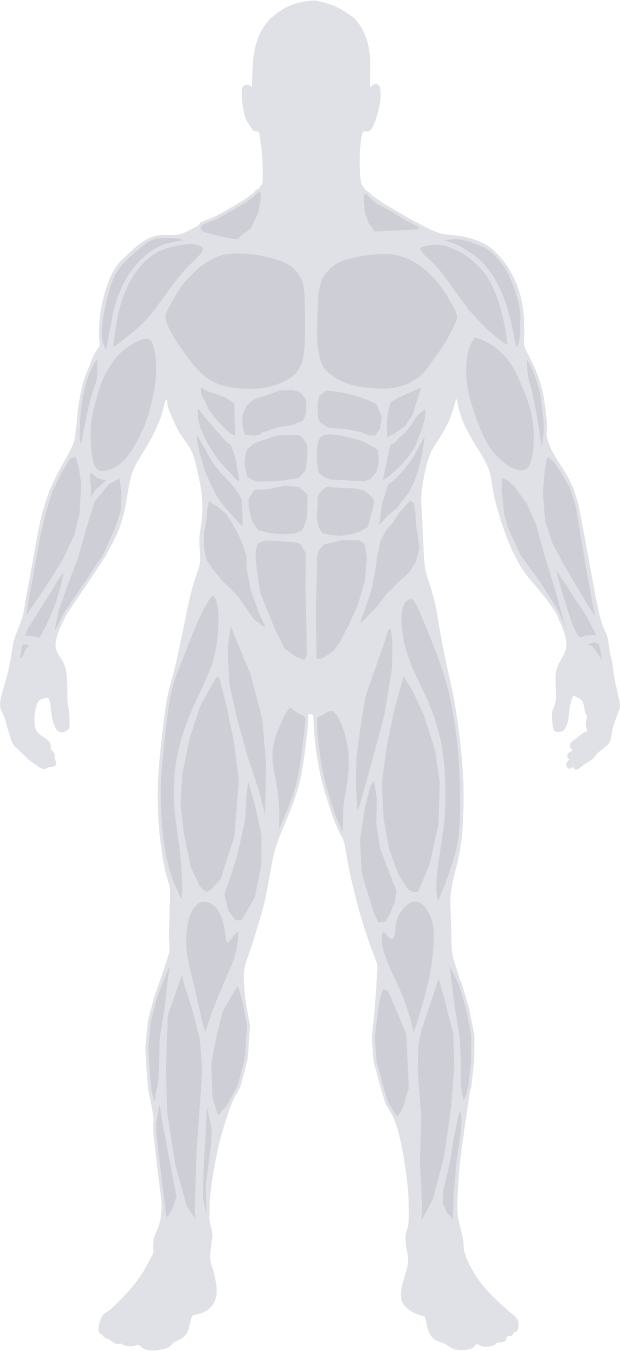
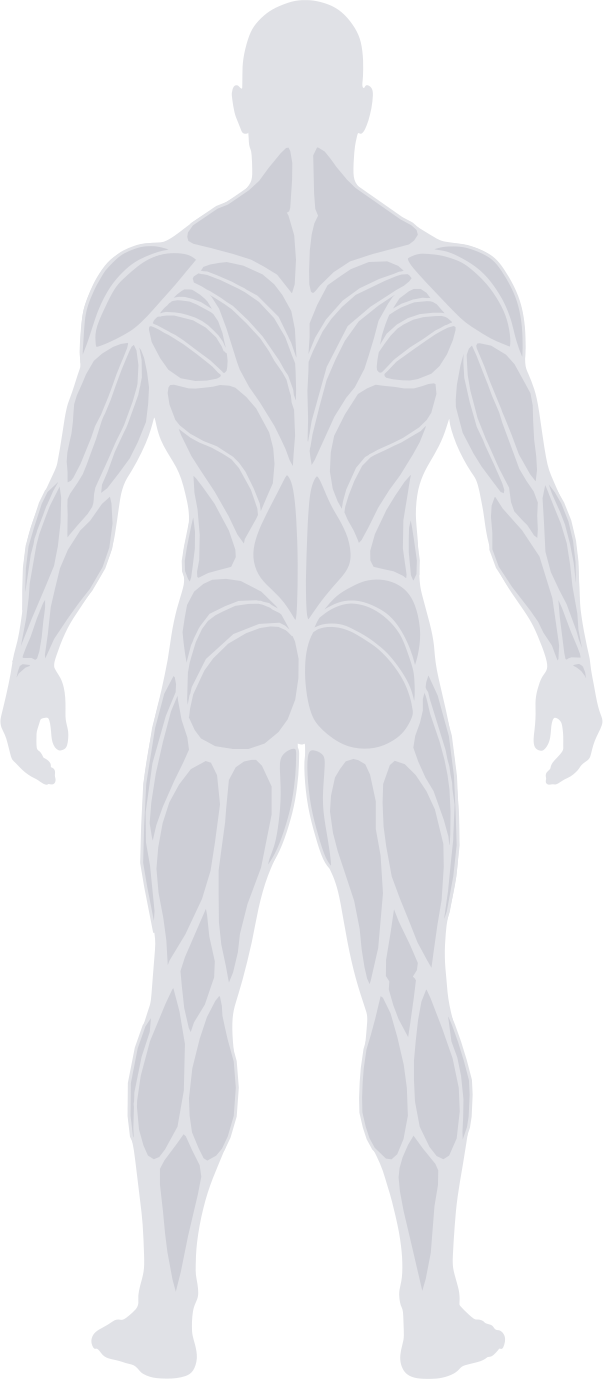
Muscles worked
- Primary:
- Lower back
- Secondary:
- Glutes and Hamstrings
Why train it
- Strengthens hip extension and spinal erector endurance with no external load required.
- Teaches the hinge pattern in a supported position before a barbell is introduced.
- Scales with tempo, pause length or a held plate without changing the setup.
Common mistakes
- Arching well past a straight line at the top, which loads the lumbar spine instead of the hips.
- Setting the hip pad too high, which blocks hip flexion and pushes the movement into the lower back.
- Swinging through reps with momentum, which removes tension from the glutes and hamstrings.
- Throwing the head back or tucking the chin hard, which breaks the neutral line the exercise trains.
Frequently asked questions
Are back extensions good for your lower back?
Done with control, yes. They strengthen the muscles that hold your spine upright, and they are a common part of lower back rehab. Move slowly, stop when your body is in a straight line, and do not swing up into an arch. If your back is painful right now, start with a small range and see how it feels the next day.
Can back extensions work the glutes?
Yes, and you can choose how much. Round your upper back slightly, turn your feet out, and set the pad below your hips so you bend at the hips: that puts the glutes and hamstrings in charge. Keeping a straight spine and bending at the waist puts more of the work on the lower back.
Can back extensions replace deadlifts?
For building the lower back, glutes and hamstrings, they can cover a lot of the same ground with far less weight and fatigue. They will not build the full-body strength or the grip a heavy deadlift does. They are a good swap when you are recovering or want the training effect without heavy bars.
Should you hold a weight on back extensions?
Once you can do 15 to 20 clean bodyweight reps, yes. Hold a plate or dumbbell against your chest, which is easier to control than holding it behind your head. Add weight in small steps and keep the same slow speed. If you have to swing to reach the top, the weight is too heavy.
Should you go past straight on a back extension?
No. Stop when your body forms a straight line from heels to head. Arching past straight squeezes the lower back joints without making the muscles work any harder. The work happens on the way up from the bottom, not at the top.
What muscles does the Back Extension work?
The Back Extension trains the lower back as the main target. Expect the glutes and hamstrings to take some of the load as well.
What equipment do I need for the Back Extension?
Only a 45-degree back extension bench. Your own weight is the resistance, so there is nothing to load.
Is the Back Extension suitable for beginners?
Yes. The Back Extension is rated beginner: you are the load, so there is no weight to get wrong. Add reps or time only once the position holds from the first of them to the last.
Can I do the Back Extension at home?
Only if your home setup runs to a 45-degree back extension bench. Most do not, so this is usually a gym movement. The alternatives below cover the same muscles with kit you are more likely to have.
How many sets and reps of the Back Extension should I do?
Three to four sets taken within a rep or two of failure. There is no weight to add here, so progress by slowing the lowering phase, pausing at the hardest point, or moving to a harder variation once you can clear 15 clean reps.
What are good alternatives to the Back Extension?
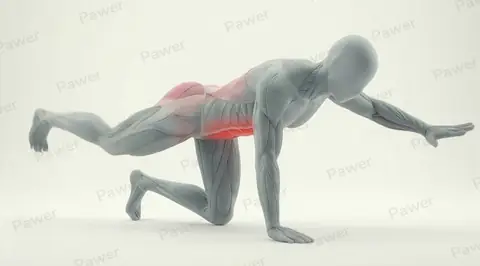
Dumbbell Back Extension, B-stance Back Extension, and Bird Dog train the same primary muscles as the Back Extension. Pick whichever one suits the equipment in front of you.
Similar exercises
By muscle
Every exercise is mapped to the muscles it trains. Browse by what you want to build.
By equipment
A full gym, a pair of dumbbells, or nothing at all: browse by what you have.