Hamstring Curl
Also known as: Dumbbell Leg Curl and Prone Dumbbell Hamstring Curl
 Anton YefanovUpdated
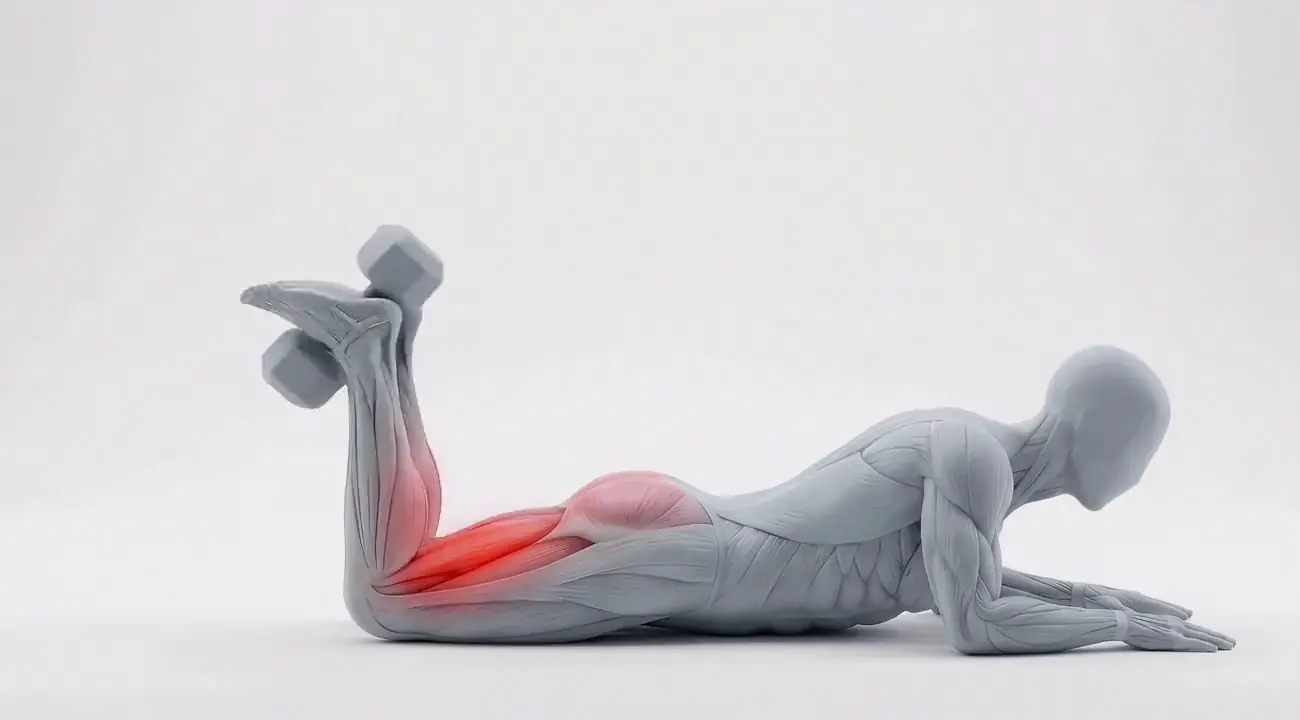
This is the prone dumbbell version of the leg curl: you lie face down, trap a light dumbbell between the arches of your feet and curl both heels toward your glutes. Only the knees bend, so the hamstrings do the work while the calves help clamp the dumbbell in place and the abs stop the hips lifting. Securing the weight is the difficult part, which is why the dumbbell variation is rated a step above a machine curl even though the joint action is identical. Start light, confirm the dumbbell is stable before the first rep, and keep the tempo slow in both directions.
How to do the Hamstring Curl
- Lie face down on a mat or bench with your legs straight and your hips flat.
- Set a light dumbbell upright between your feet, or have a partner place it.
- Squeeze the arches of your feet together until the dumbbell is fully secure.
- Fold your arms in front of you and brace your abs.
- Bend your knees to curl the dumbbell up toward your glutes.
- Pause at the top, lower until the legs are almost straight, and repeat.
Muscles worked
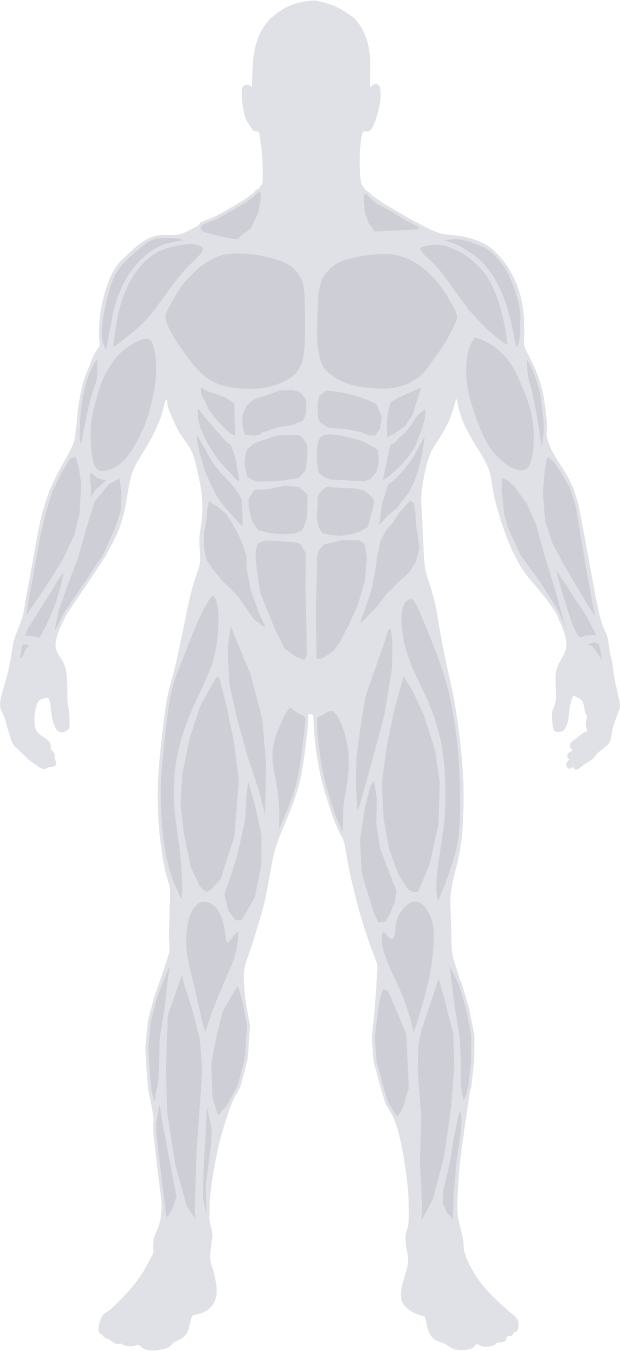
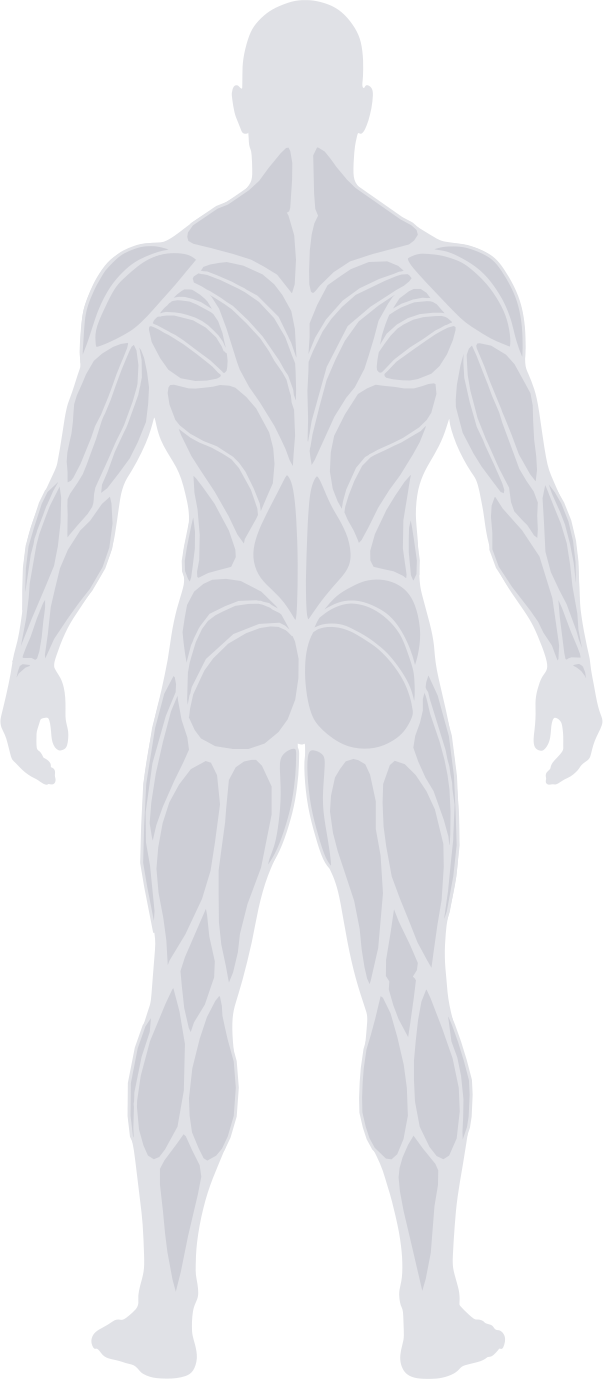
The hamstring curl works the hamstrings, the muscles on the back of the thigh that bend the knee, with the calves assisting. Lying face down and curling a dumbbell held between your feet toward your glutes is pure knee flexion, so the hamstrings move the weight while your hips stay flat.
In the prone position, the dumbbell feels heaviest early in the curl, when your shins are close to horizontal and the weight sits furthest from the knee. That is where the hamstrings work hardest. As the shins approach vertical the leverage gets easier, so pausing at the top and lowering slowly matters more than adding weight. The calves cross the knee too, so they help with the curl while also pointing the feet and squeezing the dumbbell in place. Bracing your abs stops the hips from lifting, which keeps the work on the hamstrings.
- Primary:
- Hamstrings
- Secondary:
- Calves
Why train it
- Trains knee flexion without a leg curl machine, so it works in a home gym.
- Clamping the dumbbell adds an ankle and calf demand that a machine pad removes.
- The setup enforces a slow tempo, which keeps the eccentric under control.
Common mistakes
- Starting too heavy, so the dumbbell slips out of the feet part way through the set.
- Lifting the hips to help the curl, which loads the lower back instead of the hamstrings.
- Letting the dumbbell drop at the end of the rep, which skips the eccentric and risks the ankles.
- Rushing the reps, which makes the weight swing rather than the hamstrings pull.
Frequently asked questions
Is a hamstring curl the same as a leg curl?
Yes. Hamstring curl and leg curl are two names for the same movement: bending the knee against resistance. The difference is the setup, such as a dumbbell between your feet, a lying leg curl machine or a seated leg curl. The seated version stretches the hamstrings more and has been shown to build them slightly faster.
Hamstring curl or Romanian deadlift: which is better?
You need both for complete hamstrings. The hamstrings cross two joints. A curl trains them by bending the knee, and a Romanian deadlift trains them from the hip. Doing one of each covers the whole muscle better than either alone.
Do hamstring curls work the glutes?
Barely. A curl is a knee movement, and the glutes work at the hip. You may feel your glutes help to hold your hips still, but they are not doing much of the lifting. Pair curls with a hip thrust or a Romanian deadlift if you want glute work in the same session.
Can hamstring curls cause knee pain?
They should not, but the knee can complain if you kick the weight up fast or let it drop at the bottom. Move slowly through the whole range and keep the weight light enough to control. Cramping in the hamstring at the top is common and not harmful: ease off and stretch it before the next set.
What equipment do I need for the Hamstring Curl?
The Hamstring Curl needs a dumbbell. Nothing beyond that is required to run the movement the way it is described above.
Is the Hamstring Curl suitable for beginners?
With some training behind you. The Hamstring Curl is rated intermediate, which means the setup matters as much as the effort. It is a reasonable first month goal rather than a first session one, and the alternatives below are the easier way in.
Can I do the Hamstring Curl at home?
Yes, if you own a dumbbell. That is the whole requirement, and it is the reason this one travels well between a home setup and a gym floor.
How many sets and reps of the Hamstring Curl should I do?
Three to four sets of 10 to 15 reps. Isolation work responds to reps and a controlled tempo rather than load, so stop each set a rep or two short of failure and keep the weight honest.
What are good alternatives to the Hamstring Curl?
Stability Ball Leg Curl, Band Leg Curl, and Cable Single Leg Laying Leg Curl train the same primary muscles as the Hamstring Curl. Pick whichever one suits the equipment in front of you.
Work out your Hamstring Curl weights
Estimate your max from a recent set, then find the weight for your next one.
- One Rep Max CalculatorTurn a recent set into an estimated max. Compare Epley, Brzycki and Lombardi, then read off your training percentages and every rep max from 2RM to 12RM.
- RPE CalculatorRate a set by effort, get an estimated max, and read off the weight for your next target. Includes a full RPE chart of percentages by reps and effort.
Similar exercises
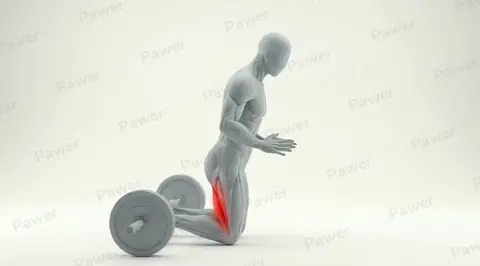 Nordic Hamstring CurlBodyweight
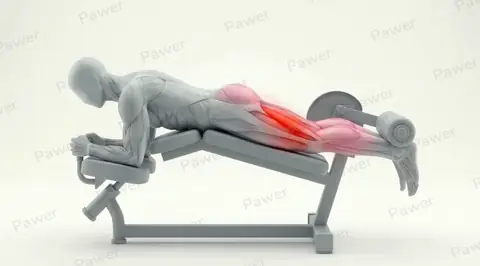 Lying Leg CurlMachine
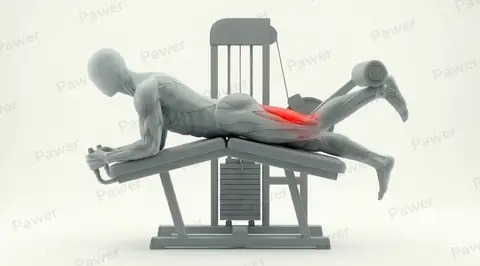 Cable Single Leg Laying Leg CurlCable
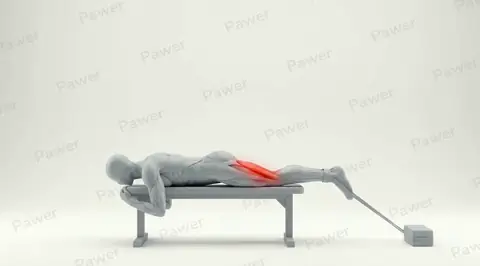 Band Leg CurlResistance band
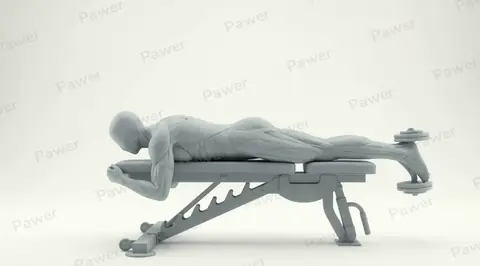 Dumbbell Leg CurlDumbbell
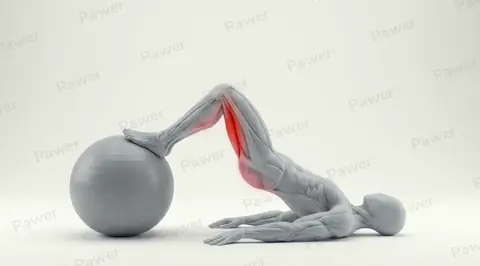 Stability Ball Leg CurlStability ball
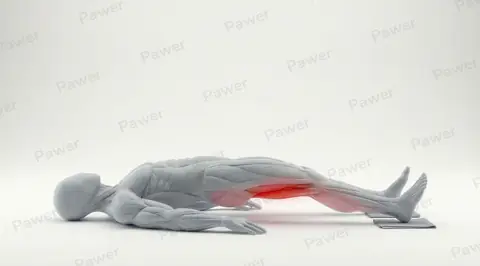 Towel Slide Leg CurlBodyweight
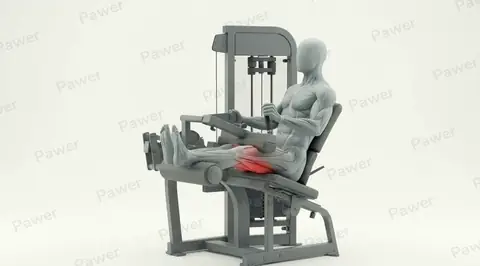 Seated Leg CurlMachine
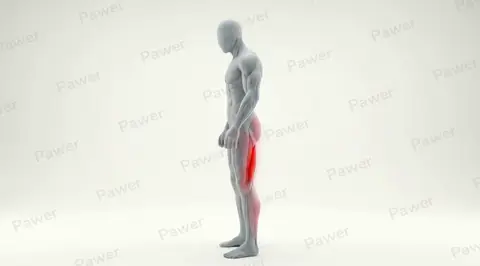 Romanian Deadlift Hamstring SweepsBodyweight
 Hip Hinge Speed Romanian DeadliftDumbbell
By muscle
Every exercise is mapped to the muscles it trains. Browse by what you want to build.
By equipment
A full gym, a pair of dumbbells, or nothing at all: browse by what you have.