Landmine Press
Also known as: Standing Landmine Press and Landmine Shoulder Press
 Anton YefanovUpdated
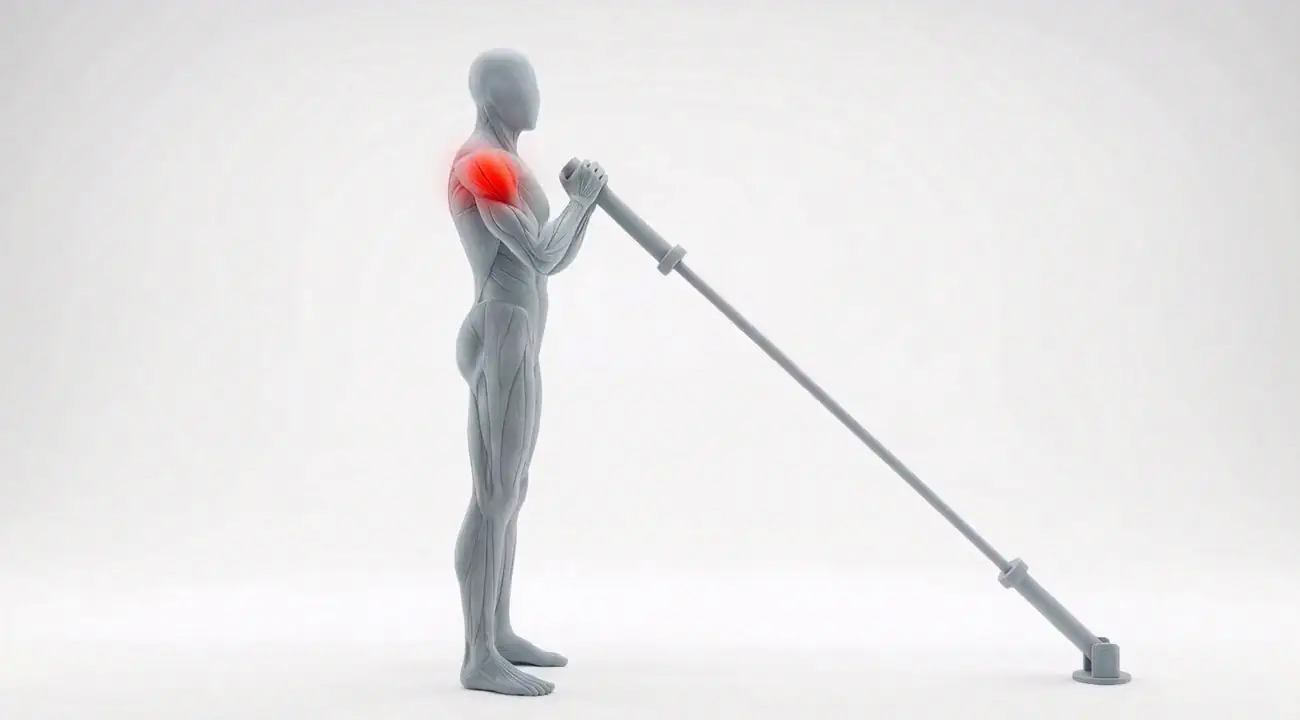
A landmine is a barbell with one end pinned to the floor, so the loaded end travels through an arc instead of a straight vertical line. For the standing press you cup that end with both hands at chest height, brace the core and glutes, hinge slightly at the hips and press up and away until both arms are straight. The deltoids lead the press with the chest, triceps, core and glutes supporting, and the fixed arc keeps the work in front of the body, which suits lifters who cannot get comfortably overhead.
How to do the Landmine Press
- Wedge one end of a barbell into a landmine sleeve or a padded corner.
- Load the free end and stand facing it with your feet hip-width apart.
- Cup the loaded end with both hands and bring it to chest height.
- Brace your core, squeeze your glutes and hinge very slightly at the hips.
- Press the bar up and away along its arc until both arms are straight.
- Hold briefly, then lower the bar back to your chest under control.
Muscles worked
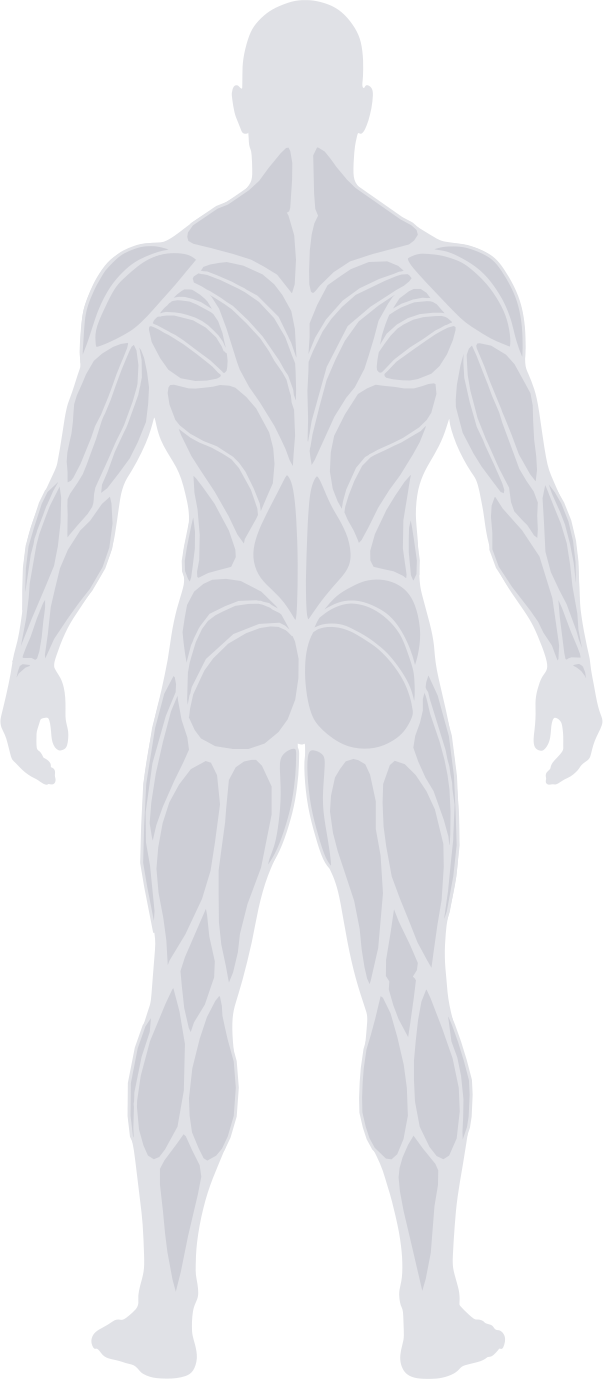
The landmine press works mainly the front delts, with the upper chest and triceps helping and the core holding you steady. Because the bar travels up and away on an arc instead of straight overhead, the movement sits between a shoulder press and an incline press, so the front delts and the upper fibers of the chest share the shoulder flexion.
The delts work hardest off the chest, where the bar is furthest in front of the shoulder. The triceps take over in the top half as the elbows straighten. Standing with a slight forward hinge sets the angle of the press: a more upright torso makes it more of a shoulder movement, while leaning further in brings more chest. The core and glutes resist the pull of the bar trying to extend your lower back, which is why the brace matters.
- Primary:
- Shoulders

Why train it
- The fixed arc presses in front of the body, which suits lifters short on overhead range.
- Needs only a barbell and an anchor, so it works in gyms without a landmine attachment.
- Bracing against a forward load keeps the core working on every rep.
Common mistakes
- Pressing straight up instead of following the bar's arc, which fights the anchor and stalls the rep.
- Letting the ribs flare at lockout, which turns the press into a lower back extension.
- Holding the bar loosely so it slides in the hands, which ends the set on grip rather than shoulders.
- Using an unsecured corner setup, which lets the bar skate sideways under load.
Frequently asked questions
Does the landmine press work the shoulders or the chest?
Mostly the front shoulders and upper chest. The angled press sits between an incline bench press and an overhead press, so it works both. The serratus, the muscle along your ribs, also works hard as you reach forward at the top. Leaning forward more shifts the work towards the chest.
Is the landmine press easier on the shoulders?
Yes, for many people. The angled path keeps your arm in front of your body instead of directly overhead, so it is a common choice for those who cannot press overhead without pain. The shoulder blade can move freely, which helps it feel more natural.
Can you do a landmine press without a landmine attachment?
Yes. Wedge one end of a barbell into a corner, wrapped in a towel to protect the wall, or place it inside a heavy plate's centre hole on the floor. Make sure it cannot slide. Stand at the other end and press the free end up and forward.
Kneeling or standing landmine press?
Kneeling takes your legs out of the lift and forces your core to work harder to stay still, which suits beginners and keeps the focus on the shoulder. Standing lets you use more weight and add a little leg drive. Half-kneeling, with one knee down, is a popular middle option.
What equipment do I need for the Landmine Press?
The Landmine Press needs a barbell. Nothing beyond that is required to run the movement the way it is described above.
Is the Landmine Press suitable for beginners?
Yes. The Landmine Press is rated beginner: the pattern is quick to pick up and forgiving when a rep drifts. Start light and add weight once the form repeats itself without you thinking about it.
Can I do the Landmine Press at home?
Yes, if you own a barbell. That is the whole requirement, and it is the reason this one travels well between a home setup and a gym floor.
How many sets and reps of the Landmine Press should I do?
Three to five sets of 6 to 12 reps. Sit at the lower end with heavier weight when you are chasing strength, and at the upper end when you are chasing size.
What are good alternatives to the Landmine Press?
Band Lateral Raise, Cable Overhead Press, and Dumbbell Seated Overhead Press train the same primary muscles as the Landmine Press. Pick whichever one suits the equipment in front of you.
Work out your Landmine Press weights
Estimate your max from a recent set, then find the weight for your next one.
- One Rep Max CalculatorTurn a recent set into an estimated max. Compare Epley, Brzycki and Lombardi, then read off your training percentages and every rep max from 2RM to 12RM.
- RPE CalculatorRate a set by effort, get an estimated max, and read off the weight for your next target. Includes a full RPE chart of percentages by reps and effort.
- Barbell Plate CalculatorSee which plates go on each side of the bar for any weight, using only what your gym stocks. Count a loaded bar, add collars, and switch bars.
- Warm-Up CalculatorGet every warm-up set for your working weight, with reps, rest and the plates per side. Ramps for work sets, heavy singles, meets and 5x5 programs.
Similar exercises
By muscle
Every exercise is mapped to the muscles it trains. Browse by what you want to build.
By equipment
A full gym, a pair of dumbbells, or nothing at all: browse by what you have.