Standing Cable Hip Abduction
 Anton YefanovUpdated
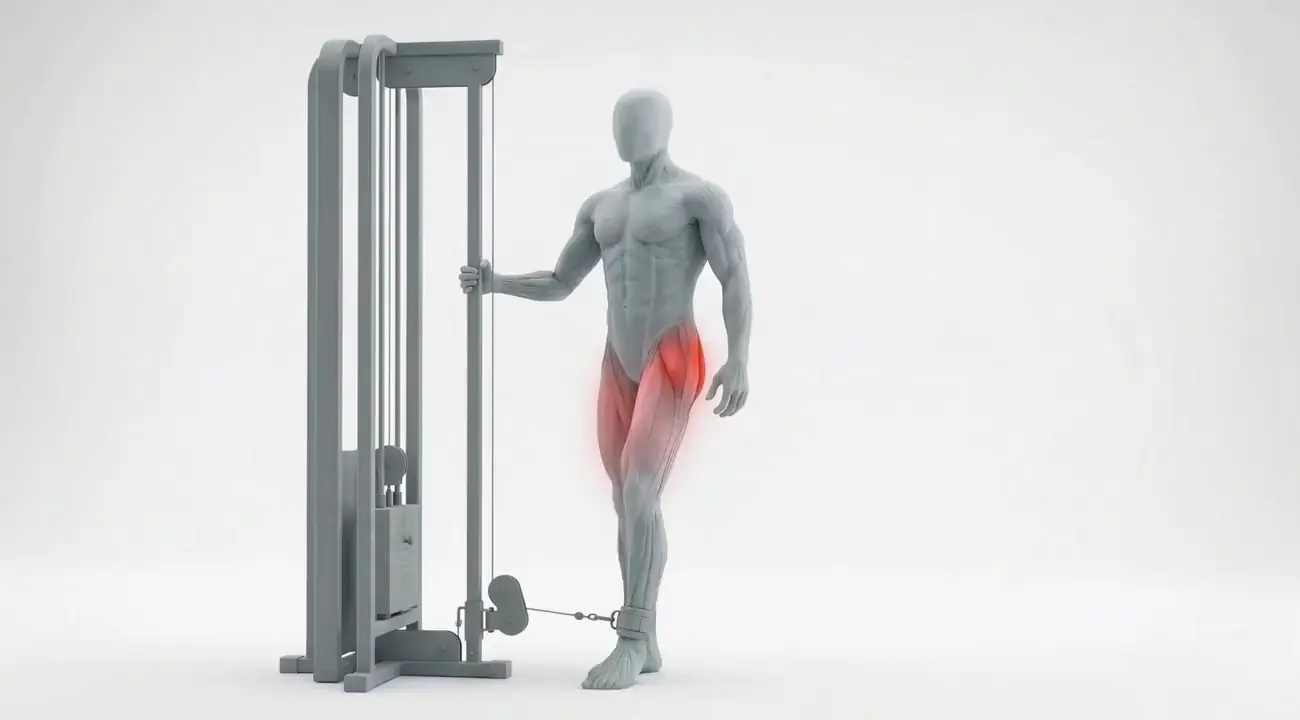
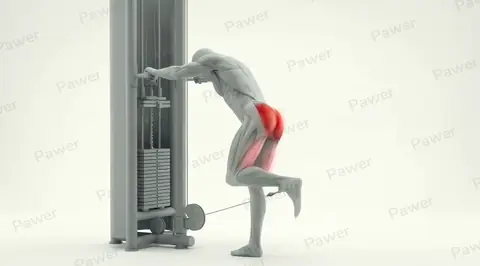
The standing cable hip abduction cuffs the ankle of the leg furthest from the machine and draws it out to the side against a low pulley. The gluteus medius and minimus produce the abduction while the stance leg works just as hard isometrically to keep the pelvis level. EMG work on hip abduction in a one leg stance shows abductor activity on the support side rises sharply as load increases, so both hips are training even though only one leg moves. Leading with the heel and keeping the movement slow stops the trunk from swinging the leg out.
How to do the Standing Cable Hip Abduction
- Attach an ankle strap to the low pulley of a cable machine.
- Fasten the strap around the ankle of the leg furthest from the machine.
- Stand side on with the cable across the front of your standing leg and hold the frame for balance.
- Brace your trunk and keep both hips level and facing forward.
- Lift the cuffed leg out to the side with the knee straight, leading with the heel.
- Return under control without letting the weight stack touch down, then repeat and switch sides.
Muscles worked
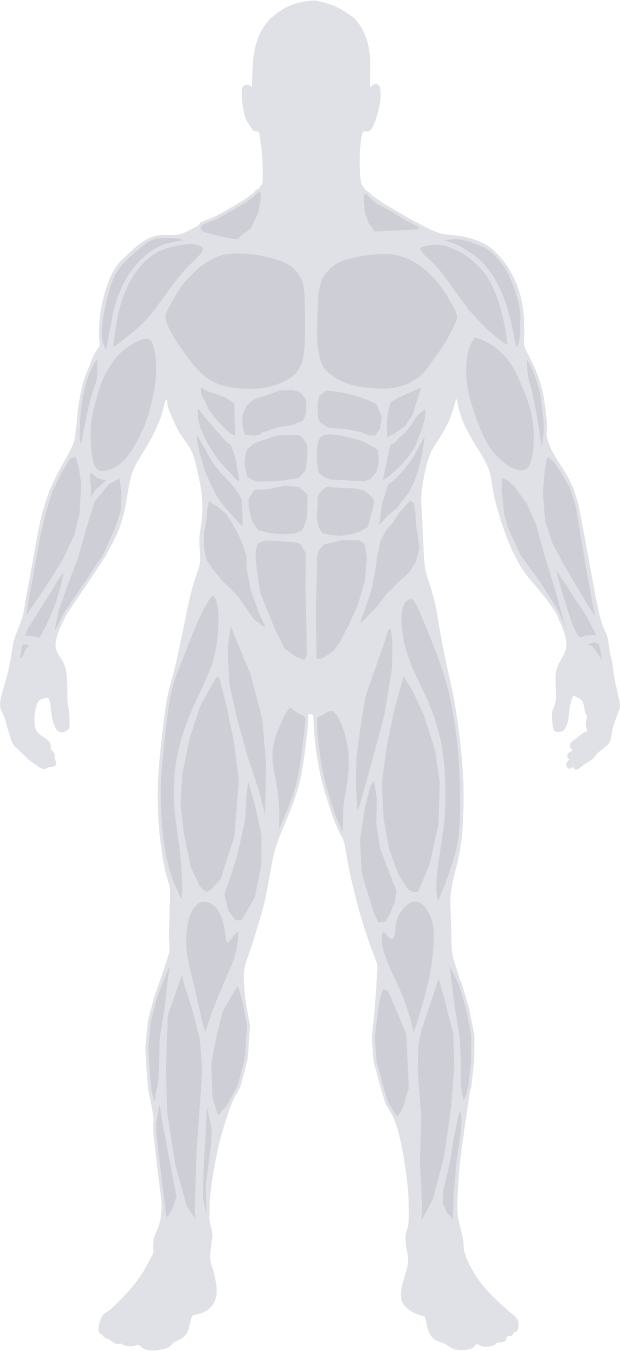
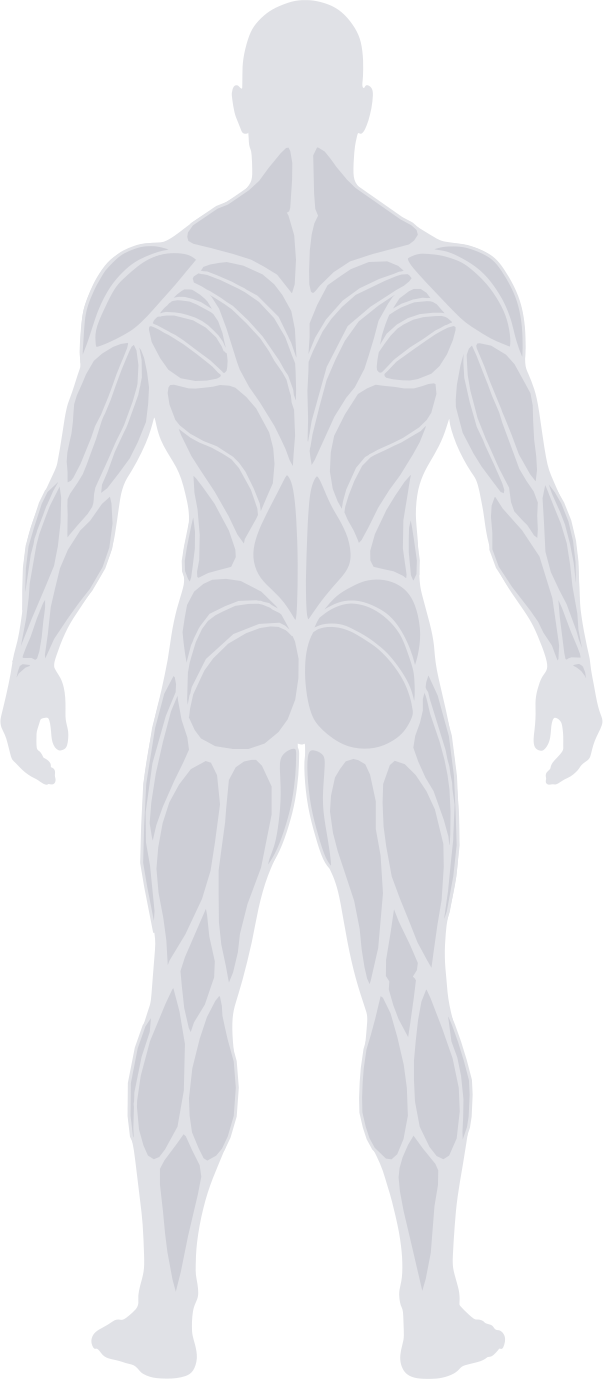
Why train it
- Loads the gluteus medius and minimus directly with constant cable tension.
- Trains the stance hip isometrically at the same time as the moving hip.
- Improves lateral hip stability that carries into running and cutting.
Common mistakes
- Swinging the leg with the trunk, which replaces abductor work with momentum.
- Forcing the leg higher than the hip allows, which tilts the pelvis and shortens the working range.
- Letting the working leg drift forward, which turns abduction into hip flexion.
- Hanging off the machine frame so the standing hip stops stabilizing.
Frequently asked questions
What muscles does the Standing Cable Hip Abduction work?
The Standing Cable Hip Abduction trains the glutes as the main target. Expect the core to take some of the load as well.
What equipment do I need for the Standing Cable Hip Abduction?
Only a cable machine. Nothing beyond that is required to run the movement the way it is described above.
Is the Standing Cable Hip Abduction suitable for beginners?
Yes. The Standing Cable Hip Abduction is rated beginner, and the machine holds the path for you, so there is little to get wrong once the seat and the pin are set.
Can I do the Standing Cable Hip Abduction at home?
Only if your home setup runs to a cable machine. Most do not, so this is usually a gym movement. The alternatives below cover the same muscles with kit you are more likely to have.
How many sets and reps of the Standing Cable Hip Abduction should I do?
Three sets of 12 to 20 reps. The muscles here are small and recover fast, so frequency does more for them than heavy singles.
What are good alternatives to the Standing Cable Hip Abduction?
Band Hip Abduction, Machine Hip Abduction, and Cable Hip Abduction train the same primary muscles as the Standing Cable Hip Abduction. Pick whichever one suits the equipment in front of you.
Work out your Standing Cable Hip Abduction weights
Estimate your max from a recent set, then find the weight for your next one.
- One Rep Max CalculatorTurn a recent set into an estimated max. Compare Epley, Brzycki and Lombardi, then read off your training percentages and every rep max from 2RM to 12RM.
- RPE CalculatorRate a set by effort, get an estimated max, and read off the weight for your next target. Includes a full RPE chart of percentages by reps and effort.
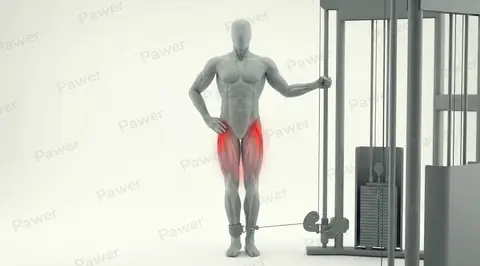
Similar exercises
By muscle
Every exercise is mapped to the muscles it trains. Browse by what you want to build.
By equipment
A full gym, a pair of dumbbells, or nothing at all: browse by what you have.