Jump Rope
 Anton YefanovUpdated
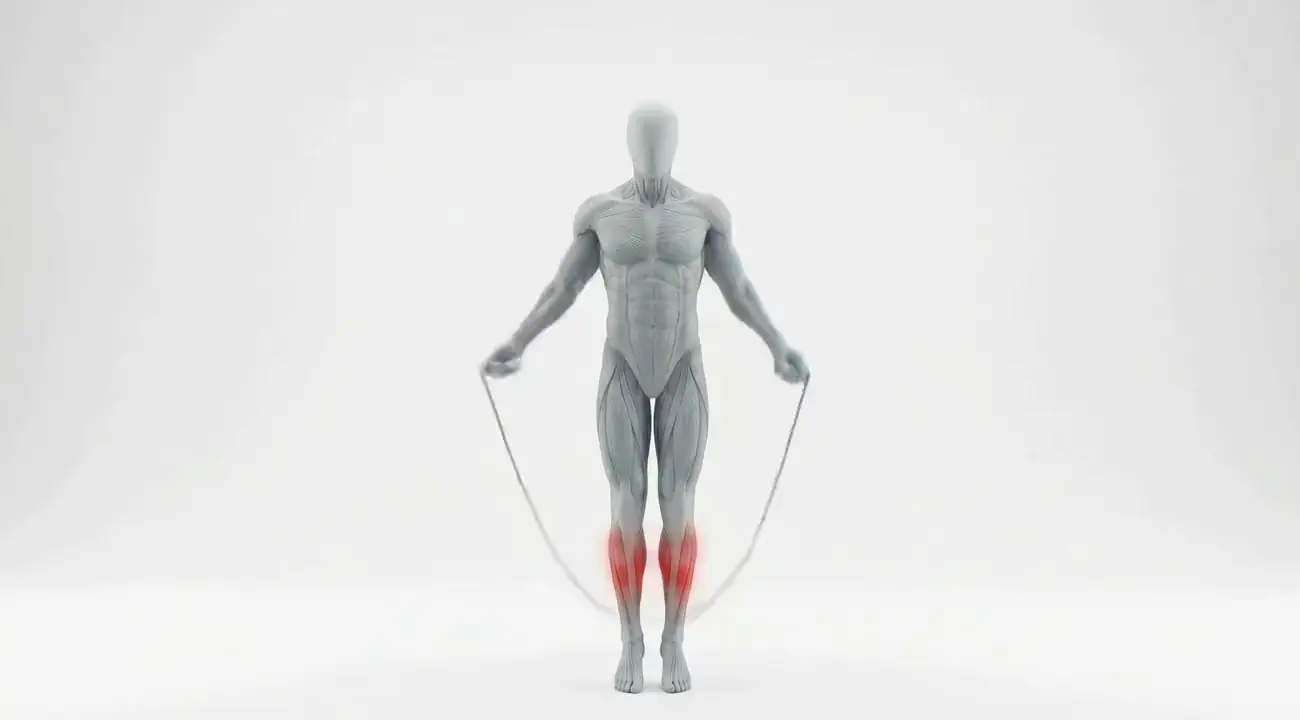
Rope jumping is a rhythmic, low-amplitude bounce driven mainly by the calves and the elastic tissue around the ankle. Ground-contact measurements put the calf group and tibialis anterior well ahead in the two-foot bounce, while the alternating-foot version moves a large share of the work to the hip flexors and thigh. Each landing stretches and then rebounds the calf and Achilles complex, which is why repeated skipping counts as low-level stretch-shortening work as well as a cardio staple. The arms stay close to the body and the wrists do the turning.
How to do the Jump Rope
- Stand on the middle of the rope and check the handles reach your armpits.
- Take an athletic stance with your chest lifted and shoulders back.
- Hold the handles close to your body with your elbows slightly bent.
- Turn the rope with your wrists rather than swinging from the shoulders.
- Hop only as high as the rope needs, meeting the floor through the ball of the foot.
- Let the heel settle after each contact and keep the knees soft.
Muscles worked
- Primary:
- Calves


Why train it
- Loads the calf and Achilles complex on every rebound, which is why it doubles as entry-level jump training.
- Trains eye, foot and hand coordination through a repeating rhythm.
- Packs into any space and any interval structure with one cheap tool.
Common mistakes
- Jumping far higher than the rope needs, which burns energy and raises landing load.
- Swinging the whole arm to turn the rope, which tires the shoulders and loses rhythm.
- Landing heavily and flat, which sends impact straight through the joints.
- Adding volume too quickly when new to impact work, which is where shin complaints start.
Frequently asked questions
Is jumping rope better than running?
Minute for minute, jumping rope is often harder and burns about as many calories as a moderate run. It also fits in a small space and builds calf strength and coordination. Running is easier to keep up for 30 minutes or more, so it is better for building endurance. Many people use the rope for short, intense sessions and run for longer ones.
Is jumping rope bad for your knees?
Not when you keep the jumps low and land softly on the balls of your feet. Each jump only needs to clear the rope by a couple of centimetres. Use a mat or a sprung floor instead of concrete, wear cushioned shoes, and build up slowly, since sore shins are more common than knee trouble.
Should the rope touch the ground?
It should just tap or skim the ground. A rope that slaps hard is too long, and one that never reaches the ground is too short. To size it, stand on the middle of the rope: the handles should reach about your armpits. Shorten it slightly as you get faster.
Can jumping rope build muscle?
Mostly in the calves, which do almost all the bouncing. It builds endurance in your shoulders and forearms too. For bigger legs or upper body, though, it is too light. Use it for cardio and pair it with strength training.
How long should a beginner jump rope?
Start with short rounds, such as 30 seconds of jumping and 30 seconds of rest, repeated 5 to 10 times. Your calves and Achilles need a few weeks to adapt, so add time slowly. Once you can jump for two minutes without tripping, longer continuous sessions become realistic.
What muscles does Jump Rope work?
Jump Rope works the calves hardest, with the quads, shoulders, and core pitching in. As cardio, though, the bigger demand is on your heart and lungs rather than any one muscle.
What equipment do I need for Jump Rope?
Only a jump rope and enough ceiling to swing it. There is nothing to lift: your own body does the work.
Is Jump Rope suitable for beginners?
Yes. Jump Rope is rated beginner. Start at a pace you could hold a conversation at, and build the time before you build the intensity.
Can I do Jump Rope at home?
Yes. All it takes is a jump rope and enough ceiling to swing it, which most homes can find, so Jump Rope is easy to keep going on days you never reach a gym.
How long should I do Jump Rope for?
Five to ten rounds of 20 to 60 seconds hard with equal rest, or a few minutes steady as a warm-up. It fits at the end of a lifting session as well as on its own.
What are good alternatives to Jump Rope?
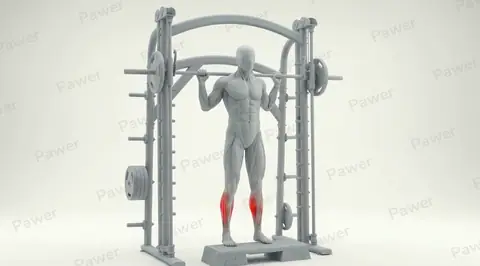
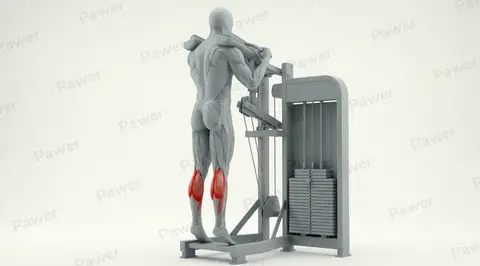
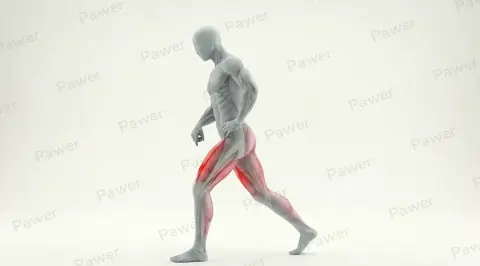
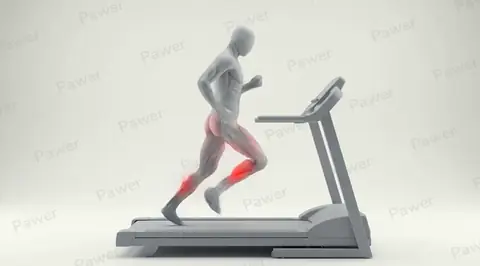
Treadmill Run, Running Cooldown, and Dumbbell Single Leg Calf Raise train the same primary muscles as Jump Rope. Pick whichever one suits the equipment in front of you.
Similar exercises



By muscle
Every exercise is mapped to the muscles it trains. Browse by what you want to build.
By equipment
A full gym, a pair of dumbbells, or nothing at all: browse by what you have.